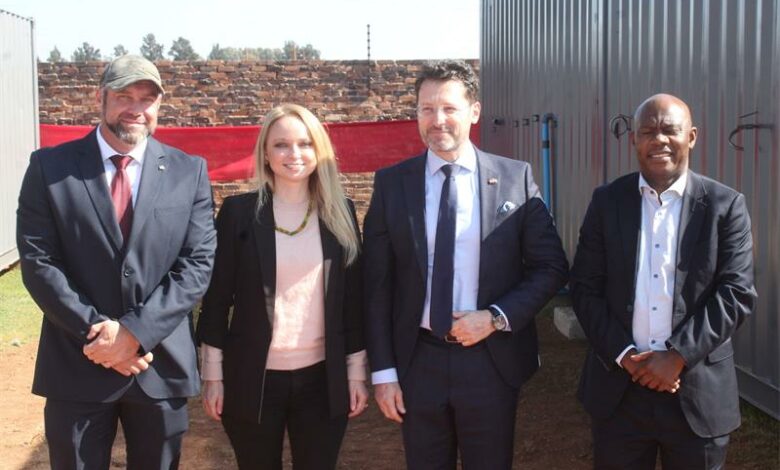
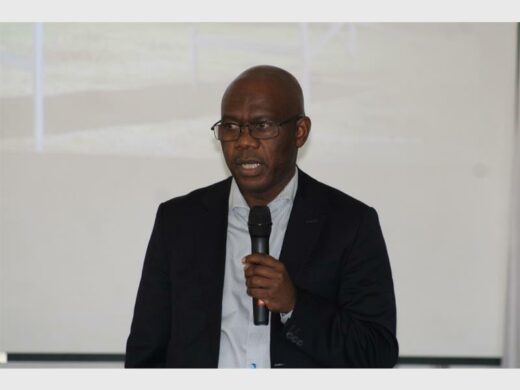
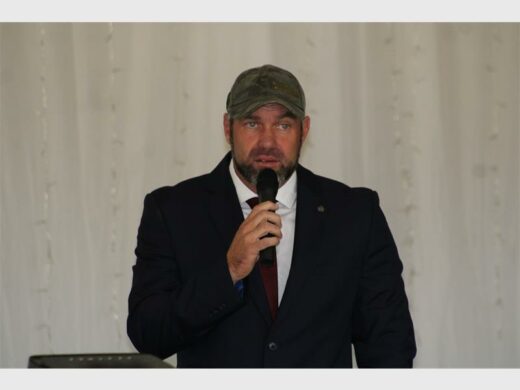
Zen Teigte, Dr Devi Bühler, ambassador Mirko Manzoni and Tilson Manyoni.
An innovative water-saving pilot project, the Low-Tech Water Project, was officially launched at Manger Care Centre (MCC) on June 29, marking another step towards developing sustainable water solutions for South Africa.
The facility treats ‘greywater’ from showers, kitchens and laundry separately from ‘blackwater’ from toilets, allowing the treated water to be reused for non-drinking purposes, such as irrigation, toilet flushing and laundry.
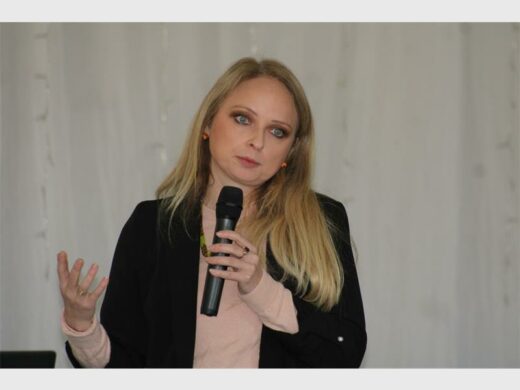
The Low-Tech Water Project lead Dr Devi Bühler, a senior researcher at the Zurich University of Applied Sciences (ZHAW).
The project was unveiled during a ceremony attended by the Swiss ambassador to South Africa, Mirko Manzoni, Tilson Manyoni of the National Advisory Council on Innovation, MCC CEO Zen Teigte and project lead Dr Devi Bühler, a senior researcher at the Zurich University of Applied Sciences (ZHAW).
Teigte said the facility will enable MCC to treat thousands of litres of water a day, which will then be reused to irrigate crops grown at the centre.
“It’s about closing the loop and becoming self-sustainable when it comes to water use. We’ll be treating about 5 000 litres of water every day and reintegrating it into our cropping system, where it will be reused instead of going to waste,” he said.
The initiative is a collaborative research project between ZHAW, Stellenbosch University, and MCC, building on more than seven years of research by Swiss and South African partners.
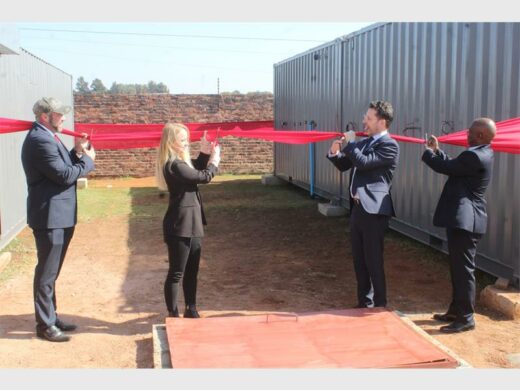
Zen Teigte, Dr Devi Bühler, ambassador Mirko Manzoni and Tilson Manyoni cut the ribbon to officially open the the Low-Tech Water Project pilot facility at Manger Care Centre.
Bühler explained that the goal is to help communities become less dependent on conventional water systems by treating and reusing their own wastewater.
“The idea is to have your own water system that treats wastewater so it can be reused for purposes that don’t require drinking-quality water. In that way, you can almost become self-sufficient,” she said.
Unlike many treatment systems, the facility relies on naturally occurring microorganisms to clean the water instead of chemicals or complex filtration systems, making it both environmentally friendly and resource-efficient.
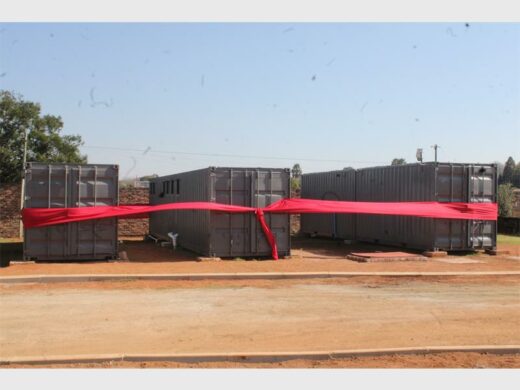
The Low-Tech Water Project pilot facility at Manger Care Centre.
The project was initially piloted in an informal settlement in Khayelitsha, Cape Town, where researchers encountered several challenges. Although the site ultimately closed, Bühler said the experience provided valuable lessons that helped refine the technology.
She believes MCC offers a more stable environment where researchers can focus on testing and improving the system before eventually rolling it out in informal settlements and rural communities.
“Ultimately, that’s where we want this technology to make a difference,” she said.
Teigte said he was immediately impressed by the concept after seeing a similar water recycling system at the Cape Town-based NPO Streetscapes, which reuses water for its laundromat.
Tilson Manyoni of the National Advisory Council on Innovation (NACI).
“I fell in love with the concept because I had never seen anything like it in South Africa. We have to start using water more responsibly and become as self-sustainable as possible, and this project offered exactly that.
“When the opportunity came, we didn’t hesitate. We wanted to be part of it. Today we’re proud to launch something that can serve as a model for other organisations in Ekurhuleni and beyond.
“We also work with rural communities and farms, so there’s great potential to scale this technology into practical sanitation and water treatment solutions that are easy to manage and can treat both greywater and blackwater effectively,” said Teigte.
Manger Care Centre CEO Zen Teigte addresses the attendees during the launch of the The Low-Tech Water Project pilot facility.
Bühler said South Africa’s growing water shortages inspired her commitment to developing practical water solutions.
“I want to see this technology implemented on a much larger scale. Beyond water scarcity, it can also help address sanitation challenges, reduce pressure on existing infrastructure and create more sustainable water services for communities across the country,” she said.
At Caxton, every story is written by humans. We use AI only to perform quality checks - never to generate the news. Happy reading!
Lebohang Pita is journalist for the Benoni City Times. He covers sports and general news for the newspaper. He also writes a bi-weekly column called The Corner Flag, which covers a range of sports-related topics.