Ekurhuleni rescue team earns national bronze medal
Ekurhuleni Fire Services rescue team takes bronze at national competition.
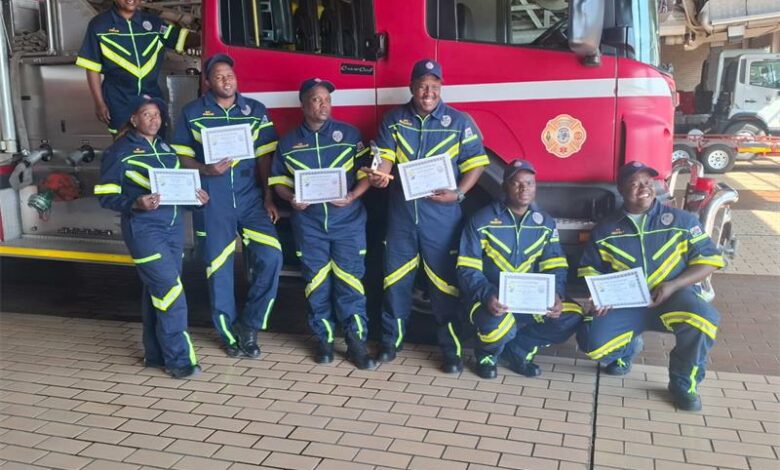
The City of Ekurhuleni (CoE) fire services extrication team returned home after securing third place at the South African Medical Rescue Organisation (SAMRO) National Competition in the Western Cape.
The two-day competition was held in Overberg from August 12 to 13, where emergency rescue teams from across the country put their technical skills, speed and lifesaving abilities to the test in challenging vehicle rescue scenarios.
The Ekurhuleni team returned with certificates and a trophy, securing the bronze medal in the Vehicle Rescue category.
ALSO READ: Avoid deadly winter fires: Ekurhuleni DEMS issues stern warning
DEMS spokesperson William Ntladi said the achievement had made the city proud, with the team competing against some of the country’s leading emergency rescue teams.
Competitors were assessed in several critical areas, including precision and speed, technical diligence and the application of lifesaving techniques during traumatic vehicle crashes.
“The bronze medal finish is a reflection of the team’s discipline, commitment and extensive preparation. Their performance also highlighted the importance of teamwork and technical competence in emergencies where every second can make a difference,” said Ntladi.
He said the achievement placed CoE Fire Services among the leading emergency rescue teams competing on the national stage.
Ntladi added that the competition served as an important training opportunity. Teams were exposed to different rescue scenarios and the latest developments in vehicle technology and rescue equipment.
ALSO READ: Ekurhuleni DEMS rolls out safety campaign
“SAMRO is always working with firefighters across the country to improve their skills, familiarise them with current equipment and ensure that they understand the latest vehicle technologies,” he said.
“Once you are familiar with the technology, you can use it effectively to save lives and approach a vehicle with the mindset of knowing its technology.”
Ntladi said the growing use of battery-powered and electric vehicles had made it increasingly important for firefighters and rescue personnel to understand the technology and safety risks associated with different vehicle types.
“Different vehicles come with different technologies, so we need to approach that vehicle fire differently.
We need to know what kind of fire extinguisher to use because we have different classes of fire,” he said.
He explained that Class A fires involve materials that burn and leave ash, while Class B fires involve flammable liquids and gases. Class C fires involve electrical equipment.
“These classes of fire need different approaches and different fire extinguishers. However, a common one used is the Dry Chemical Powder (DCP) fire extinguisher. The science when putting out a fire is to destabilise the triangle of combustion,” Ntladi said.
He said the city’s internal training programmes also played an important role in maintaining the team’s preparedness.
“This adds to our internal training at the Boksburg Fire Station through our academy, where we have a multi-approach to different types of training,” he said.
Ntladi said the team that represented Ekurhuleni comprised firefighters from various stations, including Olifantsfontein, Bedfordview and Wadeville.
He said the main objective of the competition was to test the readiness and capabilities of rescue teams when responding to emergencies.
“When you arrive at the scene, you need to know how to stabilise a vehicle. We also need to protect ourselves as rescuers while executing our jobs,” he said.
Rescue personnel must be prepared to deal with different types and sizes of vehicles, ranging from small passenger cars to buses, including single- and double-decker vehicles.
Ntladi said understanding vehicle and building construction and technology was critical to ensuring that firefighters and rescue personnel could safely and effectively access trapped occupants.
He added that firefighters also needed an understanding of building construction and other structural considerations to ensure they could respond effectively to a range of emergencies.
The bronze-medal achievement is expected to further encourage skills development and continued investment in specialised training within Ekurhuleni’s emergency services.