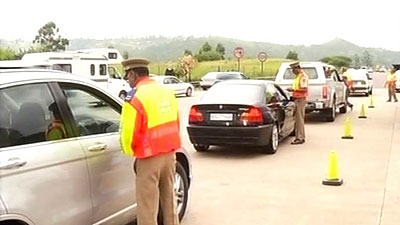
Everything you should know about roadblocks
NIGEL/HEIDELBERG - No person can be arrested or detained at a traffic roadblock for outstanding Administrative Adjudication of Road Traffic Offences (AARTO) fines.
READ THE FULL ARTICLE IN HERAUT
A uniformed police or traffic officer do have the right to stop any vehicle at any time, in which case the driver of the vehicle is obliged to give his name and address. Traffic authorities may not force a person to pay any fine at a roadblock, since none of them are appointed as sheriff of the court and a warrant of execution may only be exercised by the sheriff and not police or traffic officers.
If a driver is therefore detained at a roadblock on the strength of an outstanding AARTO infringement notice, it will constitute unlawful arrest.
The Criminal Procedure Act is clear in stating that an officer that cannot or refuses to provide an appointment certificate on demand, is in violation of the act. In terms of the National Road Traffic Act, a traffic officer does have the authority to demand a driver’s licence, which by law must be kept on the driver’s person or in the vehicle at all relevant times.
When a driver is stopped in a roadblock, traffic authorities often try to create the impression that you have no option but to settle your fines there and then under threat of arrest.
Miranda Whitfield said her husband was fined over two years back in Vorsterskroon, for not having his driver’s licence with him. She was recently pulled over by traffic officers in Boksburg who told her there was a warrant out for her arrest. The traffic officer took her keys and told Miranda she needed to pay R800 immediately.” I don’t have that kind of money,” Miranda told the officer, but in reply she was advised to have someone bring her the money or she would have to sit there until it gets paid. Although Miranda was escorted to the nearest metro police office to pay the fine, she described the incident as a traumatic experience.
The fact is that traffic officers may not arrest or detain a driver for outstanding fines, unless a warrant of arrest had been issued. A driver may be served with a summons to appear in court, as long as the court date on such summons is at least 14 days in advance (Sundays and public holidays excluded), but a driver may not be forced to pay any outstanding fine there and then.
It is important for drivers to know their rights when stopped in a roadblock:
* when you are pulled over and a traffic or police officer wants to arrest you, demand to see a copy of the warrant of arrest. In terms of Section 45 of the Criminal Procedure Act, an arrest on a copy or written communication from a magistrate is legal)
* if traffic authorities are unable to produce a copy of the warrant of arrest, a driver may refuse to go with them and point out that the arrest is illegal;
* if they persist and still want to arrest you despite their inability to produce the warrant document, a driver may inform the officers of his intention to sue them for unlawful arrest. At the time, take down all the details of the arresting officers as well as the date and time;
* thereafter, seek legal advice and lay a charge against the officers as soon as possible.