What can we expect from the 2016 budget speech
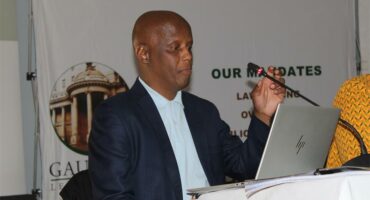
Finance minister Pravin Gordhan will deliver the 2016 budget speech on February 24
WHAT are we to expect?
Should we brace for austerity?
In his is first budget speech on Wednesday since being reinstalled to the job in December, Gordhan, 66, must contend with dwindling revenue as commodity prices plunge, the worst drought in more than a century and slowing economic growth. With debt rising and Standard & Poor’s threatening to cut the nation’s credit rating from BBB-, the lowest investment grade, Gordhan has little room to manoeuvre. At the same time, businesses and investors are looking to him to restore policy confidence after President Jacob Zuma damaged sentiment in December when he replaced his finance minister at the time, Nhlanhla Nene, with a little-known lawmaker.
Zuma backtracked on his decision four days later and re-appointed Gordhan to a post he had held between 2009 and 2014.
Nene had estimated in October that the budget deficit in the year through March 2017 will narrow to 3.3 percent of gross domestic product from a projected 3.8 percent this year. Reducing that shortfall will probably take longer, with the deficit likely to reach 3.5 percent in 2016/17, according to the median of 21 economists’ forecasts compiled by Bloomberg.
Gross debt is set to exceed 50 percent of GDP and could surge as high a 55 percent in 2018/19 without “structural improvements in revenue,” according to Morgan Stanley economist Andrea Masia. The government will need to issue an extra R23 billion ($1.5 billion) in debt, including R8 billion of short-term securities such as Treasury bills, to fund the budget shortfall over the next three years, Masia said in a note.
Gordhan will need to find extra money to fund the government’s pledge of no fee increases for university students and assist farmers whose crops and livestock are threatened by drought. That task is made more difficult by the government’s awarding of above-inflation wage increases to civil servants over the next three years.
The budget probably won’t have much detail on big expenditure projects like the 9,600-megawatt nuclear program or the National Health Insurance plan, according to BNP’s South Africa economist, Jeffrey Schultz. Gordhan may also give more information about possible “non-strategic” state assets that can be sold to raise cash for the government, according to Nedbank.
What do you think the outcome will be?