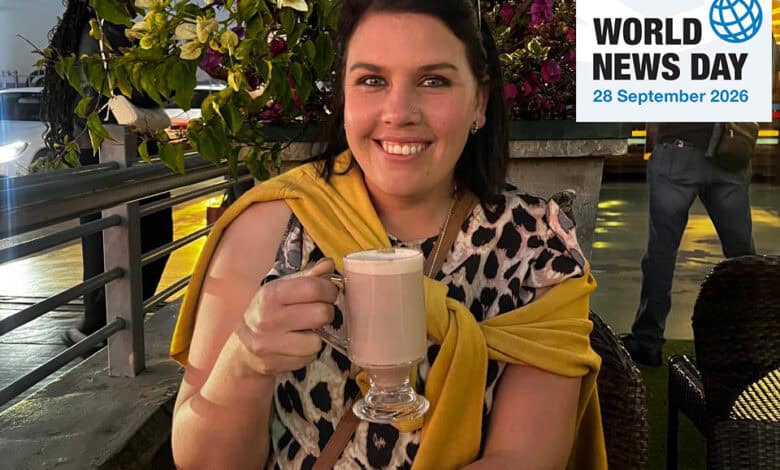
Behind the byline: René Joubert puts people at journalism’s heart
Highvelder journalist René Joubert believes reporting carries a responsibility to the people who entrust journalists with their stories.
Care, rigour and truth
In an era where synthetic content, social media rumours and digital disinformation flood our daily feeds, distinguishing facts from falsehoods has never been more challenging.
For René Joubert, a journalist at Highvelder, that responsibility is also deeply personal.
Having grown up in Ermelo and completed high school at Ermelo Hoërskool, Joubert has a longstanding connection to the community she now reports on.
She began her journalism career in 2017 and has since covered many different sides of life in Ermelo and the surrounding area.
A passion for people and their stories
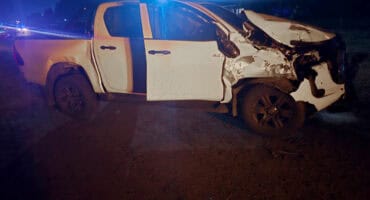
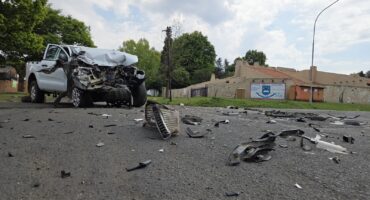
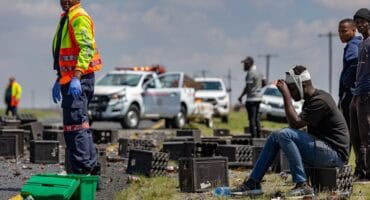
Her work ranges from breaking news and crime reporting to photography, digital stories, features and advertorials. But it is human-interest stories that remain particularly close to her heart.
“I love stories about people. You get to know the person behind the story, and sometimes you become invested in their lives in a way that stays with you long after the story has been published,” says Joubert.
When a story stays with the journalist
Over the years, she has reported on parents desperately seeking help for children with serious medical needs, families facing the devastating loss of a child and moments when an entire community has rallied around a family in crisis.
There have also been stories with very different endings – including witnessing what families have described as a miracle when a child survives and recovers after a horrific accident.
For Joubert, these stories do not simply end when the newspaper is printed or the article appears online.
“Some stories stay with you. You see what a family is going through, you walk alongside them during one of the hardest times of their lives, and then you see how the community responds. That is one of the things that makes community journalism so special.”
Trust brings responsibility
That closeness also brings responsibility.
“When people tell you their story, they are trusting you with something that is often very personal. You have to remember that behind every interview, photograph or headline there is a real person and often an entire family who will live with that story long after everyone else has read it.”
Telling the whole story of a community
At the same time, Joubert believes community journalism must reflect the full reality of the town it serves.
That means celebrating achievements and telling uplifting stories, but also reporting on crime, tragedy and issues affecting residents. In both cases, accuracy remains fundamental.
“Being part of the community does not mean you simply report what people want to hear. You still have to ask questions, check the information you receive and make sure what you publish is fair and accurate. People trust us to tell them what is happening in their town, and we have a responsibility to protect that trust.”
Her work also extends beyond the written word. Photography and digital journalism allow Joubert to document the people, places and moments behind her reporting and take those stories to audiences across different platforms.
Yet the fundamentals remain unchanged: listen, verify, ask questions and tell the story truthfully.
As World News Day 2026 is marked under the global theme ‘Choose Truth’, Highvelder stands as part of the Caxton network of community publications across South Africa, committed to credible local journalism and information grounded in verified facts.
For Joubert, choosing truth also means never losing sight of the people whose lives become the stories readers see.
“Every story belongs to someone before it belongs to the newspaper. They have trusted you to tell it, and you owe it to them – and to your readers – to tell it with care and get it right.”