Highvelder editor Wayne van der Walt puts verification before clicks
For Wayne van der Walt, a journalist’s credibility is built through groundwork, credible sources, verification and accountability.
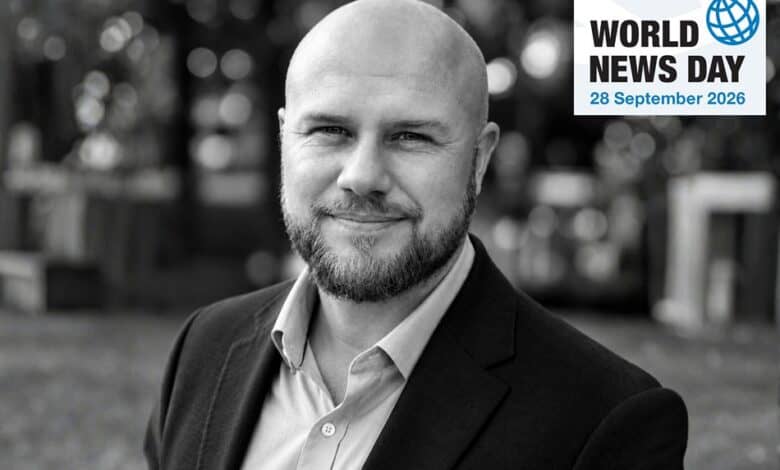
For Highvelder editor Wayne van der Walt, journalism has never been about simply passing information from one place to another.
It is about doing the work to establish what happened, asking the questions that need to be asked and being accountable for what eventually carries his byline.
After almost 17 years in community journalism, that approach has become increasingly important as social media has made information easier than ever to publish, share and repackage – often without the groundwork that produced it in the first place.
Van der Walt became an editor in 2014.
Today, much of his work at Highvelder still happens outside the editor’s office – reporting on local events, following breaking news, investigating community issues and photographing the stories he covers.
Photography as part of the story
Photography was something he learnt along the way. What began as another skill needed for the job eventually became an important part of his journalism and another way of documenting the people, places and events that make up the community.
For Van der Walt, the principles behind both remain much the same: be there, establish what happened and tell the story as accurately as possible.
Investigative reporting also remains an important part of his work.
At the 2026 AVBOB Forum of Community Journalists Excellence Awards, Van der Walt placed second in the Hard News/Investigative Reporting category.
For Van der Walt, however, credibility is not something an award automatically provides.
“Credibility does not come from calling yourself a journalist. You earn it with every story. I want to know who my source is, why that person is in a position to know what they are telling me and whether I can substantiate it. If there are documents, I want to see them. If there is video, I want to know where it came from. If somebody is implicated, they deserve a right of reply. And if I can get to the scene myself, I would rather see it with my own eyes than report somebody else’s version of events.”
Original journalism in the age of social media
That distinction has become increasingly important to him as social media has changed what audiences perceive as local journalism.
Van der Walt says he has watched how pages and publications build substantial followings by largely republishing information already available to the community – from public notices and social media posts to press releases – or by repackaging stories originally reported by other news organisations.
For him, the distinction is not about who is entitled to share community information.
It is about recognising the difference between aggregating information and producing journalism.
“There is nothing wrong with sharing information that is useful to the community, but I struggle when that becomes the bulk of what is presented as journalism. If someone has published something on Facebook and you simply republish it, what have you added? If you receive a press release and publish it word for word, where was the journalism? And if another journalist uncovered a story and you simply repackage what they reported, somebody else did the work that made that story possible.”
The distinction can easily become obscured online, where follower numbers, likes and shares do not necessarily reflect how much original reporting went into producing the content.
“Social media rewards what gets likes and shares, it does not measure the work behind it. A page can have thousands of followers and generate enormous engagement by recycling information that was already available. Meanwhile, original journalism might mean spending hours or days finding the story, travelling to scenes, building sources, asking questions, obtaining documents and repeatedly following up with people who would sometimes prefer not to answer you.”
Adding value beyond what is already available
For Van der Walt, the question ultimately comes down to what a journalist adds to information that is already available.
“There has to be some value added. Journalism should tell the community something it did not already know, establish facts it could not establish for itself, ask questions on its behalf or provide context that was missing. Otherwise, we are not reporting – we are simply redistributing information.”
That distinction also extends to using work produced by other journalists.
The same philosophy applies to information supplied by authorities and organisations.
“A press release tells you what an organisation wants the public to know. Sometimes that information is perfectly newsworthy, but our responsibility is still to look at it critically. Authorities are often very eager to tell you about their successes while being far less enthusiastic when you ask about their failures. If we publish only what lands in our inboxes, we are allowing other people to decide what our communities should know.”
Trust begins with doing the work
Van der Walt believes the responsibility of a community journalist has not changed, even if the environment in which journalists work has.
“We absolutely want to report the good happening in our communities – those stories matter too. But journalism cannot exist only when the story is positive or convenient. Sometimes our job is to celebrate the community, and sometimes it is to ask questions that make people uncomfortable. Both are part of serving the same community.”
As World News Day 2026 is marked under the global theme ‘Choose Truth’, Van der Walt believes the fundamentals remain straightforward: be present, find credible sources, ask questions, verify the answers, provide a right of reply and be accountable for what ultimately carries your byline.
“Trust is not built by telling people you are credible. It is built over years by doing the work, putting your name behind it and being willing to answer for what you publish.”