Farming is her life’s passion
"They must take care of its own people before they consider importing because I'm sure we can produce,"
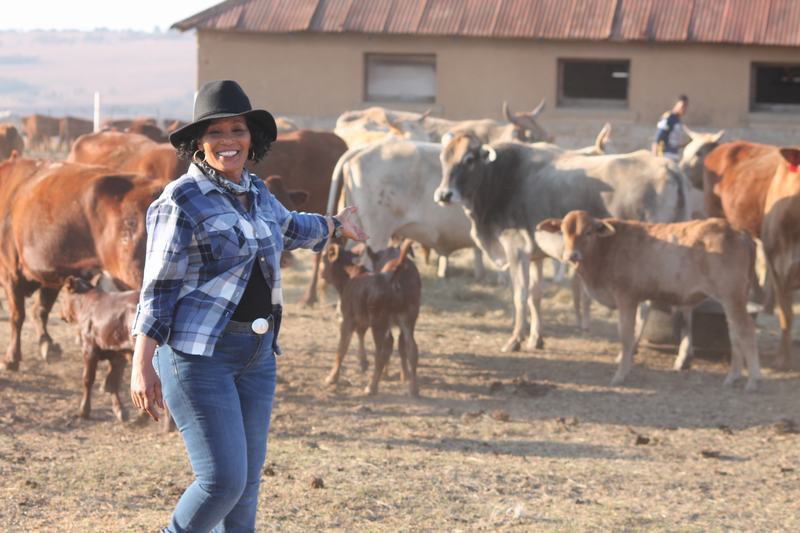
From modeling to films, appearing on billboards and being the first black front office manager in the then Holiday Inn to falling in love with farming describes Ms Dudu Sibaya (59).
She first fell in love with the idea of farming, because of her late father-in-law who used to enjoy sitting outside and watching the sunset.
“He loved to see grass and always said he wished I could have a farm, plant grass and see how much money I could make from grass. That sparked something in my brain,” explained Ms Sibaya.
She said when she bought her farm, Klipfontein near Breyten, in 2008, she brought him to experience what he had always wished for her.
Although she was no longer with his son, she really wanted him to see how well she had done for herself as a result of his encouragement.
She also said after being involved in many business ventures, which included cleaning and security companies, farming has been by far the most challenging and rewarding.
“Realising I wasn’t getting younger, I really wanted to retire on a farm and be my own boss,” she said.
She received one-year training at Buhle Farmers Academy where they taught her what she needed to know about farming. Ms Sibaya jokingly remembered the closest she had ever got to a cow was when there were weddings in her neighbourhood in Soweto. Then, as children, they looked at it from a distance, because they were scared of it.“It’s funny that now I’m able to touch, brush and talk to my cattle compared to when I was just scared of them. I even help out when they give birth and by injecting them,” said Duduzile.
Her desire to learn and doing something new has pushed her to learning more about farming. She now knows how to treat cattle, how to inject them, artificial insemination, how to benefit from the hide, meat and horns, among other things.
Her herd of livestock began with only six animals that grew to 50, but she had to sell them, because she wanted a specific breed. Now her herd has grown to just more than 200.
Ms Sibaya has taken advantage of her 926 ha by also planting mealies, sugar beans and grass, thanks to another farmer who helped her.
When asked about any challenges she faces with farming, she said the locals are abusive mentally and spiritually, as they have tried on several occasions to steal from her.
Her message to fellow female farmers is to be united and take advantage of the available training programmes and financial assistance.
“Hard work, passion and persistence is key in this business, I also want to encourage other women that we can also thrive in this male dominated business,”said Ms Sibaya. She also gave gratitude to the Department of Rural Development and Land Affairs for all the assistance they’ve given to her.
Ms Sibaya also said the government must invest a little bit more into this business of women in farming and the government must give more farmers to women as we also have a shortage in commercial female farmers.
Government must also assist us with markets, instead of allowing more chickens into the country, help them breed more chickens for an example.
“They must take care of its own people before they consider importing because I’m sure we can produce,” said Ms Sibaya.