GO!Durban stations may not accommodate informal traders
GO!Durban stations may not cater for informal traders, but the public transport project is expected to create new opportunities for SMMEs.
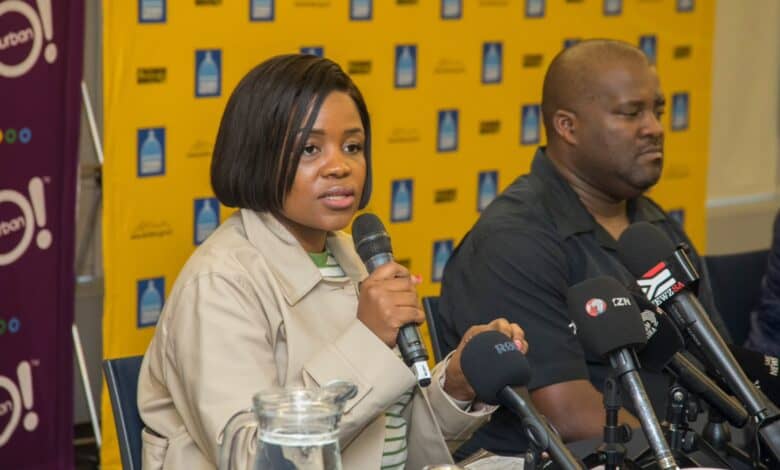
THE design of the GO!Durban stations may not accommodate informal traders commonly known as hawkers, however, once fully functional, the project will provide opportunities to small, medium and micro enterprises (SMMEs).
This is according to the head of the eThekwini Transport Authority (ETA), Neli Zama, who, on Sunday, September 6, during a media briefing at the ICC, responded to a question on whether opportunities will be created for informal traders once the long-awaited project is launched.
In December, a launch and commencement of the C3 Corridor between Bridge City and Pinetown of the GO!Durban service is expected.
The remaining Phase One services — C1, C2, C9 and the Inner-City Distribution Service (ICDS) — will be introduced from the first quarter of 2027, further expanding the network and extending its reach across eThekwini.
The City will also from December 2026 to March 2027, embark on a process of integrating existing subsidised bus services into the GO!Durban network.
On opportunities for informal traders, Zama said the limitations are a result of the design of the stations.
“But what we will have are smaller kiosks just to provide convenience and services that commuters will require to buy a few things as they are travelling,” explained Zama.
However, once fully functional, added Zama, opportunities will be created for SMMEs, which will include, among others, parking for buses and their servicing.
Also read: Bus and taxi industries green light GO!Durban
Outlining the City’s roadmap on the project during the media briefing, eThekwini Mayor Cyril Xaba said over and above the project being a vehicle for “economic transformation” for the public transport industry by formalising it and “integrating affected minibus taxi and bus operators into the formal integrated public transport network and creating sustainable opportunities for operators to participate in the system”, it has created other opportunities.
Xaba said the project, which has cost the City an accumulative R9.7b, has delivered significant employment and economic transformation.
“To date, 22 967 job opportunities have been created, including 11 767 opportunities for youth, 3 677 for women and 231 for people with disabilities. In addition, 25 unemployed graduates were employed.
“The programme has also increased opportunities for historically disadvantaged businesses and communities through local procurement, subcontracting, enterprise development, skills development, employment and community investment.
“The results include approximately R1.2b made available to subcontractors, R372m invested in enterprise development, and R526m spent on 155 small businesses.
“While the implementation of the programme has suffered delays, it has delivered tangible results in the form of infrastructure, systems and economic empowerment outcomes,” said Xaba.
The project has received the resounding support of the bus and taxi industries in eThekwini.
For more from the Highway Mail, follow us on Facebook , X and Instagram. You can also check out our videos on our YouTube channel or follow us on TikTok.
Click to subscribe to our newsletter here