
Plant bee-friendly plants this spring
The week 22 to 29 September 2014 has been declared National Honeybee Foraging Week, to draw public attention to the needs of these important little insects.
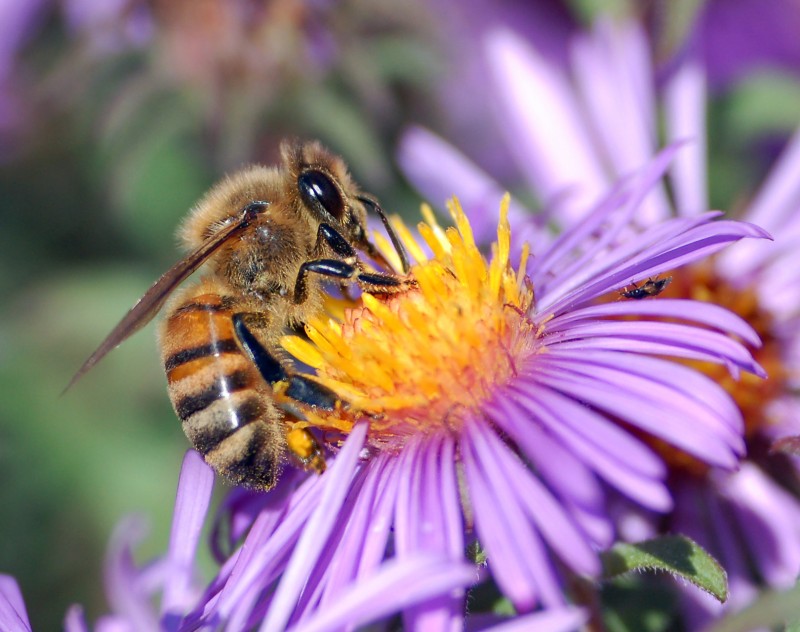
NEXT week the country will be looking forward to a public holiday as we all take time to appreciate and reflect on our heritage.
Heritage Day is not only about our culture and celebrating our diversity, it is also about our environment and the creatures, big and small, that live in it.
A group of concerned organisations have called on the public to celebrate Heritage Day 2014 by planting honeybee-friendly plants, in the first National Honeybee Foraging Week from 22 to 29 September 2014.
It is a sobering thought that the future of humanity depends, to a large extent, on an insect so small that most of us give little thought to its welfare.
According to the South African National Biodiversity Institute (SANBI), a study conducted in 200 countries found that 75.6 per cent of the world’s leading food crops are pollinated by animals, the other 24.4 per cent are self pollinating or are pollinated by wind.
In South Africa 50 important crops need insect pollination and farmers collaborate with bee keepers to station hives on farms during the few weeks of flowering to supply the concentration of bees needed for good pollination.
When the flowering is over, honeybees move into gardens, onto farms and along roadsides in search of pollen (protein) and nectar (carbohydrates) from flowering plants. But honeybees are under threat from diminishing habitat and foraging resources. Pests and diseases also take their toll as does the misuse of pesticides and insecticides in agriculture.
Supported by the South African Bee Industry Organisation (SABIO), South African Green Industries Council (SAGIC), South African Nursery Association (SANA), Garden Centre Association (GCA) as well as honeybee scientists and concerned communities across the country, the new celebration aims to showcase how every South African can play their part in ensuring the continued survival of a healthy honeybee population.
Start this spring by planting a variety of flowering plants in your garden to provide food for honeybees. Choose plants that flower at different times throughout the year to provide honeybees with a continuous supply of pollen and nectar.
South African beekeepers need access to a variety of flowering plants to provide forage or food for their colonies at different times of the year. A recent study undertaken by SANBI revealed that eucalyptus trees, crops such as sunflower or canola, indigenous trees and shrubs, flowering plants in suburban gardens and even roadside wildflowers are critically important for honeybees to build strong and healthy colonies.
Gardeners should ‘think bee-friendly’ when seeking out new plants for the garden; and farmers must use honeybee-friendly plants when restoring dam walls, crop borders or road verges.
Urban greening programmes, road verges, school gardens and city parks all play a vital role in increasing the amount of forage available for South Africa’s honeybees. Now is the time to make decisions with honeybees in mind.
Indigenous plants recommended by beekeepers for KwaZulu-Natal include the trees white pear (Apodytes dimidiata), wild pomegranate (Burchellia bubalina), Erythrina spp., Natal bottlebrush (Greyia spp.), the tree fuchsia (Halleria lucida), forest elder (Nuxia floribunda), wild date palm (Phoenix reclinata) and water berry (Syzygium cordatum).
Shrubs and groundcovers include agapanthus (Agapanthus praecox), asparagus fern, indigenous bush violets (Barleria spp.), clivia, Euryops daisy, kingfisher daisy (Felicia spp.), carpet geranium (Geranium incanum), wild banana (Strelitzia nicolai), and bride’s bush (Pavetta spp.). Aloes and vygies also are valuable nectar sources.
In a herb garden plant borage, chives, fennel, mint, marjoram, oregano, rosemary and thyme.