Concerned groups creates action plan for Palmiet
Seven to ten serious sewage and industrial pollution incidents are observed monthly by the Palmiet River Watch
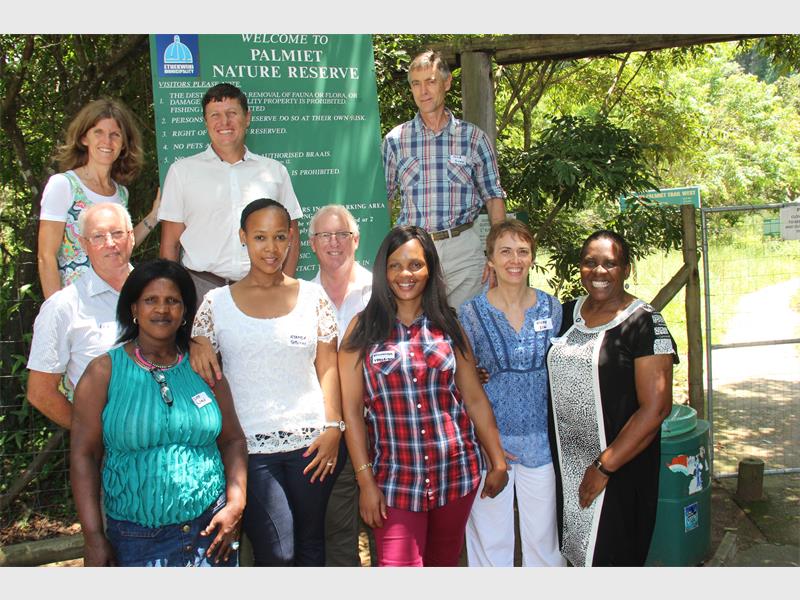
WORKING in groups at the Palmiet Nature Reserve, 45 researchers, officials, residents and business representatives helped formulate an action plan for the Palmiet Rehabilitation Project with Dr Sean O’Donoghue, manager of the Climate Protection Branch, in alignment with the recent COP21 Paris Agreement and eThekwini Municipality’s commitment to implementing climate change adaptation measures.
Described by environmental campaigner, Lee D’Eathe, as ‘a singular opportunity to voice our concerns’, he reported that the recent river health assessment undertaken by the Palmiet River Watch confirmed that the environment is seriously impaired.
“The poor river health comes as no surprise as the corrective recommendations made in the State of River Reports in 2002, 2007 and 2010 have not been implemented.”
D’Eathe revealed that seven to ten serious sewage and industrial pollution incidents are observed monthly by the Palmiet River Watch.
“Furthermore, the internet maps showing much of the Palmiet River having ‘acceptable water quality’ are deceiving, since the chemical analysis methods they use have little regard for the environment. Animal and plants have been wiped out, including the Palmiet plant after which the river was named.
“Constructed close to and in water courses, sewer pumps stations and sewer lines fail regularly and pour raw sewage directly into streams and the Palmiet River,” he said.
This is caused by vandalism and theft, illegal disposal of liquid and solid waste. A toxic mix is discharge directly into water courses, consisting of industrial trade effluent, household waste, metal compounds, herbicides, pesticides, medication, hormones, pathogens, detergents, plastics and disposable personal items.
Cathy Sutherland from the School of Development Studies had the ecological infrastructure interventions, proposed by the city for the Quarry Road settlement, put on hold. Reconsideration is required in a holistic manner across the whole catchment in order to restore the vital goods and services that functioning natural and artificial ecological systems need to provide.
Attendees described how the Palmiet River had been raging violently after the previous week’s rain, causing river-bed and river-bank erosion, the loss of belongings of people living under bridges and damage to illegally erected shacks.
“With climate change, collecting run-off and channelling it to the nearest watercourse has devastating environmental consequences. Run-off should be managed from its source, requiring sustainable design and maintenance, not just with future projects but retrospectively throughout the storm-water catchment basin.
“A lack of enforcement of environmental legislation and by-laws contributes to ongoing environmental degradation,” added D’Eathe.
A recommendation was made from the floor to resolve this with a small task team and a detective assigned by SAPS to receive and effectively process cases of environmental damage and pollution.
Input from the growing number of contributors with a vested interest has raised expectations for project funding, and a commitment to delivery, to improve water quality and supply, along with an end to river water pollution, river banks collapsing, alien invasive overgrowth, waste being dumped into water courses and crime along with an effective governance model.