Know your alien invasive plant: Lantana
Hillcrest Conservancy will produce weekly articles regarding the various alien invasive plant species in the Highway area to help the community identify and eliminate them.
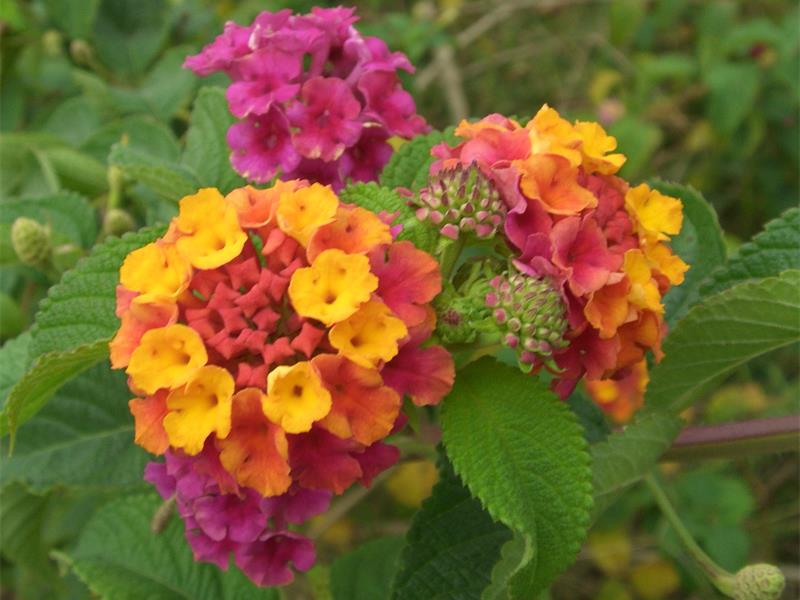
THIS week, Hillcrest Conservancy takes a look at the Lantana, as part of its series of articles on alien invasive plants, to help the community to identify and eradicate them from their gardens.
Every garden, at some time or another has had or will have one of these plants. The Lantana camara (Verbenaceae) is also known as the bird’s brandy, cherry pie, tick-berry, gewone lantana or gomdagga (Afrikaans), sumba (Shona); ubukhwebezane (isiZulu) and ubutywala bentaka (isiXhosa).
The Lantana is a spreading shrub or untidy scrambler with four-angled stems and often with thorns growing up to 2m or higher. Stems usually covered with short, stiff hairs and recurved thorns. It has dark green, rough, hairy leaves which are paler below and smell strongly when crushed. It has pink, red, crimson, orange, yellow or white flowers in compact, flat-topped heads, often with several colours in one head, which appear from September to April. The fruits are glossy green fruits which turn purplish-black and are poisonous.
The Lantana originates from central and South America. Its invasive status in this country is a CARA 2002 – Category 1 NEMBA – Category 1b and is mostly a problem in the Western Cape, Eastern Cape, KwaZulu-Natal, Mpumalanga, Limpopo and North West provinces.
Through seed dispersal, the Lantana competes with and replaces indigenous species. Allelopathic suppression of indigenous species interrupts regeneration processes and reduces biodiversity of natural ecosystems. Dense stands in plantations obstruct access and utilization. The Lantana is poisonous to humans and animals and responsible for livestock mortalities amounting to millions of Rands every year in South Africa. It also reduces the grazing potential of the land.
The alien invasive plant is used as a garden ornament and for hedging. But instead of a Lantana, you can plant a Natal bauhinia (Bauhinia natalensis), September bush (Polygala myrtifolia), plumbago (Plumbago auriculata), pink sage (Orthosiphon labiatus) or wild pomegranate (Burchellia bubalina).
Contact Ian Pattrick on 079 909 5458 or Hillcrest Conservancy chairman, George Victor, on 073 901 3902 or e-mail georgevic@telkomsa.net