
Plant indigenous – the beautiful coral tree
Lindsay Gray, on behalf of Hillcrest Conservancy, will produce weekly articles regarding the various indigenous plants you can plant in your garden.
Lindsay Gray, on behalf of Hillcrest Conservancy, will produce weekly articles regarding the various indigenous plants you can plant in your garden.
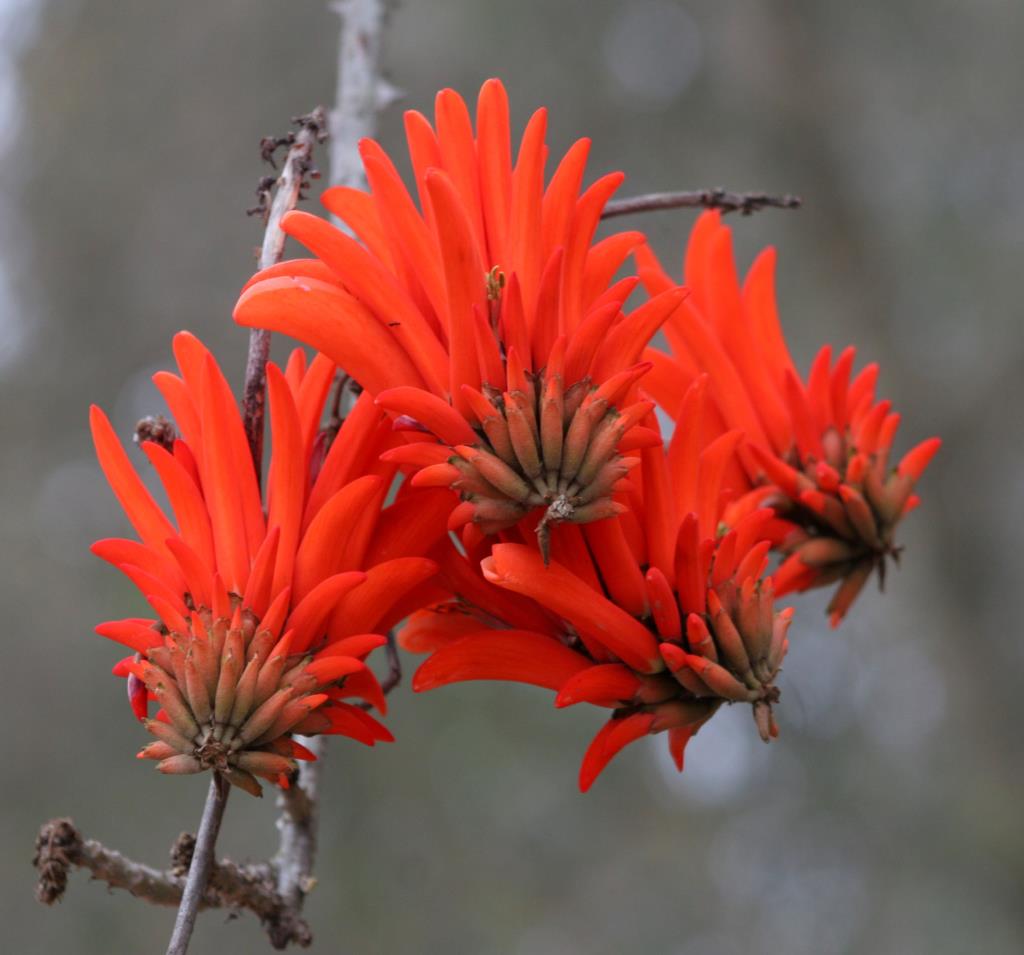
Erythrina lysistemon, commonly known as the coral tree, is brightening up our suburbs with its scarlet-red flowers as we head into spring.
Known as the kanniedood in Afrikaans, umsinsi in Zulu and umsintsi in Xhosa, this medium to large tree has great cultural and medicinal significance. It is regarded as a royal tree and is planted around the graves of the Zulu chiefs. The tree is also used as a living fence around kraals and homesteads. It is said that, when the flowers appear, it signals to the farmers that it is time to start planting summer crops.
Erythrina lysistemon is a deciduous tree, losing all or most of its leaves in winter, depending on the severity of the cold. The showy, scarlet-red flowers open in August on bare branches or as the new leaves are just appearing, creating a spectacular show against a vivid blue sky. The flowers usually last until mid-September and are followed by long seed pods, bearing delicate shiny red seeds.
This tree is of great ecological importance in natural areas and in our gardens. The flowers produce an abundance of nectar which is enjoyed by insects and birds. The flower buds and leaves are a great food source for vervet monkeys, baboons and buck. In natural areas, elephant, rhino and baboons feed off the roots.
ALSO READ: Plant indigenous trees – Plectranthus genus
Erythrina lysistemon occurs in a wide range of altitudes and habitats throughout South Africa and north beyond its borders. It is fast-growing and undemanding, however it requires a well-draining soil and enjoys a decent summer rainfall. I have two of these trees, one of which seldom flowers well. The previous summer’s late rainfall has resulted in spectacular blooms on both of my trees this spring!
It is easy to propagate the tree from seed, cuttings and truncheons. Cuttings should be taken in late spring/early summer whereas a truncheon (branch or section of a mature tree) should be taken in late winter/early spring. Allow the cut end of the truncheon to dry for a day or two and then plant it into a pot or directly into its new home, and kept the young tree moist through the growing season.
This species is occasionally confused with the coastal coral tree, Erythrina caffra, that occurs in the coastal and riverine fringe forests along the eastern seaboard. The flowers of E. caffra are more salmon-orange than red, with a cream-flowering form occasionally seen, and the formation of the flower also varies.
A word of warning about the root system of the coral tree, it can lift paving and other hard surfaces, so take care not to plant the tree too close to the house or any paved or asphalted areas.
If you don’t have the space for Erythrina lysistemon, then a wonderful alternative is Erythrina humeana, or the dwarf coral tree, that produces the same showy scarlet-red flowers on long black stalks, in summer. These roots are not aggressive.

Do you want to receive alerts regarding this and other Highway community news via WhatsApp? Send us a WhatsApp message (not an sms) with your name and surname (ONLY) to 060 532 5409.
You can also join the conversation on Facebook, Twitter and Instagram.
PLEASE NOTE: If you have signed up for our news alerts you need to save the Highway Mail WhatsApp number as a contact to your phone, otherwise you will not receive our alerts.