
Life Westville Hospital reaches milestone with 250th robotic joint replacement procedure
“We are excited to remain at the forefront of technology in the joint replacement field and will always strive to give patients the best outcomes possible,” concluded Dr Mahomed.
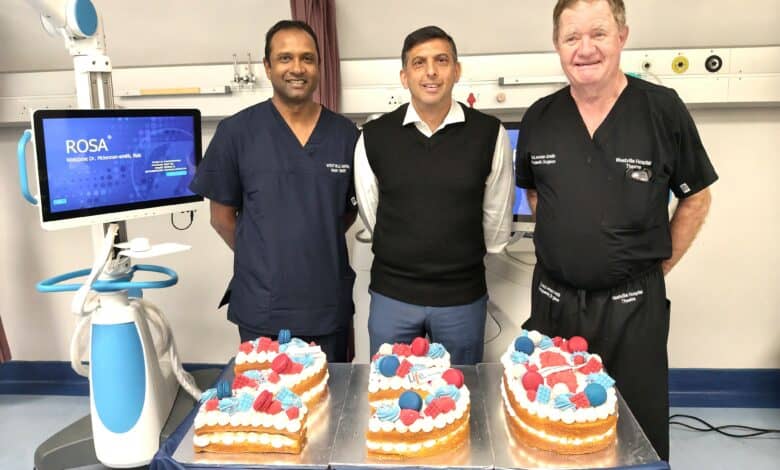
Life Westville Hospital has completed its 250th robotic joint replacement procedure, marking a significant achievement in the use of advanced orthopaedic technology. The milestone highlights the growing role of robotic-assisted surgery in improving precision, alignment and patient outcomes for people requiring joint replacement treatment.
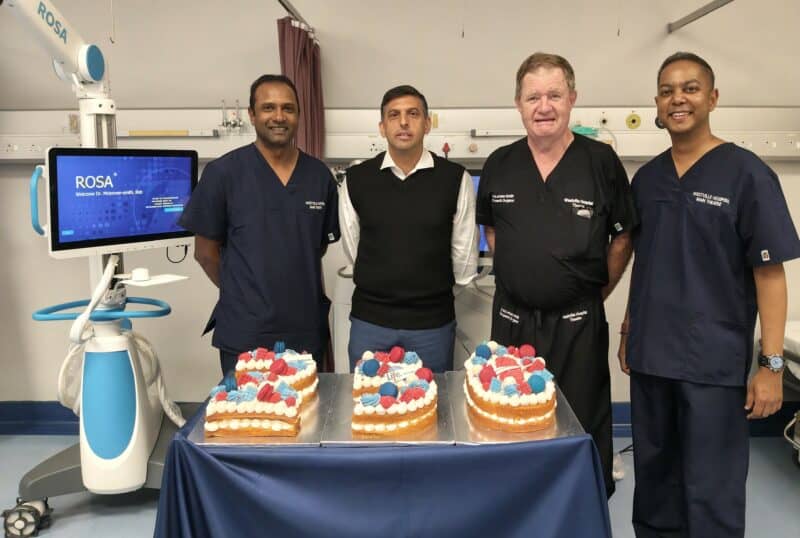
A landmark operation recently took place at Life Westville Hospital when orthopaedic specialists Dr Rob McLennan-Smith and Dr Haroun Mahomed completed the facility’s 250th robotic-assisted joint replacement surgery. Together with Dr Leon Paul Moodley, the team has helped drive the adoption of cutting-edge surgical innovation aimed at enhancing accuracy, balancing and long-term results for patients undergoing joint reconstruction.
Robotic joint replacement explained
The hospital sheds more light on robotic joint replacement by answering some frequently asked questions.
Who is a suitable candidate for robotic knee replacement surgery, and what symptoms indicate it may be time to consider the procedure?
All patients requiring knee replacement surgery are candidates for robotic knee surgery. These are usually people with knee osteoarthritis or rheumatoid arthritis, who can no longer cope with their pain or daily activities. Pain, stiffness, and poor mobility are the reasons patients struggle with their knee joints. If X-rays confirm arthritis, then these patients can be helped with robotic knee replacement.
How does robotic-assisted knee replacement differ from conventional surgery, and what benefits can patients realistically expect?
Every individual has a different size and shape of their bones and joints. By using the robot, we can better match the appropriate position and alignment of the knee for each patient. The surgical cut is very similar to non-robotic knee surgery. We then place sensors and scan the patient’s bone shape, alignment, and ligament tension. This gives us a lot of personalised information which the robot analyses and assists in placing the implants accurately. An experienced surgeon is still vital in ensuring that the robot contributes correctly without damaging muscle and soft tissues.
What does recovery typically involve, including hospital stay, rehabilitation and the timeframe for returning to daily activities?
Recovery from surgery has improved greatly over the last few years. We have improved pain control and anaesthetics so that most patients will walk on the day of surgery and be ready to leave hospital within one to two days. They use crutches for a few weeks until muscle recovery is good. Most patients are driving and back to work in six weeks.
We use a combination of in person physiotherapy and an app with exercises and videos to guide patients through their recovery before and after surgery. This allows the patient to provide feedback to us and send questions and videos of their progress.
What factors contribute to the long-term success of a knee replacement, and how can patients maximise the lifespan of their new joint?
Knee replacements should give patients pain free and comfortable movement for between 15 and 20 years. This depends on choosing the correct operation for each patient, doing the surgery well, and numerous patient factors including activity level, weight, and muscle strength. If problems arise repeating knee replacement surgery is possible and something the Orthopaedic Surgeons at Life Westville Hospital can help with.