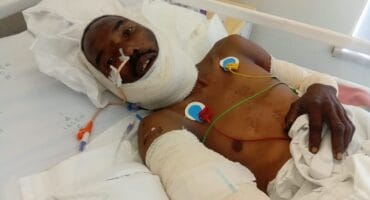
Anti-migration’s devastating impact on South Africa’s public health
Doctors Without Borders says migrants are still scared to visit public healthcare facilities following anti-migrant protests in South Africa.

THE violence meted out against undocumented, and at times documented, migrants has had a devastating impact on South Africa’s healthcare services and public health.
This is according to the organisation Doctors Without Border (MSF) which on Wednesday, November 18, briefed the media on how anti-migration violence and negative sentiment impacts people in the UK and SA.
The briefing was conducted by a panel from SA and the UK, as well as a speaker from Section27, the law clinic’s head of health rights programme, Khanyisa Mapipa.
Mapipa said the result of the actions during 2025 of anti-migrant groups barring people from accessing healthcare facilities led to many defaulting on their medication, which includes chronic illness such as hypertension (BP) and HIV, as well as for TB.
She said these actions had not only impacted individuals “but they also threaten the public health of the country because these people live within our communities”.
Additionally, in the midst of the chaos leading to the June 30, 2026 deadline, which had been set by anti-migrant groups for undocumented persons to leave SA, MSF, the Treatment Action Campaign (TAC) and other stakeholders had to create an emergency parallel health system for people to have access to medication.
“So that we don’t experience an epidemic or an outbreak in South Africa,” said Mapipa.
This, she added, strained the country’s public health sector, and the government which had to make provisions to cater for the people serviced by the parallel system.
Also read: Sophisticated criminal networks behind human trafficking in SA
Director of advocacy and analysis for MSF Southern Africa, Claire Waterhouse, said despite a decrease in 2026 in the number of physical blockages to public healthcare facilities, many migrant patients are still scared to visit the facilities because they had been traumatised by the rampant anti-migrant rhetoric and violence.
Waterhouse added that subtle barriers remain for migrants to have access to public healthcare services.
MSF, said Waterhouse, had observed disturbing instances in some health facilities where healthcare workers, security guards and communities neighbouring these facilities, were involved in deterring migrants from accessing healthcare services.
Mapipa said it has been observed that even though people have a better understanding of their rights, at times they were barred from public healthcare facilities because of internalised xenophobia perpetuated by officials.
Mapipa added that in such cases, there should be consequences faced by those officials.
Waterhouse said though migrants are currently not being actively blocked from accessing healthcare facilities, members of this community remain worried to do so and that it will take a long time to rebuild trust.
“We obviously want people to access healthcare. We hope that the situation will improve and continue to improve,” said Waterhouse.
For more from the Highway Mail, follow us on Facebook , X and Instagram. You can also check out our videos on our YouTube channel or follow us on TikTok.
Click to subscribe to our newsletter here