
Chirping with Kloof Conservancy – Lesser Honeyguide
Find out more about this feathered Highway resident below.
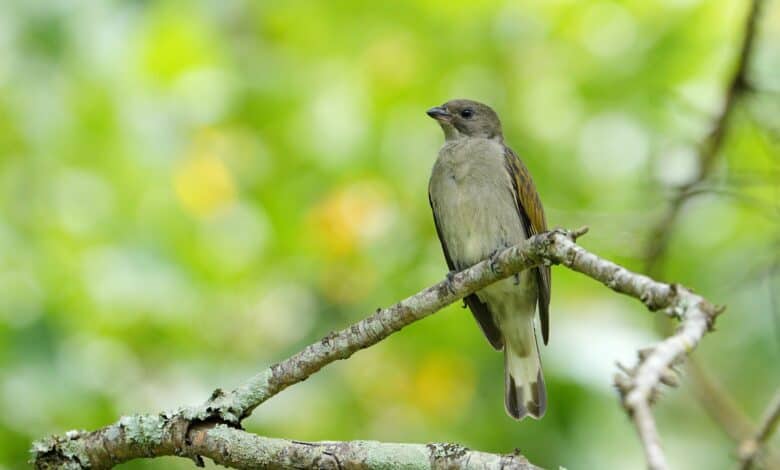
THIS week’s featured bird draws mixed feeling from bird lovers in that it is famous for its skill in finding beeswax but is also notorious for leaving the rearing of its young to other birds!
Also read: Chirping with Kloof Conservancy – Cardinal Woodpecker
Description
A rather non-descript small mainly olive-grey bird at 15cm in length and 28g in weight. Males and females are identical in colouration and appearance. A distinguishing feature is a dark “malar” stripe on its cheek.
Distribution
The Lesser Honeyguide is found throughout Southern African except for the Northern Cape.
Habitat
This species is at home in forested areas including our riverine forests and plantations. It can also be often spotted in well treed gardens.
Feeding
The Lesser Honeyguide is primarily an insectivore, feeding off ants, caterpillars and bees. It is well-known for feeding on beeswax which requires them to host a unique bacterium which is needed to break down the wax.
Breeding
This species is a brood parasite leaving its eggs primarily in the nests of various Barbet species. The young chicks aggressively kill any host bird chicks with a very sharp beak as soon as they hatch. These leaves the Lesser Honeyguide chicks to receive all the food from their unsuspecting host parents.
Predators and threats
This species is listed as Least Concern by the International Union for Conservation of Nature and the population numbers appear to be stable.
Local information
You are most likely to find the Lesser Honeyguide in one of our many riverine forests where there is a healthy bee population.
Interesting facts
Honeyguides are well-known for “guiding” humans and badgers to beehives but the Lesser Honeyguide does not usually do this as it seeks dried out hives where it feeds on the beeswax.
For more from the Highway Mail, follow us on Facebook , X and Instagram. You can also check out our videos on our YouTube channel or follow us on TikTok.
Click to subscribe to our newsletter here