
Glasses versus contact lenses
Contact lenses sit directly on your eye, providing a wider field of view and causing less visual distortions and obstructions than glasses.
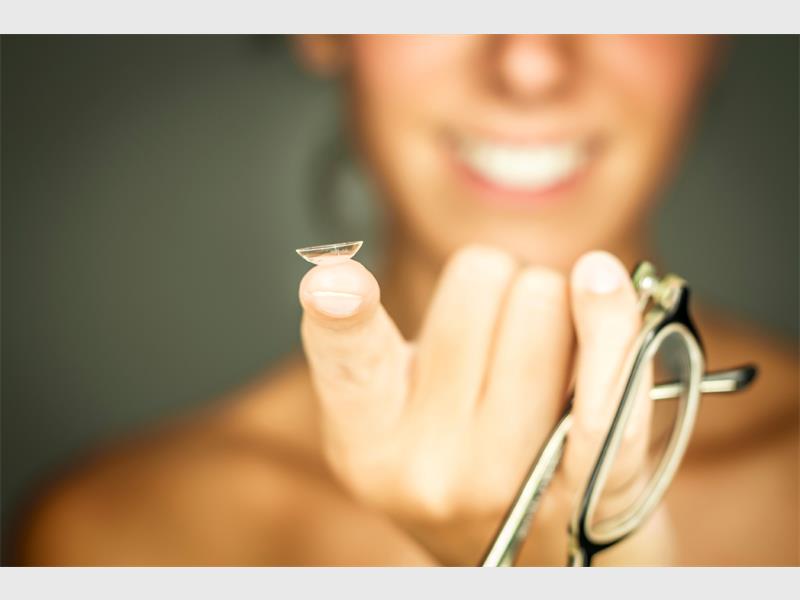
Your appearance, personal taste and lifestyle are your best guide to choosing glasses or contact lenses. Your eye care professional can best recommend what is suitable for you.
Thanks to advances in contact lens technology, most people these days can wear contacts successfully, even if they prefer to wear glasses as their primary form of vision correction. So the decision to wear either contacts or glasses, and when to wear them, usually is a matter of personal preference.
Keep in mind, though, that if you wear contact lenses full-time, you also should have an up-to-date pair of glasses in case you need to stop wearing contacts due to an eye infection or irritation, or you simply want to give your eyes a break.
Before deciding whether to use eyeglasses or contact lenses, we should keep in mind that one is not necessarily better than the other. Each of them has advantages and disadvantages when it comes to vision, ease of use, and eye health.
Glasses require very little cleaning and maintenance and you don’t need to touch your eyes to wear them, therefore decreasing the risk of eye infections. If you have dry or sensitive eyes, glasses won’t make the situation worse.
Any prescription can be put into a pair of glasses while contact lens prescription can be limited when it comes to astigmatic powers. Glasses offer some protection from environmental factors such as wind and dust and they make a great fashion statement.
Frames are fashionable and can speak volumes about your personality and style. Glasses are also cheaper than contact lenses in the long run since they don’t need to be replaced as often.
Contact lenses sit directly on your eye, providing a wider field of view and causing less visual distortions and obstructions than glasses. You can participate in sports and outdoor activities without fear of the glasses falling off, breaking or getting in the way.
Contact lenses are generally not affected by the elements; your vision can be obstructed or blurred by precipitation collecting on your eyeglass lenses or when they fog up in cold weather. Contact lenses won’t clash with what you’re wearing and you can even change the colour of your eyes with colour contact lenses.
There are some things you should keep in mind before deciding on contact lenses. Contact lenses, with the exception of daily disposable lenses, require regular cleaning and disinfection. Although this process only takes a few minutes, a lot of people do not bother doing it.
The most common eye problems encountered by contact lens users are excess tearing, itching, burning, sensitivity to light, dryness and occasional blurred or distorted vision. These conditions may be worsened by improper care or cleaning of contact lenses and increase the risk of developing an eye infection.
- Information sponsored by ModernEyes Mall Of The South.