Tax attack overshadows budget positives
The budget speech generated over 20 000 online mentions, which had the potential to be viewed by an audience of just over 200 million.
The public used social media to launch an attack on tax, instead of praising the positives of the speech.
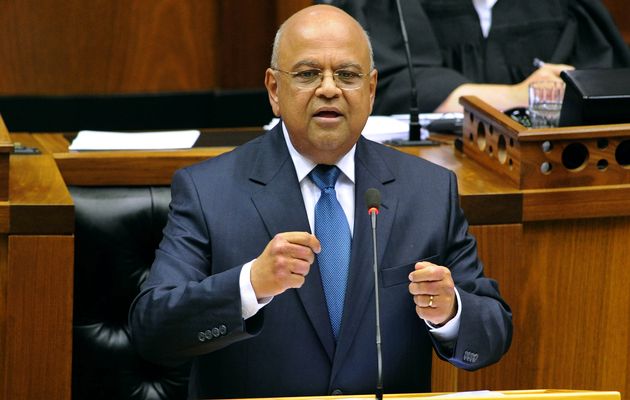
Following Finance Minister Pravin Gordhan’s budget speech on Wednesday 26 February, public sentiment seems stuck on the serious topics of tax relief and corruption, which overshadowed the talk’s positive revelations.
BrandsEye, a leading local online monitoring and insights company, tracked the themes on twitter that relate to the budget speech. The company catalogued all online conversation from build-up to conclusion, up to two hours after the event.
JP Kloppers, CEO of BrandsEye says, “The fact that most members of the twitter community feel that Gordhan was a better public speaker than Zuma, highlights once again the negative sentiment online towards our president. It is going to be fascinating to see how political parties use this opportunity to strike a chord with the South African population in the upcoming national elections this year.
“The budget speech generated over 20 000 online mentions, which had the potential to be viewed by an audience of just over 200 million.
“Interestingly, the State of the Nation Address (Sona) saw only 100 million more opportunities to view its online conversation a couple of weeks ago, yet saw three times as much online volume as the budget speech, a testament to the credibility of online authors contributing to the budget speech conversation.”
BrandsEye’s analysis revealed that words such as ‘Nkandla’ and ‘Lol’ peppered the conversation.
A tweet by civilian Viwe Ayanda Keswa said, “LOL @The_New_Age: The child support grant will increase from R300 to R310 a month in April, and R320 in October: Gordhan #Budget2014.”
Kloppers says, “Tweets exposed the public’s concerns over supporting the lavish lifestyles of politicians, and consumers found little relief in the fact that while income tax would remain steady, fuel levies would increase and e-tolls would only add to this pressure.
@Sir_John_II, a member of the public, tweeted, “Hol’up!! So you’re increasing the fuel levy and you still want me to pay for #ETolls?!?”
One tweet by Chester Messing, a popular political satirist act stated, “Budget speech time. Budget cuts should come in small, medium and Nkandla.”
The characters tweet created over 90 000 opportunities to see (OTS) the message. This clearly shows how the Sona’s consumer sentiment towards Zuma carried through into the Budget Speech.
During the Sona, the DA’s leader, Helen Zille, in reference to Nkandla, tweeted “Oh, that’s the real address they are talking about! RT@JaquesMaree73: #Zuma’s Estate of the Nation. #SONA2014.”
Top companies such as Absa, Deloitte, KPMG, Old Mutual and Sage Pastel Payroll, took the opportunity to engage directly with the everyday man and woman on twitter by offering key insights and rewards for participating in the online discussion.
There was an optimistic reception to the tax breaks afforded to small and medium enterprises (SMEs). The general consensus among most analysts on this topic was that SMEs would have a great role to play in helping to aid economic development and stabilise the economy.
Kloppers says, “While the online conversation offers us a small peak into the hearts and minds of South Africans, this election year perhaps will present a dynamic political environment for us all.
“The absence of comment from political influencers within the first few hours after the budget speech is potentially an opportunity lost.”