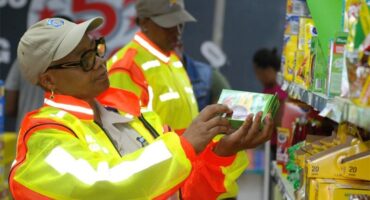

North West University hosted a Land Reform and Food Security conference on the West Rand recently .
Amanda de Lange, West Rand Regional Leader and Mogale City Councillor for the Freedom Front Plus says the irreconcilability of the two topics in one sentence in South Africa was evident.
“The ANC’s 50 per cent land reform share scheme and food security in South Africa make for two very uneasy bed partners.”
She says it was clear throughout the two-day conference that the ANC’s use of land reform as political compensation without an educated consideration of the long-term consequences it will have on the country’s agricultural and economical growth is irresponsible and ill-advised.
According to Andrew Makenete, one of South Africa’s foremost agricultural economists and agribusiness experts, it is a great concern that government – the writer of legislation and receiver of taxes – is in possession of large funds supposed to be allocated to agriculture in South Africa.
Yet, the bottom of the food chain, which is the poor and hungry, does not get the benefit of these funds or legislation.
“This is a clear sign that the system is not working,” he says.
The fact that in most cases successful commercial farms are allocated to unqualified farmers or communities, resulting in huge economical losses for the agri sector when these farms later are left in a derelict state, prompts the question why government does not invest in farming infrastructure in rural areas such as proper roads, mills, silos, railway transport, and so forth where most of the hungry and needy live.
Most of South Africa’s rural areas are also the most fertile farming land, which means it would be more beneficial to rural farmers where up to 22 million people are living, rather than handing out established commercial farms for which they do not have the knowledge to farm successfully without experience, says Makenete.
“It also would make business sense if Government re-allocated abandoned farms before acquiring and distributing new ones. This would prevent large hectares of prime arable land in the possession of Government lying dormant and unutilised to the benefit of the hungry, says De Lange.
Prof Nic Olivier, director of the Southern African Development Community (SADC) Centre for Land-Related, Regional and Developmental Law and Policy (CLRDP), says that only 20 per cent of South Africa’s population buys food from shops where health regulations are applied. The rest of the population, 80 per cent, source food from informal and unregulated sources that in many cases pose a serious health threat to consumers.
Dr Blessing Karumbidza, an environmental and social-economic justice activist points out that one does not have to be the owner of a farm to be a successful farmer and provider of food to communities.
In many cases farmers do not want the extra burden of paying monthly instalments and land taxes on the farms.
According to Dr Pieter Groenewald from the Freedom Front Plus, the ANC‘s threats of a 50 per cent share scheme on farms are thoughtless and damaging to South Africa’s agricultural sector.
“Farms are run like businesses these days and no successful business owner anywhere will relinquish 50 per cent of his or her business readily.”