Blood saved her life
Von Willebrand factor is a very common blood disease and is a deficiency of proteins that produces platelets in the blood.
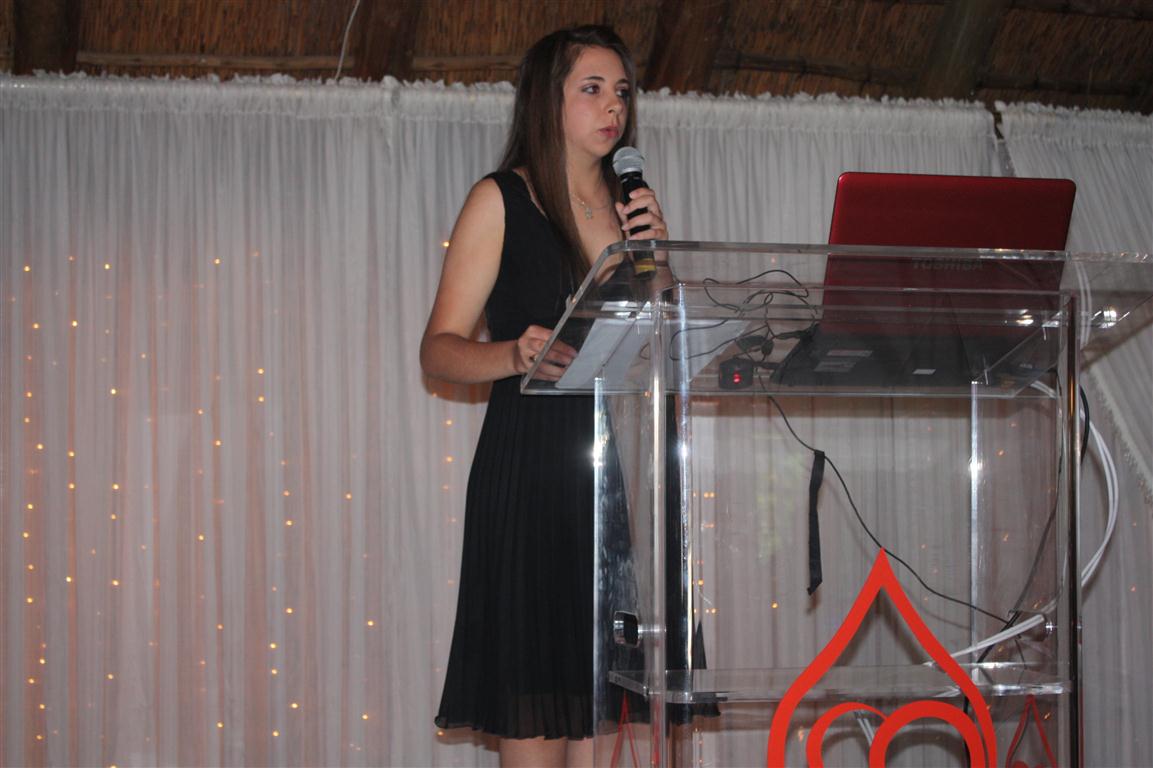
From a young age, Elzanre Venter always wanted to donate blood.
The idea that she might be the reason someone else has another chance of living was motivation enough for her.
“Since the first day of high school, I gradually got more and more excited to get to Grade 10 and turn 16, just to donate blood. I knew it would be possible because my health, I thought, was good,” said the 18-year-old pupil from Hoërskool Noordheuwel.
Unfortunately a tragic misfortune destroyed her chances of ever being able to donate blood. A week before she turned 15, she experienced a sharp pain in her abdomen. It went on for about two days and eventually her parents rushed her to the hospital.
“The doctor told us I needed emergency surgery, as my appendix was on the verge of bursting.”
They could only operate early the next morning. After the surgery, which seemed successful, she got weaker. On her third day in hospital she could not sit up straight or lie down because of an excruciating pain in her left shoulder. She was told she had internal bleeding and urgently needed another surgery.
“Once again, after the surgery I got even weaker than before. Because I was not responsive for three days after the second surgery, they decided to do tests to check my blood and platelet count. They did these tests every three to five hours. This went on for approximately 14 hours, before they noticed that I was anaemic and diagnosed me with a blood disease known as Von Willebrand’s factor,” recalled Elzanre.
Von Willebrand factor is a very common blood disease and is a deficiency of proteins that produces platelets in the blood. Common symptoms are severe bruising and frequent nose bleeds. It can lead to severe internal bleeding, severe blood loss with childbirth and extended menstruation in women. Sufferers easily become tired or weak. This blood disease has three categories. Type 1 has a 10-45 per cent protein deficiency, type 2 has between 45-90 per cent protein deficiency while, type 3 has a total absence of protein and therefore no platelets can be produced.
Whenever a person with this specific blood disease has to undergo any kind of surgery or treatment, they will need blood and platelet transfusion. This disease forces one to be more cautious when doing physical activities, because should they be severely injured they will bleed much quicker than normal.
“I still remember the doctor telling me a few days later that I had about an hour to live if I didn’t get a blood transfusion immediately. It took about five units of blood and three units of platelets before I became responsive again,” recalled Elzanre. She is doing fine now but has to have her blood and platelets count checked every three to six months.
“I believe this disease isn’t a weakness, it doesn’t make me less of a person, but instead a greater person.”
She has lived with this disease for two and a half years and she could not be more grateful to all blood donors for giving her another chance to live. She’s thankful to have the ability to speak for others who are fighting endless and even harder battles.
“I want to give thanks to all blood donors who have given their time to save others, for overcoming the fear of needles and everything else involved in donating blood. I hope and pray that you will keep doing this and motivate others to do it as well. You are donating for a reason, and this is the reason … If you had the opportunity to save one life by giving approximately 20 minutes of your time, why wouldn’t you? If you were the one with only one hour of your life left, wouldn’t you want others to save you as well?” asked Elzanre.