
Today in History: President PW Botha resigns
" I am being ignored by ministers serving in my cabinet."
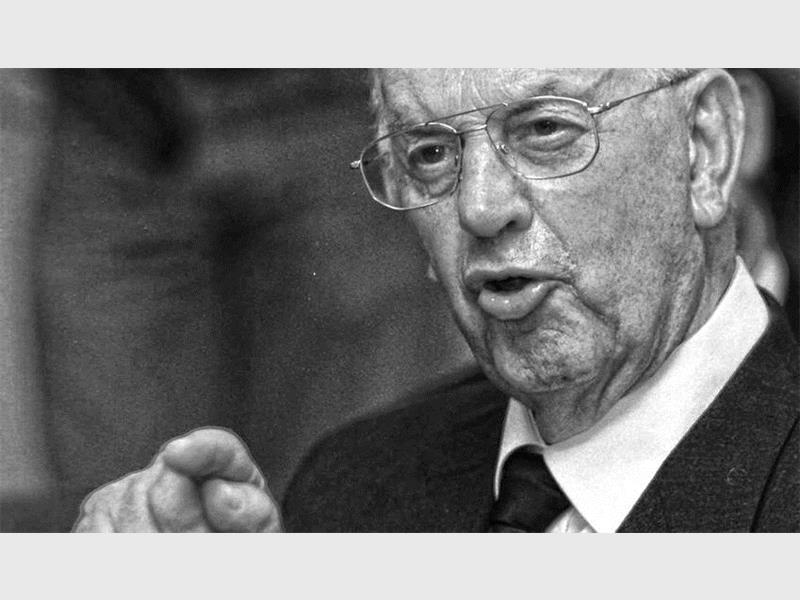
On 14 August 1989, President Pieter Willem (PW) Botha abruptly announced his resignation from the state presidency, following his resignation as the leader of the National Party in February of the same year, and the appointment of FW de Klerk as his successor.
In March 1989, the NP elected FW de Klerk as state president, but Botha initally refused to resign, stating that the Constitution entitled him to remain in office until March 1990, and that he was even considering running for another five-year term.
Following a series of acrimonious meetings in Cape Town, and five days after United Nations Security Council Resolution 435 was implemented in Namibia on 1 April 1989, PW Botha and FW de Klerk reached a compromise: PW Botha would retire after the parliamentary elections in September, allowing FW de Klerk to take over as president.
However, Botha resigned from the state presidency two weeks before the elections, complaining that he had not been consulted by De Klerk about De Klerk’s scheduled visit to President Kenneth Kaunda of Zambia.
“The ANC is enjoying the protection of President Kaunda and is planning insurgency activities against South Africa from Lusaka,” Botha declared on national television.
He said further that he’d asked the Cabinet what reason he should give the public for abruptly leaving office. “They replied I could use my health as an excuse. To this, I replied that I am not prepared to leave on a lie. It is evident to me that after all these years of my best efforts for the National Party and for the government of this country, as well as the security of our country, I am being ignored by ministers serving in my Cabinet.”
FW de Klerk was sworn in as acting state president on 14 August 1989 and the following month he was nominated by the electoral college to succeed PW Botha in a five-year term as state president.
Within months of the collapse of the Berlin Wall, FW de Klerk had announced the legalisation of anti-apartheid groups – including the African National Congress – and the release of Nelson Mandela.
FW de Klerk’s rule saw the dismantling of the apartheid system and negotiations that eventually led to South Africa’s first racially inclusive democratic elections on 27 April 1994.
See also:
•‘It hurts us when people want to undervalue the costs of apartheid’
•Oud-Monumentaar FW de Klerk by Monnas
•ANC still in the lead in Mogale