
On this day in History: Jan Smuts becomes Prime Minister
General Jan Christian Smuts started his first term as prime minister of the Union of South Africa after the death of General Louis Botha.
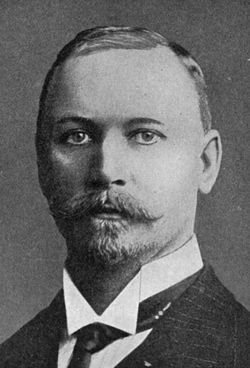
On Wednesday, 3 September 1919, following the death of General Louis Botha, General Jan Christian Smuts started his first term as Prime Minister of the Union of South Africa.
Smuts was a man of exceptional intellect and an internationally esteemed statesman who contributed tirelessly to the formation of the League of Nations, an international body whose aim was the preservation of world peace by preventing future wars through multinational dialogue and co-operation.
The Smuts government had to face mounting criticism in the early 1920s, as his stern measures to quell revolts made him unpopular, while his pro-British approach further alienated him from the Afrikaners.
The heaviest blow to his government came in April 1923, when the two opposition parties, the Labour Party (LP) and National Party (NP), agreed to join forces against the South African Party (SAP) in the next election. When his party lost Wakkerstroom in a by-election in April 1924, reducing the majority of the SAP party in the House of Assembly to eight, Smuts announced a general election to be held in June 1924. The NP and LP easily unseated the Smuts government in this election.
See also:
•Afrikaners is vir seker plesierig
•On this day in history: Afrikaans declared an official language
•On this day in 1915: Anti-apartheid activist Beyers Naude was born