
Which animals are the most dangerous in South Africa?
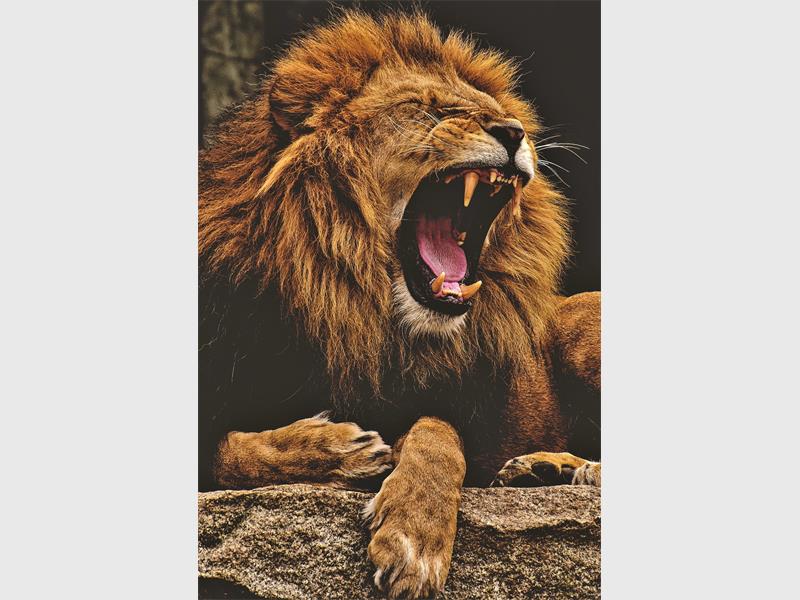
A lion's bite has the strength of about 650 PSI, which can easily pierce human bone, and it's not even in the Top 5 of animals with the strongest bite in South Africa.
Wild animals are just that … wild. A general rule of thumb when you’re in the wild, visiting a nature reserve during your vacation, is to keep your distance from all wild animals, no matter their size or apparent temperament.
Netcare 911 warns about the dangers of taking this warning lightly. There are a few animals more dangerous than the rest, of course.
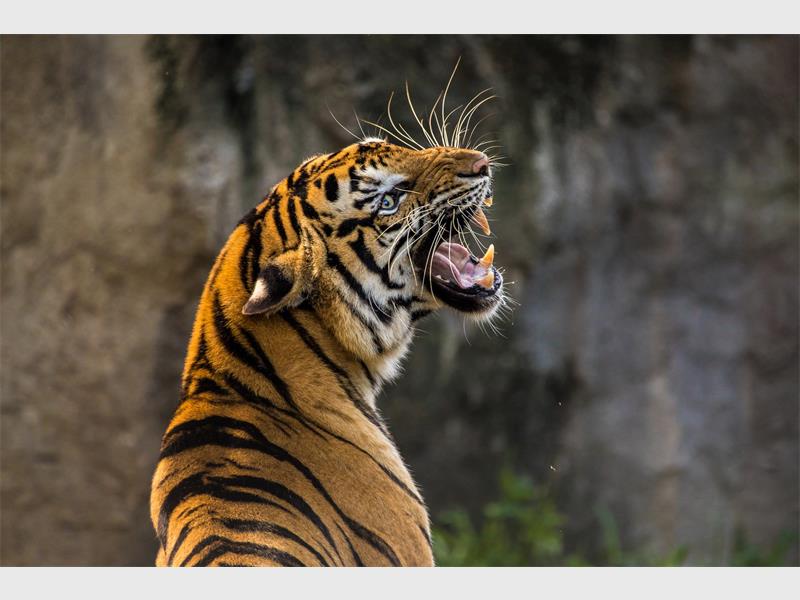
The lion, king of the jungle is an obvious top pick. A lion’s bite has the strength of about 650 pounds per square inch (PSI), almost 45 Bars of pressure. Considering the sharpness of their teeth, that is more than enough to break through human bone. Tigers, spotted hyenas and jaguars have considerably stronger bites. Gorillas measure in at about 1 300 PSI (90 Bars) of bite force, hippos at 1 800 PSI (124 Bars) and the Nile crocodile has a bite force of about 5 000 PSI (345 Bars), which is more than seven and a half times stronger than the bite of a lion. (Source: https://themysteriousworld.com)
Elephants were responsible for most of the cases of animal attack treated by Netcare’s emergency facilities, followed by snakes and then the eland, which is Africa’s largest antelope.
“During the period 2015 to 2018, 10 patients were assisted at Netcare emergency departments for elephant attacks. Many of them had a high injury severity score,” noted Netcare’s emergency, trauma, transplant and Corporate Social Investment General Manager, Mande Toubkin.
A press release by Netcare noted that, “The World Wildlife Fund observes that elephant populations are becoming increasingly stressed due to humans encroaching on their territories, and the high incidence of poaching of elephants in certain areas. It notes that this encroachment is increasingly bringing people not only into greater contact with elephants, but also other kinds of wild animals.”
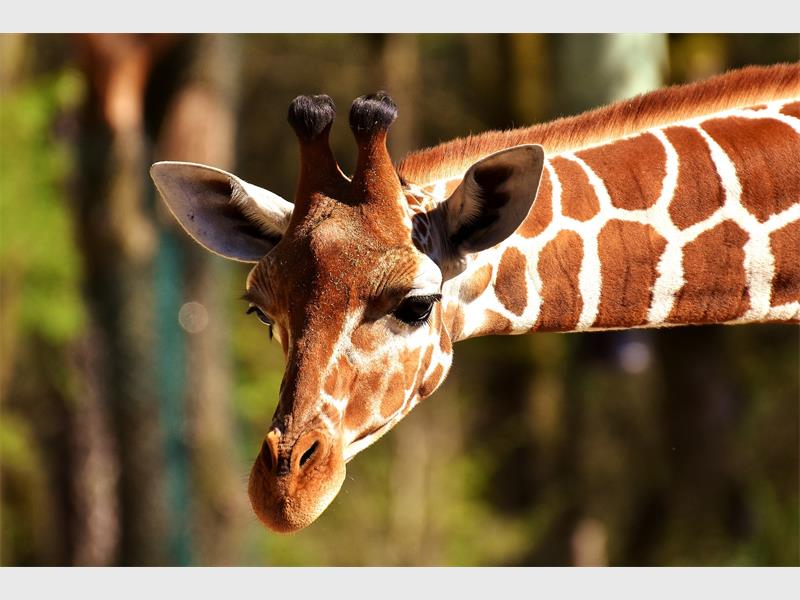
Over the past four years, crocodiles, giraffes and hyenas were responsible for two cases each. One man was fatally kicked in the stomach by a giraffe, and a mother and her child were attacked by a female giraffe who had recently given birth to a calf.
Toubkin noted that there were also cases attended to at Netcare emergency departments following attacks by a lion, hippo and buffalo, which are animals considered to be some of the most dangerous in Africa. There were also instances of attacks by a wildebeest, a shark and a tiger.
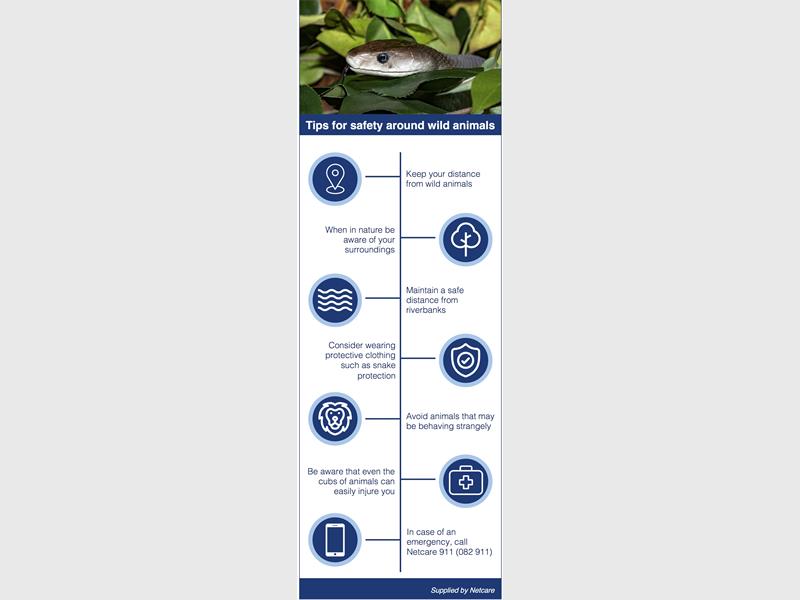
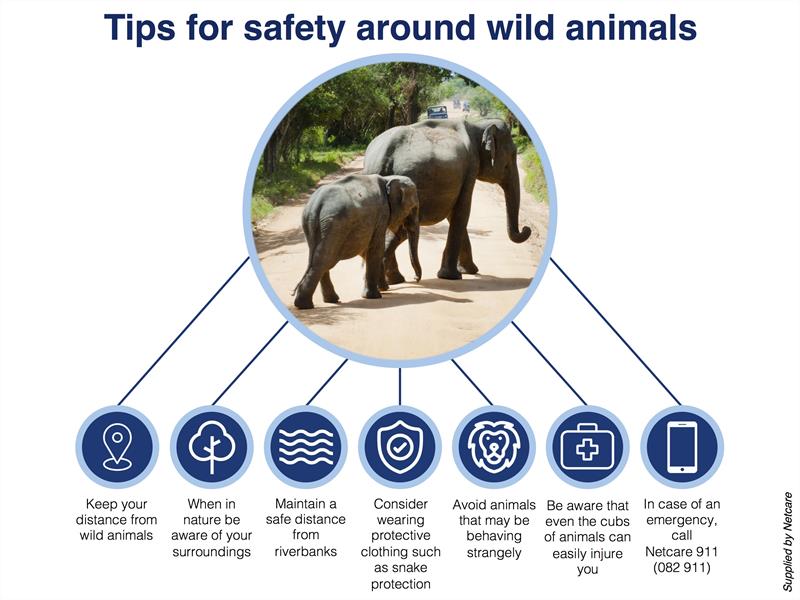
Here are some tips from Netcare to keep in mind:
• Keep your distance from wild animals and don’t interfere in any of their activities.
• Be aware of your surroundings while in nature. If driving in a game park or reserve, do not get out of your vehicle.
• Keep a safe distance from animals crossing over roads.
• Keep vehicle windows closed.
• While visiting bodies of water, find out if animals such as crocodiles and hippos are present, and maintain a safe distance from riverbanks.
• Consider wearing protective clothing such as snake protection leg gaiters when walking in the wild.
• It should be noted that an infectious disease such as rabies can make pets and wild animals behave abnormally and, in some cases, lose their fear of humans. Avoid animals that may be behaving strangely and/ or in an over-friendly or docile manner.
• Be careful around cubs/ baby animals, as they are also quite powerful and can injure people, especially children.
• Keep the numbers of emergency services on hand.