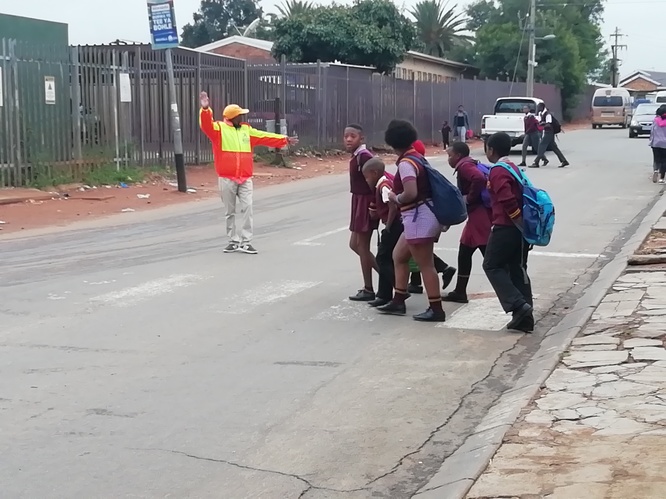
Children are at risk when they travel and walk to school.
The South African Road Federation (SARF) has warned of the risk young people face on South Africa’s roads every day, and is calling on municipalities and schools to take action.
SARF Operations Director, Basil Jonsson said, “As children start returning to school, we want to highlight the risk that learners face on our roads every day. Children are vulnerable road users because they are still developing and cannot handle complex traffic situations in the same way as adults. According to the Road Traffic Management Corporation, approximately 20 per cent of all road fatalities nationally involve children.
“We have just been awarded a second tranche of donor funding from Fondation Botnar and are expanding a project that kicked off in 2017 in Mogale City on Johannesburg’s West Rand to improve the safety of young people on their way to and from school. Between January 2015 and June 2017, Mogale City recorded 100 road crash fatalities. There was compelling evidence to launch the Fondation Botnar project here,” says Jonsson.
The first step was to better understand the risks that children face on their way to and from school in Mogale City, and the second step was to implement interventions to address those risks.”
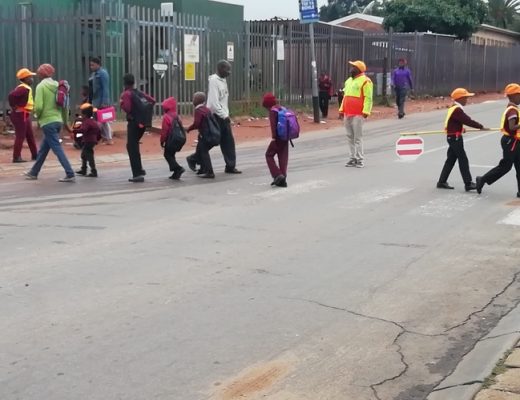
“Before and after evaluations are a cornerstone of the project,” explains Jonsson. “We need to be able to show the impact of the initiative and how we used the grant. It also builds a case study for the project to be replicated in other municipalities. While the funding from Fondation Botnar was only for Mogale City, we believe that this project should be replicated in other areas.”
We want to highlight the risk our future workforce and leaders face on our roads every day, but also, to offer solutions,” says Jonsson.
As well as Fondation Botnar and the South African Road Federation (SARF), the road safety project is made possible through the support of the Mogale City Municipality and 3M South Africa.
Award-winning app used to identify risk and implement life-saving upgrades
“Working with our partners, we developed a Road Safety Risk Assessment Model, which includes a Road Safety Risk Index, to prioritise schools where the risk for accidents is high. We also made use of the award-winning Star Rating for Schools (SR4S) App to measure the road environment, road type, road features, school zone, sidewalks, crossings, flow of vehicles and pedestrians as well as intersections. To measure speed around the schools, we used a hand-held speed gun.
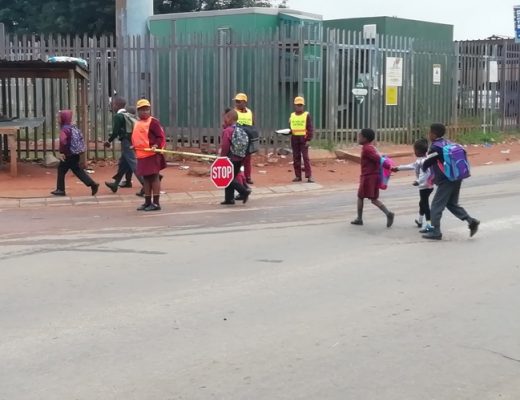
“Using these tools, we undertook a risk assessment of 50 schools in Mogale City. Those with the highest road safety risk were selected for the project. These included Athlolong primary school, Lengau primary school, Mosupatsela secondary school, Tsholetsega public school, WD Oliphant primary school and Bosele intermediary school.
For each school, we looked at a surrounding radius of roughly one kilometre because some children have to cross major roads to get to school. Infrastructure, signage and road markings were also considered.
“Then, we implemented infrastructure upgrades and traffic calming measures. These interventions took place alongside road safety education, law enforcement and data management. We also aimed to eliminate hazardous locations and mitigate road safety risk.”
“The Mogale City Municipality provided the labour to reinstate road markings and erect the traffic signs at the schools,” says Jonsson. “This has been an excellent example of how a partnership approach can solve problems.”