

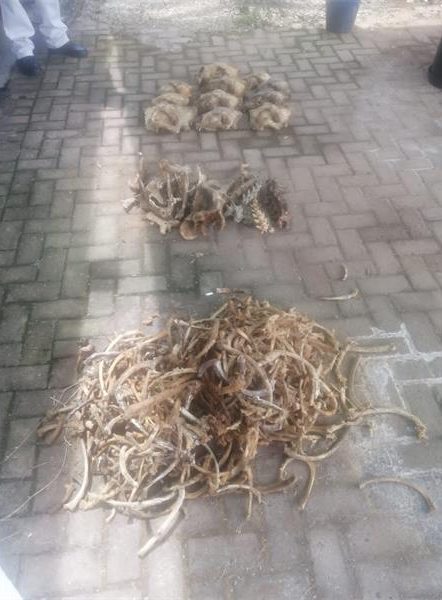
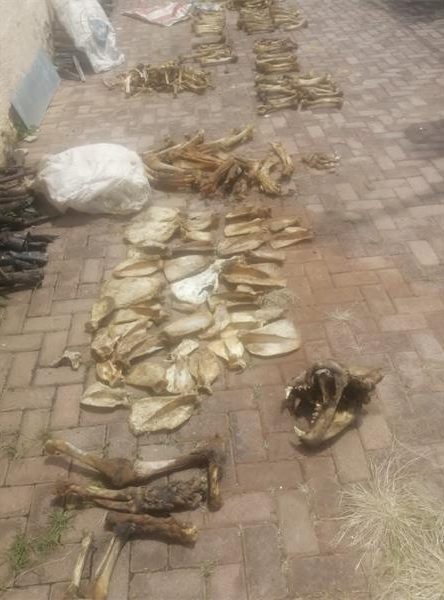
The Hawks recently pounced on 37-year-old Andries van Tonder’s home after he was found in the illegal possession of lion bones to the value of approximately R2,3 million.
During the operation conducted by the Hawks Serious Organised Crime Investigation in Germiston, Johannesburg Metropolitan Police Department (JMPD) Dog unit and the Department of Agriculture and Rural Development, dried lion bones were found in Van Tonder’s garage packaged in boxes, as well as some ready for export already packaged inside bags.
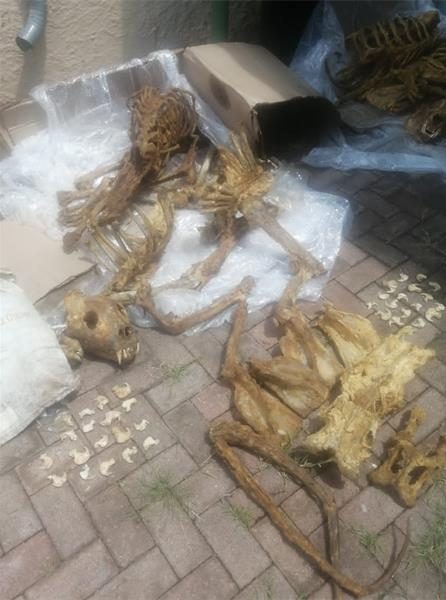
Police found that Van Tonder’s permits to possess and export the lion bones had expired in 2016 and 2020 respectively. He was then arrested and charged with contravening the National Environmental Management: Biodiversity Act 10 of 2004.
Also read: Local man arrested for illegal possession of lion bones
Although readers were outraged about the heinousness of the incident, it is not illegal to be in possession of or export lion bones if you have the required permits to do so. The chief director for communication at the Department of Environment, Forestry and Fisheries, Albi Modise responded to questions raised by the News.
Modise said according to the Threatened and Protected Species Regulations (TOPS) and Convention on International trade in Endangered species (CITES) regulations it is legal to trade and export lion bones.
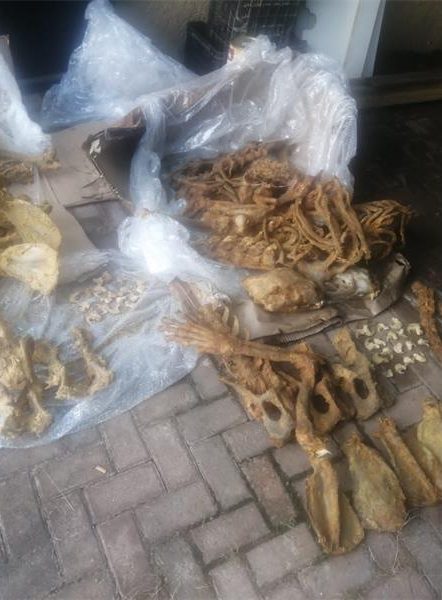
“These regulations require permits to be issued for possession, transport and export of lion bones in South Africa. International trade requires CITES permits to be issued, with an annual export quota determined by the Minister.”
He said the minister has established a high-level panel to advise her on practices such as captive breeding, hunting, and trade in lion, elephant, rhino and leopard.
“Since the establishment of this panel no decision has been taken on the export of lion bones. Therefore, no legal export of lion bones can be permitted currently.”
With regard to Van Tonder’s arrest, Modise said arrests of these nature send a strong message to deter others from becoming involved in similar illegal activities.
“Whilst trade in wildlife is permitted in terms of South African law, such trade must be done within the ambit of the legal requirements. Where there is reasonable suspicion that this is not taking place, law-enforcement authorities […] will not hesitate to act decisively.”
He added that a more holistic and integrated approach are seeing a more coordinated and effective response, resulting in more success in recent days.
Only days before the news of the arrest broke, the National Council of Societies for the Prevention of Cruelty to Animals (NSPCA) released a report in which they detailed their findings regarding the procurement of lion bones and the appalling conditions some of these lions were kept in.
In response to the News’ questions Keshvi Nair from public relations at the NSPCA explained these bones were used in traditional remedies. Lion bones are also processed as tiger bones due to the lack of availability of tiger products, and are then used in tiger wine and tiger cake. Some believe it gives longevity and you can assume the powerful characteristics of these apex predators when you use these products.
When asked if lions would become extinct, the NSPCA replied, “Lions are classed as TOPS and as such are a threatened species. Without careful management and protection of the wild lions, lions run the very real risk of becoming endangered.”
The News also reached out to the EMS Foundation, which provided a report published in 2018 in which Van Tonder could allegedly be linked to the lion bone trade, especially in Krugersdorp.
Captain Ndivhuwo Mulamu, Hawks spokesperson confirmed that Van Tonder’s case has been postponed to 6 April for further investigation. He has also been granted R5 000 bail with the condition that he hands in his passport to the investigation team.