
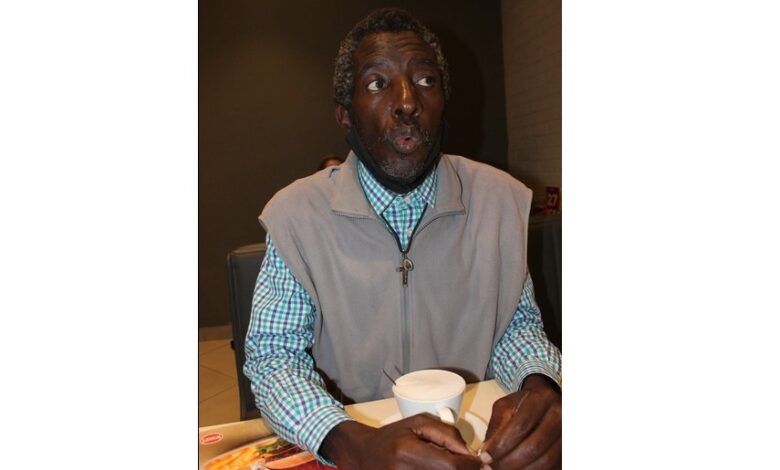
The political revolution in South Africa chewed up some of its children and spat them out, at least that is how disgruntled 58-year-old Christopher Sithole feels.
During the heyday of political unrest in South Africa, the infamous Eighties, Sithole was a resident of Munsieville and political activist in the greater Krugersdorp area. He belonged to a civic organisation called the Krugersdorp Residents Organisation (Kro) which fell under the United Democratic Front (UDF). Between August and November of 1986, during a so-called state of emergency, Sithole and 13 other local comrades were arrested and detained in terms of section 29 of the Internal Security Act 74 of 1982. Under this act, the state could ban or restrict organisations, publications, people and public gatherings, and detain people without trial. Sithole and his comrades were taken into custody on suspicion of treason, sedition, and alternative assault (holding people’s courts).
Sithole was arrested in Munsieville by the now disbanded West Rand Security Branch, then taken to Krugersdorp Police Station after which he was first incarcerated at Krugersdorp Prison and later at Johannesburg Prison. Some of his colleagues were tortured and all of them remained in prison for three years. The group of activists were eventually released but were still banned, which meant they were not allowed to move around freely. During this time they had to remain at a church in Soweto. The group then acquired legal representation to sue the state since the state could not prove their case, and therefore the activists were illegally detained.
The lawyer won the case and the activists were awarded financial compensation – all except Sithole. The lawyer later passed away and Sithole was left out in the cold. To make matters worse Sithole claims that over the years his comrades, some of whom went on to be appointed in very cozy government jobs, isolated and shunned him. Out of fear of being branded an informant on the one hand, and being targeted by former security officials on the other, he kept his silence.
Due to the raw deal he received he has also been unable to apply for a special pension all his fellow comrades qualified for.
Now almost 40 years after the ordeal Sithole hopes that it is safe enough to come forward and tell his story in the hope of either the government or a legal firm pursuing his case.