
Human trafficking more than doubled this past financial year
Gauteng Department of Social Development raises awareness on human trafficking as the first week of October is observed as Trafficking In Persons Week every year.
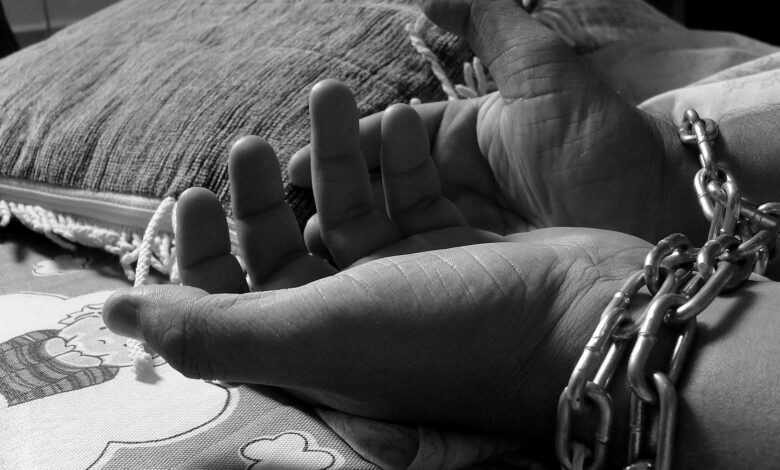
The number of people trapped in human trafficking more than doubled in the 2021–22 financial year in South Africa according to the latest Trafficking in Persons (TIP) annual report.
From April 2021 to March 2022, 83 people were trafficked, compared to 16 people the year before. Of the 83 people, 74 were referred for care.
In a statement issued by Busi Kheswa, Deputy Director: Media Liaison and Strategy at the Gauteng Department of Social Development, trafficking thrives in communities where there is instability.
“Factors such as a lack of food, water, education and infrastructure all create the vulnerability needed for traffickers to exploit the most vulnerable. Such communities are valuable to traffickers, and this include children.
“Evidence of trafficking is seen when a person does not have the power to refuse work. Trafficked victims are subjected to the worst forms of exploitation, and they are robbed not only of the fruit of their labour but also of all the rights and freedoms that human beings are endowed with by nature. The inhumanity of the abuse, the violent and destructive nature of the crime, and the sheer volume of the problem lead us to believe that human trafficking is one of the greatest injustices in the world today. It sadly compares to slavery of yesteryears.”
In terms of section 4 of the Prevention and Combating of Trafficking in Persons Act 7 of 2013, human trafficking is defined as the recruitment, transportation, transfer, harbouring or receipt of persons, using threat or force or other forms of coercion, abduction, fraud, deception, abuse of power or a position of vulnerability or the giving or receiving of payments or benefits to achieve the consent of a person having control over another person, for exploitation.
“Exploitation shall include, at a minimum, the prostitution of others or other forms of sexual exploitation, forced labour or services, slavery or practices similar to slavery, servitude or the removal of organs for trading them.”
Kheswa said the Provincial Department of Social Development is mandated to provide measures to protect and assist victims of trafficking in persons (TIP); and to provide coordinated implementation services to the victims of TIP.
To date the Department has been able to fulfil the following as its mandate:
• Identification and protection of victims
• Provision of safe care (temporary and long-term) for victims
• Accreditation of shelters
• Assessment of victims
• Monitoring and evaluation of service delivery
• Training and capacity-building
• Prevention, education and awareness
• Reporting
Since the implementation of the act the Department of Social Development has embarked on events regarding TIP, however, the department also observes TIP Week in the first week of October.
During last week, government heightened efforts to prevent TIP, and educate and create awareness about the issue in communities where all social ill prevail, particularly in those that might be prone to human trafficking.
“Education is key to eradicating human trafficking, and people must be aware of the scourge so that they can report suspicious activities. This kind of crime is a complex area, which includes a range of issues such as migration, organised crime, criminal syndicates, drug cartels and exploitation.”
Human trafficking can take place everywhere, Kheswa warned.
“It can happen in our communities where victims are taken from the area to another street for slavery as domestic workers. They are not allowed freedom of movement, and they stay in one place where they perform domestic duties like cleaning the house and taking care of babies. The victims do all these tasks without being paid and under strict and sometimes draconian supervision.
“Reports indicate that these victims’ belongings such as identity documents are taken from them because traffickers want to control and track them.”
Government calls on all to assist in curbing this heinous crime by identifying these three elements that are observed in acts of human trafficking.
• There must be an act – any person who delivers, recruits, transports, transfers, harbours, sells, exchanges, leases, or receives another person within or across the South African boarders can be considered as participant to this type of crime.
• There must also be means of a threat of harm, the threat or use of force or other forms of coercion; there must be abuse of vulnerability, fraud, deception, abduction, kidnapping, the abuse of power, direct and indirect giving or receiving of payments or benefits to obtain the consent of a person having control or authority over another person, compensation, rewards, benefits, or any other advantage aimed at either the person or an immediate family member of that person or any other person in close relationship to that person.
• Purpose – the purpose of human trafficking is monetary gain, as perpetrators of this kind of crime do this to gain profit.
It is the responsibility of everyone to report human trafficking. The act allows that even if we suspect, we have an obligation to report and allow matters to be investigated.
Report any suspicious activities related to human trafficking to the local SAPS, and the local, regional and provincial offices of the Department of Social Development.
Alternatively use the National Human Trafficking resource line 0800 222 777 with the option to remain anonymous, or call the GBV Command Centre on 0800 428 428.