Water supply crisis: ‘Master Plan’ revealed to save us all
The DA Gauteng Provincial Leader and Mogale City Mayor outlined what measures are being put in place to ensure residents have access to a reliable supply of water. There is good news of course, but also, very bad news should Eskom not get its act together.
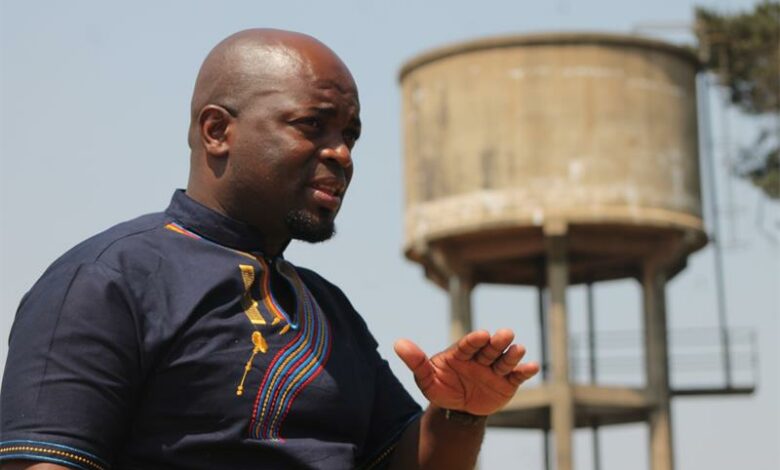
‘Damn shame’, ‘Human rights catastrophe’ and ‘Multiple constitutional infringements’.
Also read: Water supply interruptions to affect your licensing centre visit
Also read: Stage 2 water restrictions announced for Mogale City
Also read: Municipality unpacks persistent water-supply interruptions
Words of discontent spoken by stakeholders who visited the reservoir in Kenmare following the ongoing water woes of Mogale City.
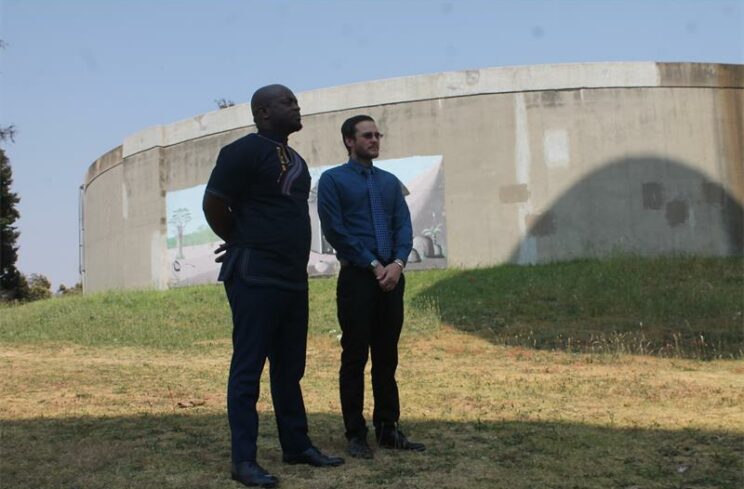
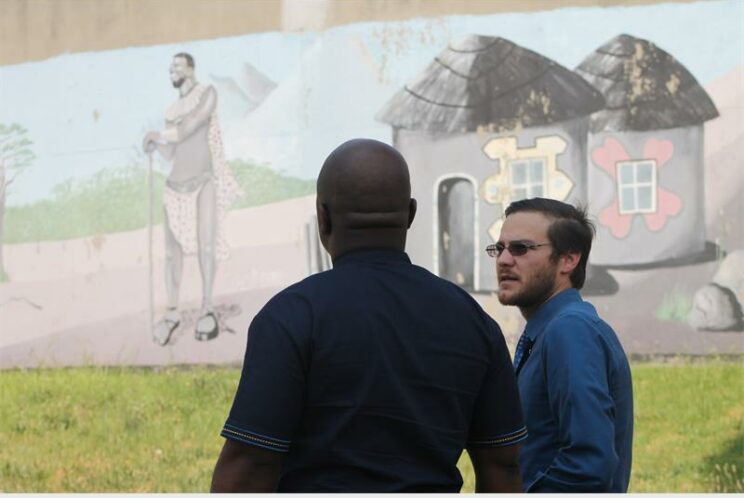
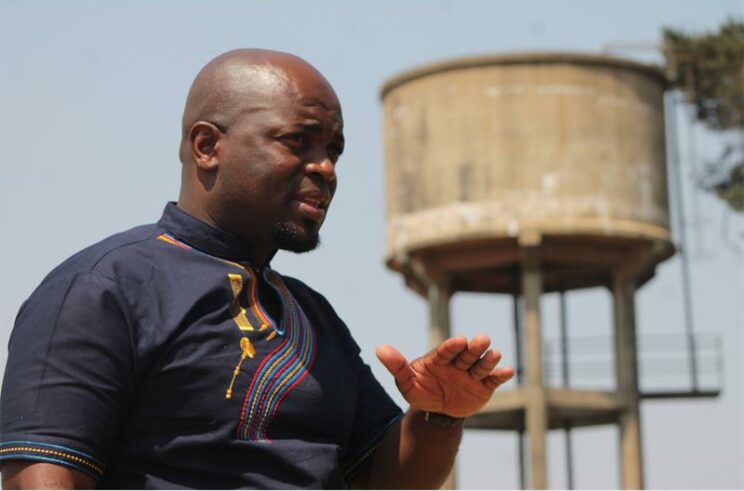
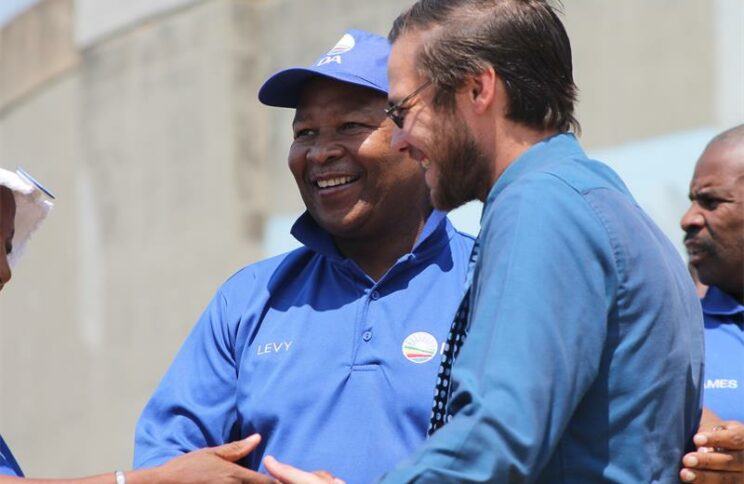
The DA Gauteng Provincial Leader and Member of Parliament Solly Msimanga along with the Mayor of Mogale City Tyrone Gray did not beat around bush when they conducted an oversight inspection at the reservoir on Wednesday morning, October 12.
The Mayor admitted that Mogale City has been plagued by water shortages since the end of August. Areas mostly affected, he said, is topographically the higher lying areas being Munsieville, Dan Pienaarville, Noordheuwel and most recently, Kagiso.
“What we need is a holistic coordination from all spheres of governance – this includes both Eskom and Rand Water cooperating and working together so that we can solve the crisis. This is not unique to Mogale City; however, we are topographically one of the highest municipalities in Gauteng and are therefore firstly affected.
“Mogale City has clean filters and re-engineered the pressure relief valves. We have further installed booster pumps as well as dedicated generators to assist in the articulation services, however, at the end of the day, what we are calling for is an inter-governmental relations protocol so that the network can be embedded and isolated so that the pump stations of Rand Water can be exempted from load shedding.
“We need a stable water supply; water is life and this is multiple constitutional infringements. We have further also escalated the matter to Gauteng Province as well as the SA Human Rights Commission. It also affects our rights to have our dignity respected, right to have access to sufficient food and water and the right to life.”
Msimanga, who said he spoke to Eskom and Rand Water, made it clear that Gauteng at this point does not have a shortage of water, however, he stated, “what we do have is a problem with is the capacity to pump water from Rand Water’s side over to municipalities. It’s not only Mogale City that is affected but also parts of Johannesburg and even parts of Ekurhuleni”.
He further explained, “Rand Water does have the capacity. Eskom needs to get their act together and we are in this situation due to Eskom’s own inability to secure continuous supply of electricity. The question is what is Eskom doing to assist municipalities? Municipalities are trying to buy boosters and generators which are all costing taxpayer’s money.
“Mayor Gray has to rely on tankers to get water to residents, and pay for it. When you ask Eskom, all you get from them is we acknowledge your letter and nothing more. It’s a damn shame we find ourselves in this situation where municipalities which are already cash-strapped are now having to dig deeper for water instead of fixing more potholes, roads and cutting grass.
“We have asked Rand Water to ensure that we have a master plan and proposed to them what a master plan should be that includes how we get uninterrupted electricity supply to where the reservoirs are lying so that we can pump water on a continuous basis.
“It’s almost summer and obviously the water consumption will increase. Therefore, we are also asking residents to be mindful of that. If you are not able to fill your reservoirs here, and at the rate that we are able to pump water into the reservoirs, it then becomes a problem. Residents need to be mindful and we need Eskom to get its act together.
“We have written to Eskom from a provincial perspective to say can we exempt areas where we have reservoirs and generators pumping water into reservoirs. But that is also falling on deaf ears.”
The way forward
Msimanga said he will write to the minister and the president as this is a human rights issue.
“You can live without electricity for a while but you can’t live without water and this is something that we now want to make sure we get some answers to. It cannot be that municipalities are overburdened with this challenge. It cannot be that Rand Water says, ‘Ok, we can pump water’ but they are not engaging with Eskom to say, ‘You are affecting our ability to pump water to municipalities if you are not going to assist us’.”
He feels that everybody is pointing fingers at everybody else but nobody is coming up with a plan in resolving this.
“The municipality has done all they can by continuously monitoring and even actually maintaining its own infrastructure but unless, and until Rand Water and Eskom get their act together, it will just be maintained infrastructure that means absolutely nothing if residents don’t get water. We can then come back to the community and say, ‘This is the answer that we have for you and the timelines in which we will implement this’.”
Integrated system between Johannesburg, Tshwane and Mogale City
Msimanga said because part of the water is coming from Johannesburg’s side, they have started working on getting an integrated system between Johannesburg, Mogale City and Tshwane.
“Hopefully, we can get this right in the next couple of weeks but what we now need to do is make sure we get the stakeholders around a table. I will also be writing to the premier to find out exactly what is he going to do to intervene in this matter. With pressure coming from the Human Rights Commission, we can get some answers and relief for the people.”
Reservoirs in Krugersdorp
Mayor Gray said there are two sets of reservoirs.
“One is owned by Rand Water which is the main reticulation feed (Krugersdorp 2, 3 and 4) and these are actually nodule reservoirs and pumped towers to reticulate the water. We have a total of 18 channels within our jurisdiction and our main feed comes from Roodepoort/ Hamberg depot which is the one that we specifically for Mogale City want to isolate from load shedding.”
Regarding infrastructure, Mayor Gray added, “We have managed to increase repairs and maintenance allocation on the capital expenditure for our financial year. It was previously dismally low at less than 4%. Treasury norms want it between 8% and 10%. We are currently sitting at 7% so we are improving the repair of the reticulation network.
“But we are also facing a crisis. For the last 15 to 20 years inadequate resources have been given to capital expenditure to upgrade the reticulation network, this means more money has to be spent on reactive repairs and maintenance instead of having pro-active repairs and maintenance. Technically, some of the locusts of this crisis found itself 15 years ago.”
How long will the current water supply issue persist?
Mayor Gray explained, “The situation can continue indefinitely if we do not find a solution to stabilising the water supply which will mean that the grid has to be isolated and those critical national key points must be prevented from ever being load shed.
“The main issue is actually just topping up our reservoirs so for instance, the way the system was designed almost 90 years ago was that we have a gravity fed system which requires the bulk head of the reservoir (this is the volume of water that is in the actual chamber) to be able to have enough weight and pressure to reticulate through the system – if we have inadequate pressure. If the water levels drop anything below 35% for instance, there is inadequate pressure to reticulate.
“We actually require, given that the reservoirs haven’t been upgraded but the town has expanded over numerous decades, an upgrade on the reservoirs which will require capital expenditure from national government but we need to isolate the pumps so that we keep the reservoir levels adequate. For every two hours of load-shedding that means the reservoir depletes for two hours and then the next two hours is spent filling it up again, so it’s always a cat and mouse game you never get to an adequate level.”
My neighbour across the street has water, but I don’t?
“Sometimes, what happens with that is there will be an airlock in the chamber. We then need to actually go on that pipeline because as the water depletes it creates an airlock into the system. This prevents the water from being pushed.
“The other issue, as mentioned by Msimanga, is that when there is an air hammer it starts bursting all the pipes along the way and there could be a micro burst along that line between the two neighbours or it could be a need to scour the line and clear the air out of it,” Mayor Gray responded.
Is it fair for people to be in this situation?
“No, it’s not fair. Eskom has been warned for over a decade to supply enough electricity and if not, it will affect every other way of life. If you think we have problems right now, wait until we hit Stage 8 of load-shedding. Not only will you be unable to communicate with anyone else, you will not be able to call the hospitals or the police if there is an emergency. You will then see anarchy crippling in and more and more job losses. We just hear more and more politics instead of getting more and more answers. People are not asking for politics they are asking for answers,” Msimanga said.