
Sterkfontein Caves officially re-opens to community
Sterkfontein Caves will be managed by Wits University as it works to preserve one of Mogale City's proudest historical exhibits.
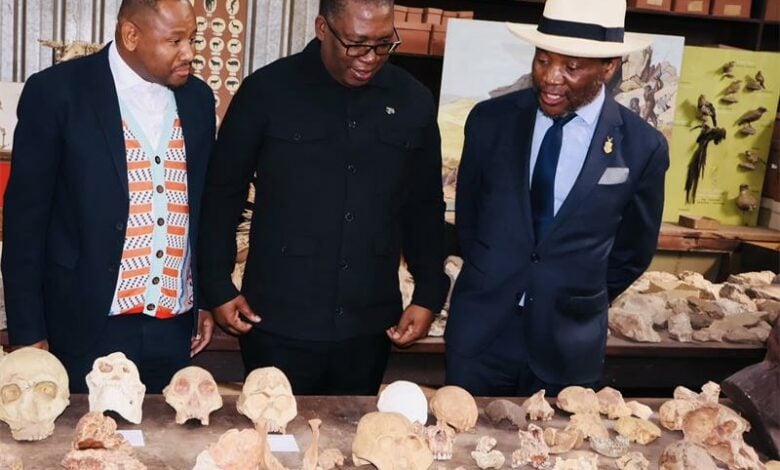
The world-renowned Wits Sterkfontein Caves reopened to the public on Tuesday, April 15.
• Also read: Sterkfontein Caves: Revisiting the 1984 cave diving tragedy
This development marks a new chapter for one of humanity’s most significant paleontological sites, as it transitions to full management under the University of the Witwatersrand. Mogale City Executive Mayor Lucky, along with Wits management, was present for the special occasion to unveil the site.
Located within the Cradle of Humankind, a Unesco World Heritage Site, the caves have yielded some of the most important hominin fossil discoveries, including the iconic Mrs Ples (1947) and Little Foot (1997), in addition to the hundreds of other fossils of human relatives. These discoveries have been crucial in informing the global understanding of human evolution and the origins of humanity.
According to dean of the Wits Faculty of Science, Nithaya Chetty, while previously serving primarily as a tourist destination attracting thousands of international and local visitors, the reimagined Wits Sterkfontein Caves will offer a more immersive research and educational experience, bringing visitors closer to the science that has defined the site for nearly 100 years.
This reopening represents a significant evolution in how we share the story of human origins,” said Nithaya.
Visitors now have unique opportunities to engage with active live science and research, all happening in real time.
Under the new management structure, Dr Job Kibii will serve as the head of the Wits Sterkfontein Caves, overseeing daily operations and visitor experiences, while Professor Dominic Stratford will continue to lead research activities as the research permit holder.
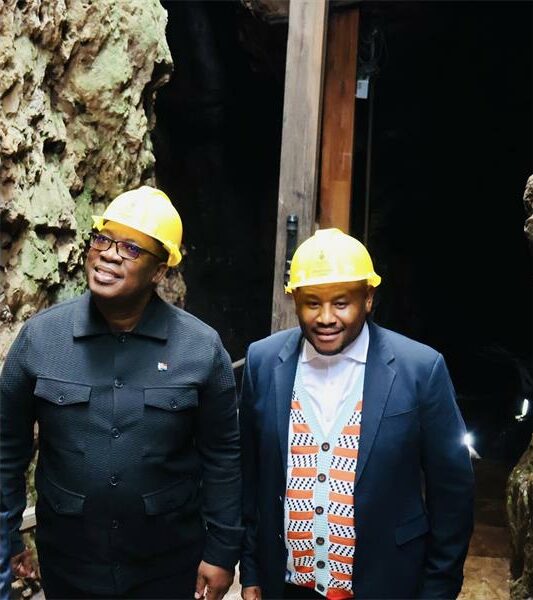
The enhanced visitor experience will feature educational programmes focused on human evolution and paleoanthropology, as well as other scientific disciplines in the Earth Sciences, such as Climate Science and Geosciences, and exhibits showcasing the latest discoveries and research findings, among other experiences will include:
• Direct interactions with scientists and students conducting research
• Behind-the-scenes access to fossil preparation laboratories
• Guided tours of the Wits Sterkfontein Caves with enhanced scientific context
Principal and vice-chancellor of Wits University, Professor Zeblon Vilakazi, added that the reopening of the Wits Sterkfontein Caves represents an exciting opportunity to bridge the gap between cutting-edge research and the public’s understanding of science.
By making science more accessible, we hope to inspire the next generation of researchers while helping everyone connect more deeply with our shared human story.”
Since taking over the management of the Sterkfontein site in 1966, Vilakazi said Wits University’s researchers have made countless contributions to the study of human evolution.
“The University houses the world’s largest repository of hominin fossils, many of which were discovered in caves. The limestone caves, formed many millions of years ago, have preserved critical evidence of humanity’s relatives as their remains fell into the deep caves through tall, narrow shafts. For more than three million years, the remains of hominins and many other animals living on the Cradle of Humankind landscape have accumulated underground in huge deposits, creating a fossil record spanning several million years of human evolution.
The caves hold exceptional universal value, which led to their designation as part of the Cradle of Humankind Unesco World Heritage Site in 1999.
“Their scientific importance cannot be ignored as they continue to make discoveries that shape the understanding of where humanity comes from. The management, researchers, and tour facilitators of the caves will continue to work closely with the Cradle of Humankind Management Authority and the South African Heritage Resources Agency to ensure the proper preservation of the site.”
The opening of the caves aligns with Wits University’s commitment to excellence in research and education, building on the legacy of prominent Wits paleoanthropologists like the late Phillip Tobias and Ronald Clarke, whose work at the caves fundamentally advanced the understanding of human origins.