
Echoes of Krugersdorp: Exploring Saint Peter’s Church
Join Dr Kathy Munro for an intriguing Heritage Day talk at St Peter’s, where the stories of miners, clergy, and middle-class pioneers still echo through the church’s stone walls.
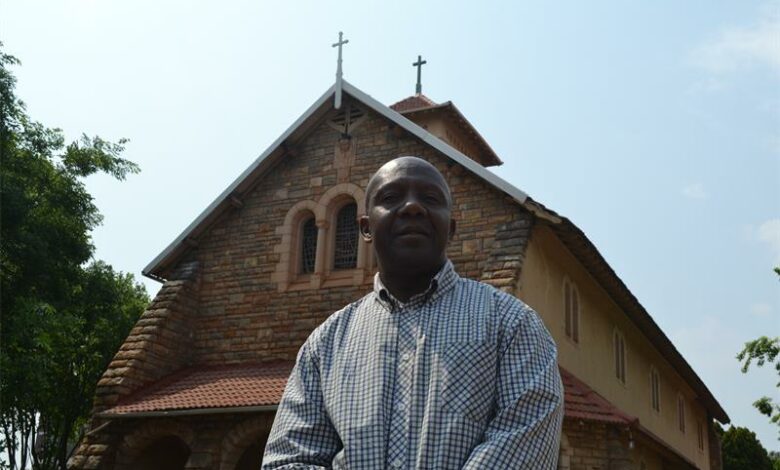
The 13th edition of Echoes of Krugersdorp, produced in partnership with the Krugersdorp Heritage Association (KHA), takes us to one of the town’s most distinctive church buildings – the Church of Saint Peter.
Early Krugersdorp: From mining camp to settled town
Co-founder of the KHA, Jaco Mattheyse, said during the early years of the town, local miners mainly focused on their basic needs. Yet, within the first two years, a new class of people started to arrive – the white working class. Through the hard work of these newcomers, joined later by the up-and-coming middle class, efforts were made to stabilise the violent, transient mining camps of the West Rand into the settled town that residents recognise today.
It seems likely that many of the more ‘respectable’ working-class members mixed with the middle class, particularly if they had higher aspirations. Economic improvement encouraged many of them to marry and establish families in Krugersdorp rather than elsewhere on the Rand. Middle-class influence, together with interaction at church services, further strengthened this tendency. The Anglican Church became the central institution of the English-speaking middle class, and many of its social gatherings revolved around church life.
• Also read: Echoes of Krugersdorp: Discover the legacy of Fort Harlech
Many miners were already chapel-goers from Cornwall and Wales, and for a large portion of the white working class, church-going was a deeply entrenched habit. However, Jaco added, unlike their unrulier counterparts, they received less attention from historians and newspaper reports.
Historians argue that people’s understanding of the white working class has been coloured by images of hard-drinking single miners, when in fact, many working-class families lived in Johannesburg during the 1890s. It was noted by historians that working-class life was complex – encompassing men, women, and children, both single and married, employed and unemployed. Their lives extended across the workplace, the streets they lived in, the bars, and the churches.
Jaco explained that commitment of Christians to building strong, permanent church structures may be compared to hammering pegs into the flapping tents of a mining camp – bringing stability to the chaos of the ‘tent town’. Many English-speaking middle- and working-class residents of Krugersdorp identified with the Anglican Church, as research on Johannesburg’s white working class shows.
• Also read: A century of care: The storied history of Dr Yusuf Dadoo Hospital
From the ‘Calico Church’ to permanent stone structures
Shortly after Krugersdorp was laid out, a temporary church was erected behind the Standard Bank at the corner of Rissik and Joubert Street. It was made of wood and calico. Records stated that 36% of 2 290 white families in Johannesburg had their children baptised in the Anglican Church.
By February 1888, Jaco added, the so-called ‘Calico Church’ had a congregation of 30, which also served as a school for about 25 children.
“When the tent was destroyed by a gale in August 1888, the middle class demanded a more permanent building. Reverend Organ immediately set about planning a church bazaar to raise funds for a substantial building. Competition, however, was tough.”
Support from mining companies and prominent figures
As Krugersdorp’s merchants struggled against their wealthier Johannesburg counterparts, so did its Anglican congregation. When the Society for the Propagation of the Gospel donated one hundred pounds annually for clergy support on the rand, the Star’s Krugersdorp correspondent complained bitterly that Johannesburg had annexed the entire amount. The clergy in Krugersdorp, historians remarked, were left utterly unprovided for by the church.
Fortunately, he added that support came from other quarters. Mining companies desired a sober, stable workforce and became allies of the middle class. In 1888, the Luipaardsvlei GM Co Ltd donated stands in Monument Street for a church. Cecil Rhodes contributed £100 (about £16 610.08 today) to the building fund, while President Paul Kruger added £5 (about £830.50 today).
• Also read: Echoes of Krugersdorp: Jan Lotz Sports Complex and its history
The total cost of the new stone church, parsonage, and school chapel was £420 (about £66 440.32 today), and Jaco said this was a remarkable sum for such a small congregation. The first service was held on Christmas Day, 1888. Bishop Bousfield later dedicated the church to St Mark on February 1, 1888. Although descriptions have not survived, the event must have been deeply significant to miners, encouraging them to settle in Krugersdorp.
St Mark’s Church was built near the Krugersdorp railway station, ensuring miners saw it twice daily on their way to and from work. The imposing stone building stood out among the temporary wooden and iron structures of the town. Prominent middle-class figures served as churchwardens, including farmer and future town councillor WM Edwards, and Mr Hallimand, manager of the West Rand Consolidated GM Co Ltd.
During the 1890s, several well-known businessmen baptised their children there, including:
• FW Lewis, a bookkeeper and later owner of May and Lewis General Dealers, as well as a town councillor
• Harry Stammers, a printer and later proprietor of The Standard, Krugersdorp’s newspaper
• Frederick Cooper, a contractor and later town clerk
• Humphrey Hayes, manager of Luipaardsvlei Estate and GM Co Ltd and later town councillor
“For miners, the sight of well-dressed middle-class families attending church every Sunday must have been striking. Exposure to such scenes week after week created what a newspaper called ‘redundancy’ – repeated visual and social signals that reinforced meaning and stability.”
By March 1888, tenders were called for the ‘erection of a handsome stone schoolhouse large enough to accommodate 300 pupils’ under the auspices of the Anglican Church. Jaco said, considering Krugersdorp’s adult population had not yet reached half that number, this was a bold vote of confidence in the town’s future. The symbolism of preparing for future generations cannot have been lost on the mining population.
The construction of St Mark’s established a literal and symbolic ‘house on the rock’, inspiring permanence and stability. Its example sparked other denominations to erect similarly substantial buildings, contributing to Krugersdorp’s architectural landscape.
“Although English-speaking miners may have admired the church’s strength, they might also have struggled to identify with people of a different language and culture. Still, the sheer presence of large stone Anglican, Roman Catholic, and Dutch Reformed churches in the town reinforced the message of permanence and stability through architectural redundancy,” he said.
A new era: Sir Herbert Baker and St Peter’s Church
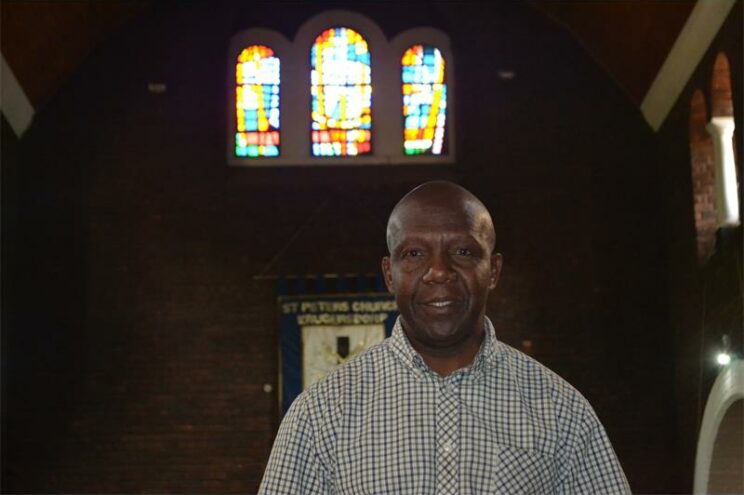
After the South African War (1899–1902), a more British-centred society emerged. It was then decided to build a new Anglican church, as Jaco describes it, in the fashionable arts and crafts style. The congregation employed Sir Herbert Baker, the celebrated architect, to design it. The new building was erected on Burger Street, opposite the Methodist Church.
The cornerstone was laid on January 15, 1905, by Mrs Carter, wife of Bishop Carter.
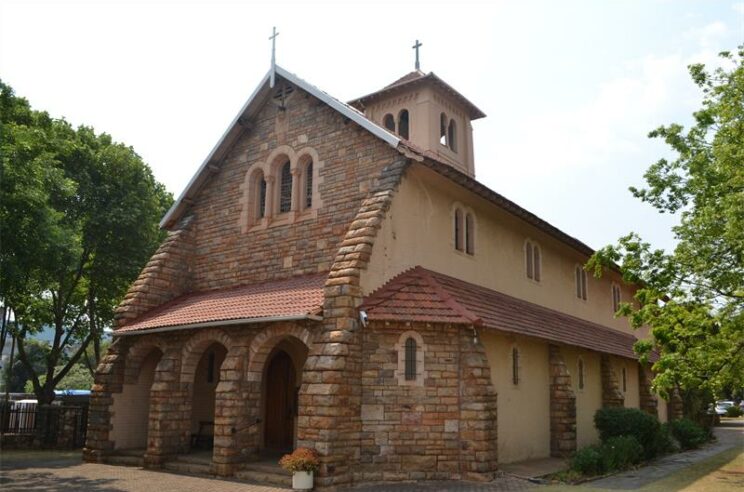
“Baker’s design for St Peter’s showcased his instinctive style, blending classical elements with local materials. He favoured slightly pointed, round-arched, buttressed walls of rough-hewn stone. The windows were tall and narrow, suited to the African sun, while the steeply pitched roof was covered in Roman pan tiles.”
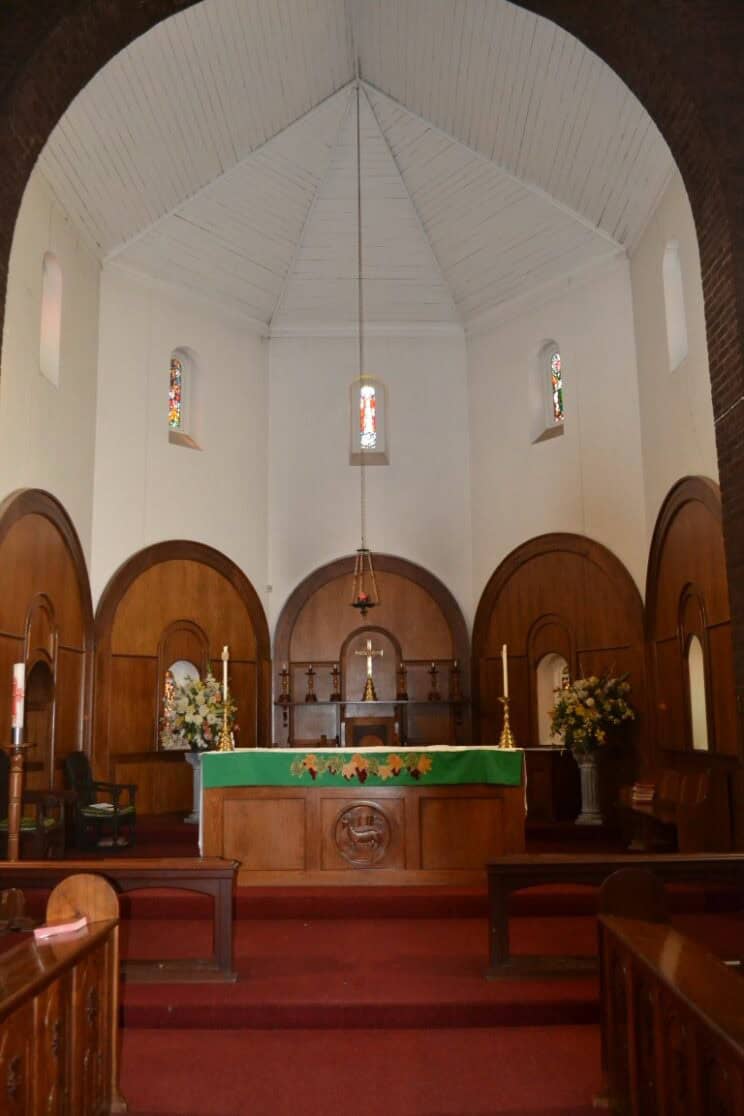
Inside, the church features a long nave leading the eye to the altar and the bishop’s throne opposite the main entrance. Benches for the congregation are arranged along the central aisle, with additional access via two side passages lined with columns and arches highlighted in white render. Below the altar lies the liturgical space where religious rites and rituals are expressed
St Peter’s today: A beacon of faith and resilience
“St Peter’s Church remains a fine example of Baker’s robust construction, detailed stonework, and careful use of local materials. His ecclesiastical designs left a profound mark on the architectural landscape of South Africa and beyond. In the 1950s, the church was extended and a tower was added in the same style. Today, the congregation remains active, and the Church of St Peter stands as a beacon of faith and resilience – a symbol of the community of Krugersdorp for over 138 years,” Jaco continued.
Upcoming lecture: The legacy of Sir Herbert Baker
The Krugersdorp Heritage Association, along with the Anglican Church of St Peter’s, is very proud to host their first event.
Well-known historian Dr Kathy Munro, chairperson of both the South African Heritage Association and the Johannesburg Heritage Association, will present a lecture on The Architecture, Life and Legacy of Sir Herbert Baker on Heritage Day, September 24, at 10:00. The lecture will be of particular interest, as the church was designed by Sir Herbert Baker.