
Krugersdorp’s Indian community: Legacy of faith and enterprise
Established in 1896, this historic mosque reflects the deep roots and lasting legacy of the Indian Muslim community on the West Rand.
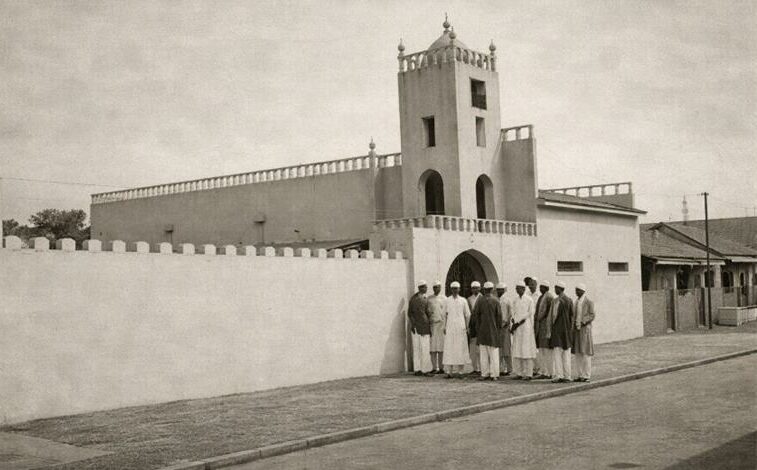
In the 24th edition of Echoes of Krugersdorp, produced in partnership with the Krugersdorp Heritage Association (KHA), we explore one of the oldest mosques in town and how the Indian community helped to build Krugersdorp.
Co-founder of the KHA, Jaco Mattheyse, said the history of Krugersdorp, established in 1887 following the discovery of gold on the Witwatersrand, is one of enterprise, migration, and cultural exchange.
“Among the communities that contributed significantly to the development of the town was the Indian community – entrepreneurs, families, and faith groups whose legacy remains deeply embedded in the West Rand,” he said.
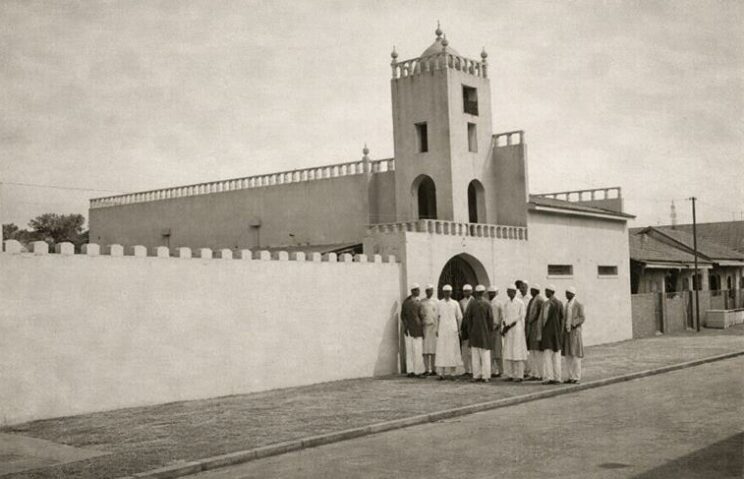
Early traders and settlers from the 1890s to the 1930s
Indian traders began arriving in Krugersdorp during the 1890s, where Mattheyse said they were drawn by the opportunities created by mining and urban expansion. These were largely passenger Indians, many from Gujarat, who established themselves as independent traders.
“Among the earliest and most prominent was Mahomed Mamoojee [MM] Dadoo, whose family would become synonymous with Indian enterprise in the town. Over successive generations, such families built stable commercial networks, contributing significantly to Krugersdorp’s economic life.”
Commerce, architecture, and permanence
“Indian traders were not only merchants but also investors in the built environment,” he explained.
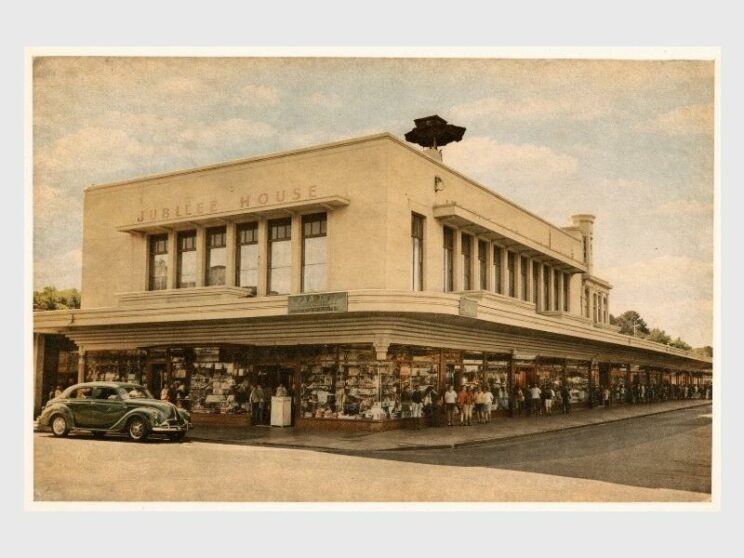
A notable example is Jubilee House, which was constructed in 1940 and later known as Solly’s, situated at the corner of Market and Commissioner Street.
“This Art Deco building stands as a testament to Indian commercial confidence and permanence within the town centre, reflecting both prosperity and participation in modern architectural trends.”
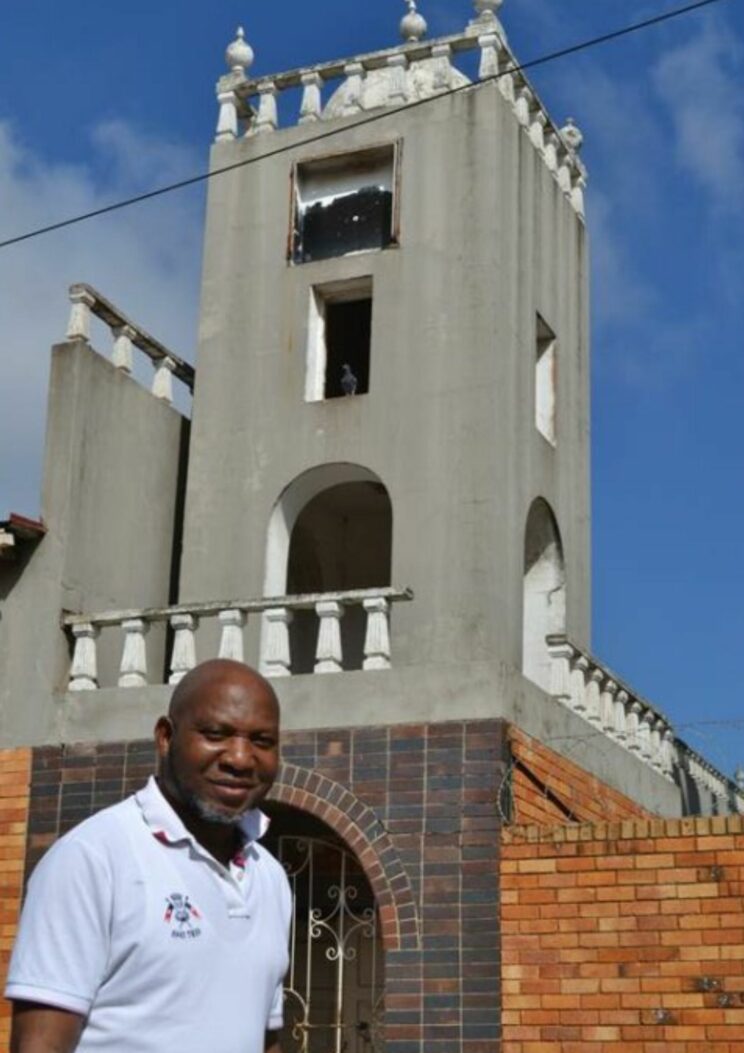
Faith and community: The Burgershoop Mosque (1896–1948)
Jaco expressed, a defining feature of the Indian Muslim community in Krugersdorp is the Burgershoop Mosque, whose origins date back to the late 19th century.
“The mosque was established in 1896, when land was granted to the Muslim community by President Paul Kruger of the South African Republic. This coincided with the formal layout of the Indian Location alongside Burgershoop, marking an early recognition of the community’s presence within the town,” Mattheyse continued.
Jaco said oral histories from older members of the community recall that the first structure on the site was a simple “tin shanty.” This was later replaced by a wooden mosque, constructed at a cost of about £8 000 (R15m to over R30m today) – a significant investment for a small and developing community.
“In the Islamic tradition, consecrated land remains sacred in perpetuity. The establishment of the mosque, therefore, held profound meaning, symbolising not only a place of worship but also a permanent spiritual and cultural foothold for the Muslim community in Krugersdorp.
“At the time, the community was too small to support the construction of a more substantial building. It was only in 1948 that a larger stone and brick mosque became possible,” he added.
The cornerstone of the present structure was laid on August 30, 1948, by Hajee Joosub, while the bricks were donated by him and Hajee Ebrahim in memory of their parents.
“The mosque is constructed of yellow face-brick with brown face-brick accents, while the tower and roofline are plastered. The building is topped with a flat corrugated iron roof. Entry is gained through a set of double doors beneath the tower, opening directly onto the pavement. This leads into a covered veranda at the rear, where the main entrance to the mosque is situated,” he said.
“To the left of the entrance lies a garden, formerly adorned with a fountain. The foyer serves both as an entrance space and as an overflow area when the main hall is full. It also accommodates a designated area for the removal of shoes and ablution facilities for ritual cleansing,” he said.
“The main prayer hall is accessed through two sets of double doors fitted with coloured glass. The hall is laid out in traditional Islamic fashion, with a red carpet demarcating individual prayer spaces. The prayer area is aligned towards Mecca [north-east], with all congregants facing in that direction. The original 1948 structure features pressed steel ceilings and coloured glass windows, while former classrooms at the rear were later incorporated into the main hall.
At the northern end of the hall is the raised seat of the Imam, who leads the congregation. A mihrab [niche] in the wall focuses prayer towards Mecca,” he added.
He said the property also includes toilet facilities and a caretaker’s cottage.
Segregation and displacement: Azaadville (1965)
Mattheyse explained that the apartheid era brought significant upheaval. In 1965, Indian residents of Krugersdorp were forcibly removed under the Group Areas Act and relocated to Azaadville. Despite the loss of homes, businesses, and established community networks, the Indian community rebuilt mosques and temples, schools and social institutions, and strong family and cultural networks.
“The name Azaadville, meaning ‘place of freedom’, reflects both resilience and aspiration in the face of displacement,” he commented.
Cultural and political contribution
Krugersdorp is also the birthplace of Dr Yusuf Dadoo, a leading anti-apartheid activist whose life and work form part of South Africa’s national history. Matthyese said, beyond politics, the Indian community contributed richly to local commerce, education and cultural diversity. Festivals such as Diwali and Eid became part of the broader social fabric of the town.
“The history of the Indian community in Krugersdorp is one of enterprise, faith, and endurance. From the first traders of the 1890s to the establishment of enduring institutions such as the Burgershoop Mosque and through the challenges of forced removal to Azaadville, this community has played a vital role in shaping the town. Their legacy remains visible in its buildings, its culture, and its continuing contribution to the life of Krugersdorp,” he concluded.