
Happy 139th birthday, Krugersdorp! The untold story behind its historic birth
A look back at the historic events, unity and decisions that ultimately led to the founding and growth of Krugersdorp.
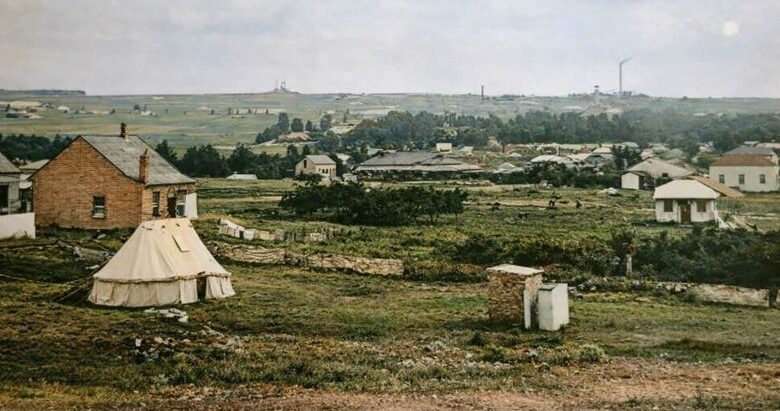
In the very special 26th edition of Echoes of Krugersdorp, produced in partnership with the Krugersdorp Heritage Association (KHA), we look at how it all started – the birth of Krugersdorp.
The town recently celebrated its 139th birthday, and co-founder of the KHA, Jaco Mattheyse, said the anniversary of Krugersdorp, commemorated on April 26, is rooted in a sequence of events that extends beyond the formal establishment of a town.
“It is a date shaped by political upheaval, collective resolve, and ultimately, the emergence of a community forged in both struggle and opportunity,” he said.
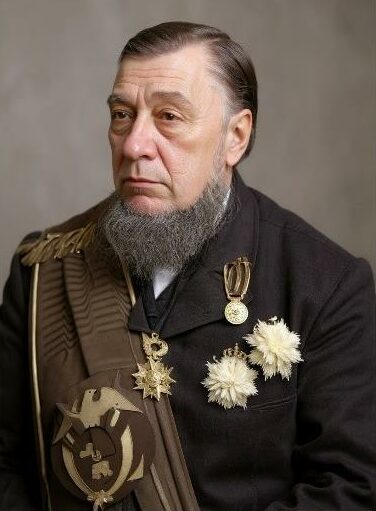
Mattheyse explained that on April 12, 1877, Theophilus Shepstone annexed the Zuid-Afrikaansche Republiek (ZAR) on behalf of Britain, notably without armed resistance. This act, closely linked to British interest in the mineral wealth of the region, marked the beginning of a period of growing dissatisfaction among the burghers of the Republic.
“Initial resistance took the form of diplomacy. Delegations, under the leadership of Paul Kruger, travelled to Britain in an effort to restore independence through negotiation. These efforts, however, proved unsuccessful, and by late 1880 the situation had reached a decisive turning point,” he said.
Also read: Echoes of Krugersdorp: Inside the town’s infamous first prison
On December 8, 1880, he stated that about 6 000 burghers (citizens) assembled at the Paardekraal Monument. At this historic gathering, it was resolved that decisive action was necessary. At the suggestion of Kruger, each man placed a stone upon a cairn, symbolising unity and shared purpose. It was here that the Paardekraal Gelofte was solemnly affirmed.
This meeting led directly to the First War of Independence, culminating in the victory at Majuba Hill and the restoration of the ZAR’s independence on February 27, 1881. Mattheyse continued that in December of that year, a thanksgiving festival was held at Paardekraal, establishing the site as one of enduring national significance. By 1886, it had become the venue of the Republic’s first official state festival.
He further mentioned that in April 1887, the Executive Council of the ZAR purchased a portion of the farm Paardekraal with the intention of establishing a town. Mattheyse explained that this development followed closely upon the discovery of gold along the Witwatersrand, which had already begun to draw large numbers of prospectors and settlers to the area.
“The town, named Krugersdorp in honour of President Kruger, rapidly developed as part of the expanding goldfields of the West Rand. What had once been open farmland was soon transformed into a centre of mining activity, attracting individuals seeking opportunity and contributing to the broader economic transformation of the region,” he added.
Commemoration and legacy
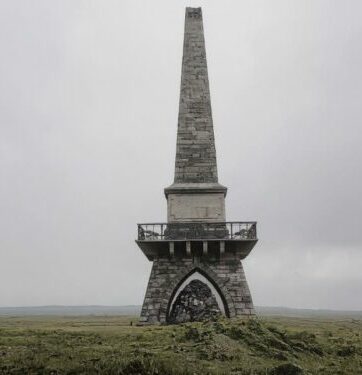
The historical significance of Paardekraal was later formalised through the construction of the Paardekraal Monument in 1890, designed by Sytze Wierda. The monument was erected over the original stone cairn, preserving the memory of the 1880 gathering.
Mattheyse continued that during the Anglo-Boer War, the cairn itself was removed on the orders of Lord Roberts in June 1901 and discarded in the Vaal River near Vereeniging. Despite this act, the symbolic importance of the site endured, and Paardekraal remains a focal point in the historical narrative of both Krugersdorp and the former republic.
The legacy that formed Krugersdorp
He said the commemoration on April 26 is therefore not merely the marking of a founding date, but the quiet recalling of a moment when a people chose resolve over resignation.
“On the open ground of Paardekraal, thousands stood together – not yet a town, not yet a city, but already a community bound by purpose. The stones they laid were more than a gesture; they were an affirmation of identity, of belonging, and of a future not yet written,” he explained.
Mattheyse reiterated that from that act of unity would flow both conflict and renewal.
“Freedom would be regained, gold would be discovered, and in time, Krugersdorp would rise – first as a settlement of tents and claims, and then as a town shaped by industry, memory, and resilience.
“Today, as the rhythms of modern life continue to reshape its landscape, the significance of that beginning remains. Beneath its streets and beyond its buildings lies a deeper inheritance – one rooted in conviction and carried forward through generations. To remember April 26 is to look beyond the passage of years, and to recognise, in the story of Krugersdorp, the enduring echo of those who once stood at Paardekraal and chose to begin,” he concluded.