
The story of the Class of 76 has been told countless times by people other than the participants in the planning and execution of the first demonstration of 1976.
As a result, confusion, half-truths and myths dominate the stories and perceptions about the era.
On June 16, 1976 – in what became known as the ‘Soweto uprising’ – the youth took to the streets of Soweto to protest against inferior education and the use of the Afrikaans language as a medium of instruction. Police fired on these young people, killing and injuring many. Hundreds more died as the protest spread across the country.
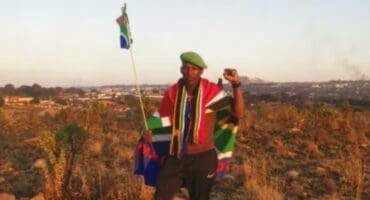
This is why the South African National Civic Organisation (Sanco) chairperson from Kagiso, Raliphi Master Push Xolelizwe, who was part of the organising team, a planner, and the implementer, does not celebrate the day. He mourns instead.
My parents, who were young people in the 70s and 80s, the generation before ours, pursued freedom with everything humanly possible. They used to tell me that Master Push fixates on that day, and instead of popping champagne, he is taken back to the tragic events of 43 years ago. Images of teargas, bullets, soldiers, school children in uniform and mayhem overcome him.
More than 20 000 students marched against the use of Afrikaans as a medium of instruction in the black schools on that chilly Wednesday. The Sanco chairperson mourns for those learners who gave up their lives on that day, when they defied tyranny.
“We were just fearless young people, fed up with the status quo. That’s it!” Master Push said.
As South Africa enters the sixth Parliamentary period since then, we must confront the reality faced by some young people today. They are still languishing in poverty and are plagued by crime, violence, substance abuse, unemployment, and lack of education and/or the requisite skills.
In some quarters, young people say the past struggle was much easier, because it was about fighting a specific regime. Today’s enemy is more multi-layered, it’s a number of socio-economic challenges, all of which make the core problems harder to identify and resolve.
Truth be told though, the conditions under the current democratic government, [even] with all its shortcomings, can never be compared to those under apartheid oppression!
Regardless of colour or creed, the democratic government has a number of programmes and projects aimed at uplifting young people. It’s really up to young people to grab these opportunities.
Absolutely immortal and infinitely spurring are the words of Mandela: “It is in your hands”. You must [not] ask for your future from anyone, [you must] grab it. After all, its yours!