Rare Blyde River gecko rediscovered after 33 years
Two EWT researchers have rediscovered the Blyde River flat gecko, unseen since 1991, confirming it as a distinct and surviving species.
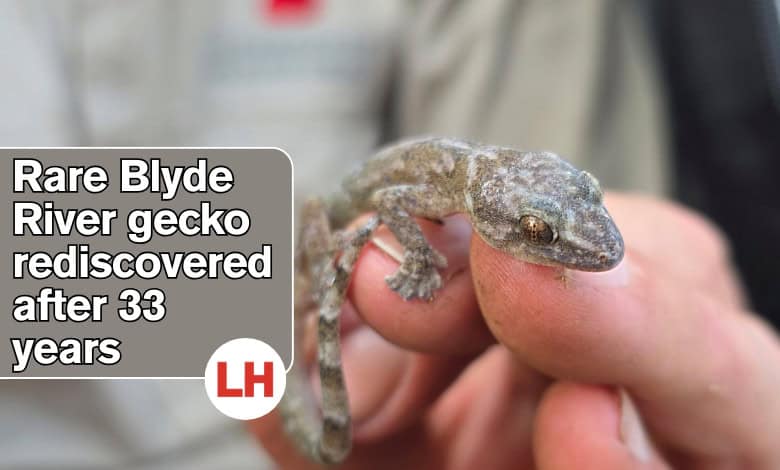
LIMPOPO – Two Endangered Wildlife Trust (EWT) researchers have rediscovered a gecko species in the Blyde River Canyon that had not been seen for over 33 years.
According to EWT communication manager Elenor Momberg, flat geckos (Afroedura) are known for their micro-endemism. “This means that they occur only in one single, or a few localities.”
The Blyde River flat gecko (Afroedura rondavelica) is known from only a single nearly inaccessible inselberg in the Blyde River Canyon.
This species was first discovered by Dr Niels Jacobsen in December 1991, when he collected two males. The species was only formally described in 2014, and the two specimens collected by Jacobsen remained the only known representatives of this species for more than 33 years,” she said.
She said that over the years, some debate has emerged regarding the taxonomic status of these specimens, with some experts surmising that they are merely juveniles of another species that occurs nearby.
“Because the species had not been recorded for more than 10 years, it was classified as a ‘lost’ species by re:Wild. The general lack of information regarding the species, taxonomic uncertainty surrounding it, and the possibility that it may have gone extinct, resulted in this species being listed as data-deficient in the latest IUCN Red List of Threatened Species assessment.”
She said in April this year, two EWT researchers, Dr Darren Pietersen and John Davies, visited the area to determine whether the gecko still inhabited the same inselberg. Following a process of about two years to secure the required permits to visit the difficult-to-reach site in the Blyde River Canyon, the researchers were able to access it by helicopter. They confirmed not only that the species had survived, but also the morphological and therefore taxonomic distinctness of the species.
She said the ecological and population data that they collected will allow this species’ conservation status to be re-evaluated, moving it out of the data-deficient category.
“Tissue samples were collected to facilitate an in-depth genetic investigation as to the taxonomic placement of this species within the genus, and to confirm its status as a distinct species. What makes this rediscovery particularly significant is the fact that this gecko has not been seen since it was first discovered in 1991, and until recently, Jacobsen was the only person to ever see this species alive,” she said.