Lost plant species rediscovered in Blyde Canyon
A plant last seen in 1954 has been rediscovered in the Blyde River Canyon, thanks to restoration efforts by the Kruger to Canyons Biosphere.
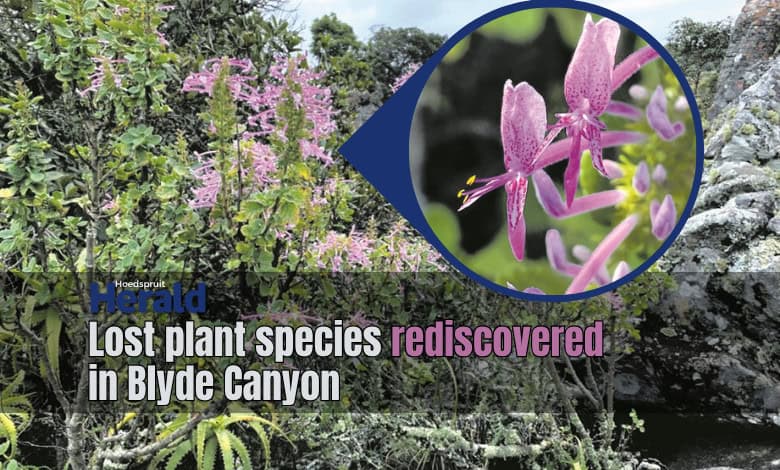
HOEDSPRUIT – A plant species not seen in over 70 years has been rediscovered in the Blyde River Canyon, bringing new hope to conservationists and scientists.
The rare species, belonging to the genus Thorncroftia, has now been identified as a new and unique species, endemic to the canyon and likely unknown to science until now.
The rediscovery was made possible through the ongoing ecological restoration work led by the Kruger to Canyons Biosphere (K2C).
The area surrounding Mariepskop, once home to natural grasslands and forest patches, was transformed in the 1960s by commercial pine plantations. This severely damaged the ecosystem, pushing many native plant species to the brink of extinction.
The story of this remarkable find dates back to 1954, when botanist Dr Leslie Codd collected a specimen, he believed to be Plectranthus succulentus.
He later reclassified it as Thorncroftia in 1961. However, no further sightings of the plant were recorded, and it gradually faded from scientific memory.
In recent years, K2C’s catchment restoration programme began clearing invasive pine and gum trees from the area to rehabilitate the degraded landscape.
These efforts, carried out by local teams, helped restore natural light and nutrients to the soil, conditions essential for the return of indigenous plant life.
In September 2024, Prof Kevin Balkwill, alongside K2C project manager Simon Attwood and members of the Mpumalanga and Limpopo Plant Specialist Group, set out to find the lost species.
Using historic herbarium records and aerial imagery, the team retraced Codd’s original expedition.
Despite heavy degradation of the site, a few Thorncroftia plants were discovered growing on rocks recently cleared of pines.
“This plant would have been lost forever if the alien trees weren’t removed,” said Attwood. “Restoration made the difference between extinction and survival.”
Originally thought to be Thorncroftia succulenta, a species found only in the Soutpansberg mountains, the Blyde River Canyon population displayed unique floral features and occurred far from known populations. This, along with clear morphological differences, led to the conclusion that the Blyde plant is a distinct species.
In April 2025, during peak flowering season, the team returned and found the plant in full bloom, confirming its uniqueness. Balkwill has now formally described the species as Thorncroftia coddii, in honour of Codd’s role in its discovery.
The plant is characterised by vibrant purple and pink flowers and a distinct floral structure. It typically blooms at the end of summer, lighting up the rocky hillsides where it grows.
“This discovery is more than a scientific milestone,” said Attwood. “It symbolises nature’s resilience and the power of restoration work.”
The rediscovery highlights the importance of ongoing conservation efforts in the Blyde River Canyon Nature Reserve. The K2C Biosphere’s work not only protects biodiversity but also secures critical ecosystem services for nearby communities, such as water supply and tourism opportunities.
As the landscape continues to heal, Thorncroftia coddii stands as a powerful reminder of what can be achieved through persistence, restoration, and a commitment to protecting South Africa’s natural heritage.