Bee-lieve it or not: Giyani farmers use bees to keep elephants away
Giyani farmers are using bees and chilli fences to keep elephants away from their crops, a “buzz-worthy” solution bringing peace to farms.

LIMPOPO – Community members living along the Kruger National Park (KNP) fence share a common struggle of having to confront wandering elephants that frequently invade their farms and destroy their crops.
These animals often break through fences in search of food and water, leaving behind a trail of damaged fields, broken infrastructure, and huge losses for small-scale farmers, most of whom depend on their farm produce for survival.
Bees and chilli to the rescue
Recognising the need to protect communities and promote peaceful coexistence between people and wildlife, the KNP, together with its partners, empowered the owners of the Gingirikani farming project with the skills and tools necessary to fend off elephants.
“The introduction of elephant deterrents, from chilli fences to beehives, has not only reduced crop damage among the communities bordering the KNP fence, but also changed how these communities perceive wildlife,” said Derick Mashale, Nxanatseni regional ranger in the KNP.
“Instead of fear or hostility towards these animals, there is now understanding and respect for nature. That is why we called the initiative Ndlopfu-Kurhula, which means ‘Elephant Peace.’ The name symbolises a new era of living in harmony with nature … an era that this community is leading with pride,” he said while speaking at the launch of the Gingirikani project on Thursday.
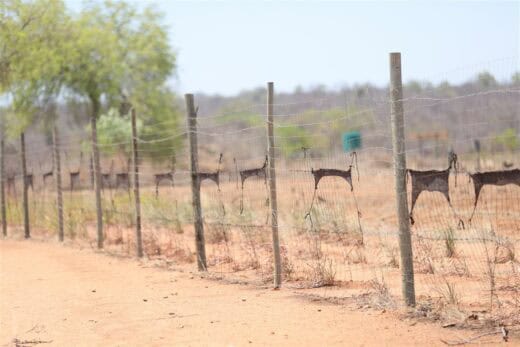
How the bee fence works
Over the years, human-wildlife conflict has been one of the biggest challenges facing communities bordering the park, threatening both food security and livelihoods. But for the Gingirikani farming project, elephants are no longer a major threat to their crops. They have found a way to repel them, not with weapons, but with creativity.
“We have beehives strategically placed along the fence, as well as small pieces of cloth laced with pepper and soaked in used oil,” explained Gingirikani project manager, Vincent Mabunda.
“The idea behind the bee fence is simple and based on the fact that elephants are afraid of bees, and they don’t like taking risks with them,” he explained.
“When they hear any buzzing sound, they associate it with painful bee stings, which, if they happen, can send an entire herd running like mad animals, and therefore stay away from the area where that sound comes from,” he added.
Read more: Limpopo farmers use bee barriers to deter elephants
According to Mabunda, they also have spotlights along the fence, which help keep elephants away at night.
“This includes a watch-tour where we can spot elephants from a distance and prepare our defence even before they could get close to the farm,” he said, thanking the park for its support and donations.
“I can’t wait for harvest day. I love honey, and now that we will be producing it here on the farm, it’s a bonus for me,” said Mabunda with a smile.