
Glencore denies authenticity of Australian war claims
The Glencore group has responded to the allegations that the mining giant had cut corners with the relocation of four graves laying slap dash in the middle of its future Kwagga North pit.
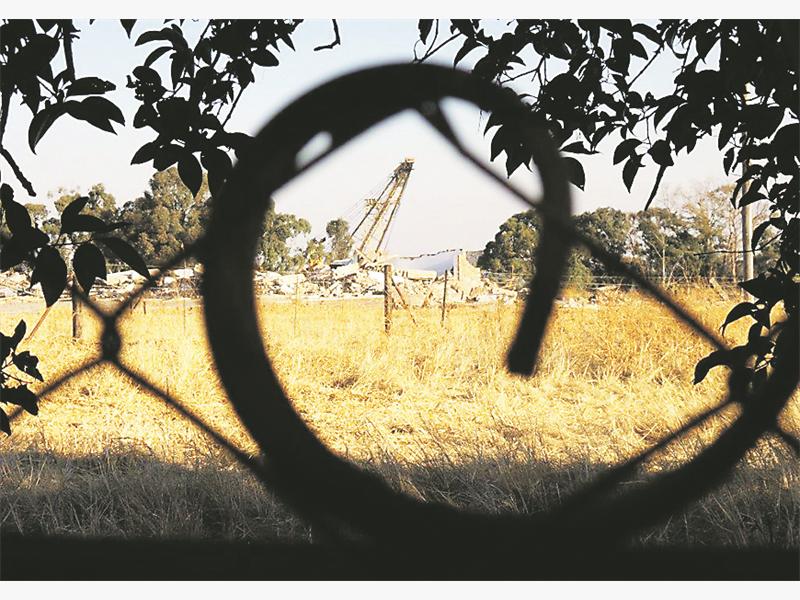
The SA Heritage Resources Agency (SAHRA), Steve Tshwete Local Municipality and Glencore’s head offices, have been flooded with written petitions from a number of Australians, who believe that a fallen war hero was among the remains that were relocated to Hendrina cemetery in 2006.
The pit is being developed on a portion of the farm Bosmanspruit where more than 40 other graves are located.
Altogether 15, of the 40 graves, have been earmarked for relocation, and discussions with the municipality in regards to the relocation, have ensued.
The international furor over the relocation of Australian soldier, Clarence Chudleigh Clifford, started after a group of Pimlico High School in Queensland, visited the area and started looking for the brave soldier’s grave.
They could not find it in Middelburg and, with the help of documented evidence on the Battle of Brakpan, traced it to the farm, on which local historians like Corine de Jonge, whose family resided on the farm for well over 150 years, believe the battle was fought.
The mine is alleged to have breached the permit stipulations by relocating the graves to Hendrina, in stead of Ermelo, for which permission was granted.
Allegations that the mine also obtained the permit without disclosing the historical value of soldier Clifford’s grave, and only obtaining the permit after the graves were relocated, was also leveled in writing by Australian heritage crusaders.
They have vowed to petition the Australian government to stop further mine development, and have soldier Clifford’s remains, returned to Australia.
According to Mr Gugulethu Maqetuka, of Glencore, its Optimum Kwagga mine operates in strict compliance with all applicable legislation.
“Appropriate grave relocation permits were obtained in 2006 from SAHRA, authorising relocation,” he said.
He continued saying that, in 2006 when the graves were relocated, there was no evidence presented that the unmarked grave, had been that of an Australian soldier.
He says that no one came forward during the public consultation process, to ascribe the grave to a specific fallen soldier.
“Despite investigations into history of the area, the heritage impact assessment done at the time, did not contain any indication to substantiate the content of the letter of complaints from Australians,” Mr Maqetuka says.
He says that in July 2014, Ms de Jonge, “came to the conclusion that the unknown grave was that of Clarence Chudleigh Clifford, based on assumption and no factual evidence”.
The graves were relocated to Hendrina, in stead of Ermelo, because Ermelo had no space.
According to Mr Maqetuka, the reference to the battle of Brakpan having been fought on the mine’s property, is incorrect.
“The farm known as Brakpan 1631IS, is not part of our mining operations, and is located approximately 17km Southeast of Optimum Kwagga operations,” he said.
“A little close for comfort,” Ms De Jonge remarked, adding that she will continue to fight for the relocation of all family graves, not only selected graves, in the path of the mine’s bulldozers.
.