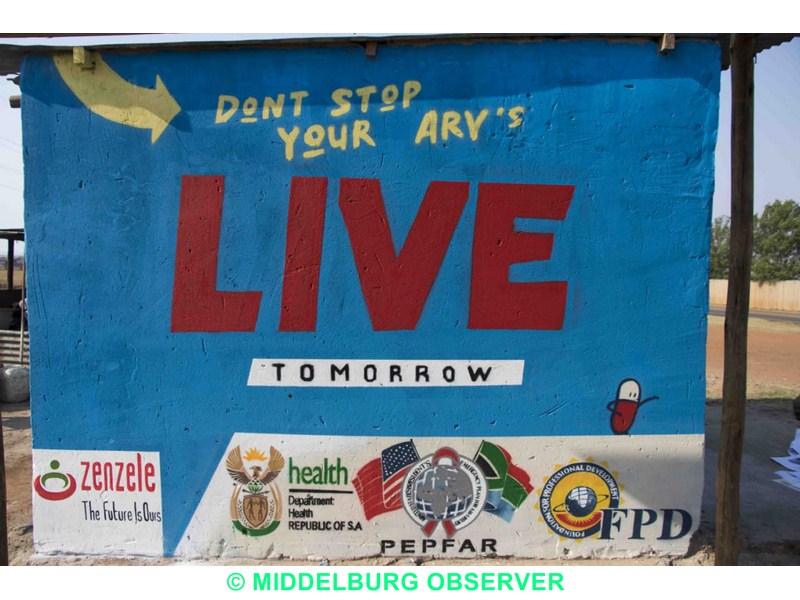
Street art for ARV awareness
Human Immunodeficiency Virus (HIV) is a very real problem on a global scale.
It doesn’t discriminate, it doesn’t restrict itself to a specific race, religion, gender or class. It’s a debilitating disease, broadly attached to stigmatisation, is life-threatening and incurable.
The medical field is doing everything in its power to curb the spread of HIV. They have their hands full of its victims.
The worst part is, it can be brought to an end. HIV can be killed off in a gradual manner through means of prevention and with education.
It’s scary to think that despite its notorious reputation, most people do very little to protect themselves from it or to help those who have to live with it.
Most people look at the thousands of HIV campaigns and roll their eyes. The topic has been discussed to the point of boredom.

One simply can’t help but raise their hat to the people who still diligently try to fight it.
The Centre for Communications Impact (CCI) was commissioned by FPD with funding from sponsors such as Pepfar and the CDC to launch the ART Adherence Communication Programme.
Lack of education appears to be the strongest life source for the dreaded virus. Efforts are made beyond expectation to infiltrate the more rural communities.
The biggest problem most clinics experience comes from patients not taking their antiretrovirals. Few people understand that poor treatment adherence leads to drug resistance, worsening of medical conditions, unnecessary health complications and increased morbidity and mortality.
Factors that contribute poor treatment adherence include the following: Inability to collect treatment or attend appointments due to location and access, the patients’ belief about the severity of their illness, denial or loss of hope for improvement, fear of side effects and discrimination from clinic staff or family members.
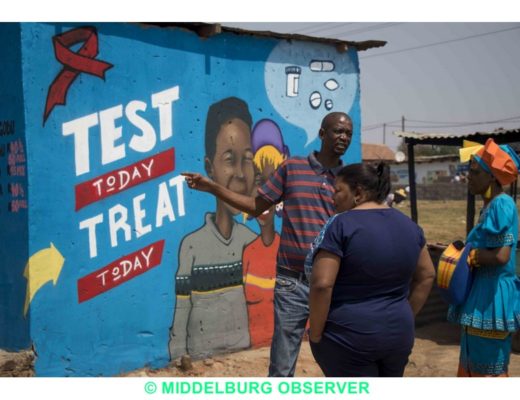
As part of the Zenzele communication programme, street art is used in strategic public places to promote HIV treatment and adherence and anti-stigma messages.
Last week Friday, Umjamaa Arts coincided with the Department of Health, Pepfar, FPD and CCI to paint HIV awareness slogans in areas like Ekurhuleni and Mhluzi.
The further they spread the message of how essential it is for HIV victims to adhere to treatment, the sooner the virus can be contained.
After all, it’s as they say, “It could happen to you”.
Other News:
R10 000 reward for information
‘We should kill him’ – Truck driver hears how hijackers argue about his fate
#TrafficUpdate: Avoid N4 near Machadodorp
VIDEO: Machadodorp two granted bail
Want breaking news on the go?
• Save our standby number (072 248 3855) and send us a WhatsApp message with the words “Add me” to be added to our broadcast list.
• Like us on Facebook, follow us on Twitter and Instagram.
• Subscribe to our YouTube channel.
• Click on the link to subscribe to our bi-weekly newsletter via email.
Have a news tip?
Contact our news room on our 24 hr standby number 072 248 3855, or send a mail to our editor tobie@mobserver.co.za