Middelburg Heritage: The week in Middelburg’s History
Middelburg the Centre of first Peace Negotiations during the Anglo-Boer War - 28 February 1901
Middelburg, the Centre of first Peace Negotiations during the Anglo-Boer War – February 28, 1901
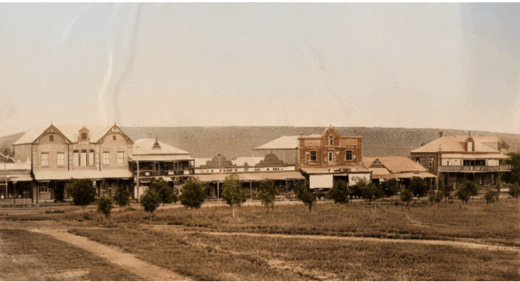
British troops captured Middelburg on Friday, July 27, 1900, during the Anglo-Boer War (1899–1902). The town was handed over to the British Commander by the Acting Magistrate. However, Middelburg also became the centre for the first Peace Negotiations between the two military commanders-in-chief.
Run up to the Peace Negotiations in Middelburg
In February 1901, Lord Horatio Herbert Kitchener, British Commander-in-Chief, again requested Mrs Annie Botha, wife of General Louis Botha, at the time Commander-in-Chief of the Zuid-Afrikaanse Republic (ZAR), to take a message to the general with peace proposals. Botha discussed these proposals with the Executive Council of the ZAR, and on February 22, 1901, Mrs Botha returned to Pretoria with a letter from General Botha that he agreed, according to him, on certain conditions, to talks with Kitchener. After further correspondence, it was determined that the negotiations would take place in Middelburg on Thursday, February 28, 1901.
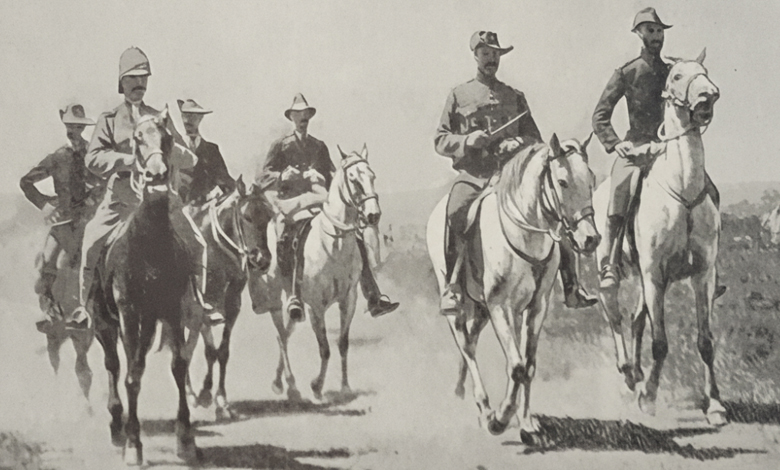
General Botha, accompanied by his secretary and four others, travelled on horseback from the Ermelo area to Middelburg. He described how they had selected the best horses in the camp, and he even used some of his scarce soap to wash his white horse, to make the best impression.
Lord Kitchener’s journey to Middelburg and Hindon’s Scouts
Kitchener also left for Middelburg from Pretoria by train, but the specific date is uncertain.
Captain Jack Hindon and his scouts were at the time actively involved in railway attacks south of Middelburg. He received information that Kitchener was travelling by train to Middelburg and decided to blow up the track under the train and capture Kitchener. A mine was set beneath the railway south of Uitkyk, but it failed to detonate, allowing Kitchener’s train to travel safely on to Middelburg. There was no explanation as to why the mine did not explode this time!
Kitchener arrived at Middelburg Station and stayed in Highbury Hall.
Highbury Hall
Mr Henry Joseph (Harry) Laver (Snr), at the time 39 years old, was a businessman of the town and owned a shop and mill at Witpoort, near Dullstroom. He built a graceful, spacious house, fronting Walter Sisulu Street, where the Rinahof apartments now stand. The house was designed with two front gables and a central porch, typical of the style of building in the 1890s in Middelburg. The house was basically the first house from the southern entrance to the town.
He called the house Highbury Hall. It is unknown whether Laver named the house after Highbury Hall, the residence of Joseph Chamberlain in Birmingham, England (Chamberlain was a member of the British Parliament and Minister for the Colonies from 1895 to 1903).
Due to health problems, Henry Joseph returned to England with his wife and three sons in 1896, leaving the house and businesses in the care of his brother George.
The Commanding General, General Lyttelton, now established his headquarters at Highbury Hall. Whether the Lavers made the house available or whether it was commandeered is unknown.
Peace Negotiations
Outside the town, at the intersection of the old Belfast road north of the Klein Olifants River and the Stoffberg road, Botha was met by a British Military Escort of Hussars, who then accompanied him into town. The Boer group arrived in Middelburg at 10:00 on February 28, 1901, and drove directly to Highbury Hall, the headquarters of General Neville Lyttelton. General Lyttelton himself was in Cape Town at the time of the negotiations and therefore not involved. Kitchener came to meet Botha and shook his hand. Kitchener took Botha into the house alone and began his discussion. The further negotiations took place under the trees in the garden of Highbury Hall.
A range of topics was addressed. Botha, however, insisted on the independence of the ZAR and the Orange Free State, to which Kitchener responded that this was not acceptable to the British Government. Further discussions followed, and Botha protested about the mistreatment of women and children, to which Kitchener agreed to have the complaints investigated. According to the record, Kitchener listened attentively and undertook to conduct investigations. Kitchener also offered medical supplies and ambulances to the Boers.
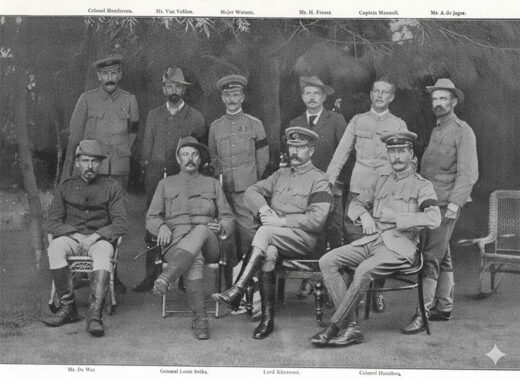
The discussions further included the role of the black population in the war, future language policy and reconstruction compensation. The talks in Middelburg highlighted several key aspects of the peace terms, but the core point of maintaining independence was undermined. The terms agreed to by Kitchener were more equitable than the later final Peace of Vereeniging terms, but were later adapted by Milner and Chamberlain to the final peace terms.
The talks ended at approximately 15:00, and Botha and his team left Highbury Hall on horseback and were again accompanied by a British escort, who saluted him as he left the town.
On March 16, 1901, Botha formally rejected the peace proposals, and the war continued for another 15 months.
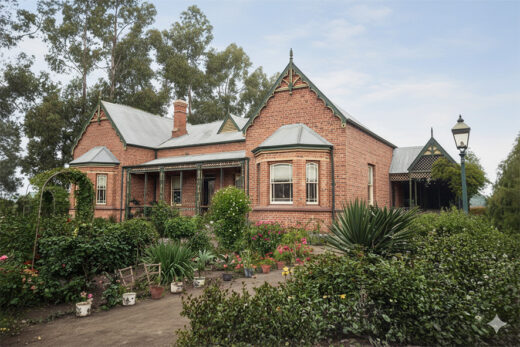
Highbury Hall after the war
Laver and his family returned to Middelburg after the war, and he would later become the mayor of Middelburg from 1907 to 1909. Harry Laver (Snr) lived in the house after the war. He ran his business in Southampton House, his business in Walter Sisulu Street across from the current Van Blerk Square, for years until he died in 1938. He was laid to rest in Middelburg’s old cemetery.
Highbury Hall was eventually rented out before being demolished in the late 1960s to make way for an apartment building.