
Goosebumps moment when Mncedi started blowing his trumpet
A star at Concentration Camp Commemoration Day.

“The star of the evening!”
This is how Mncedi Nhlapo’s trumpet contribution at the Concentration Camp Commemoration Day was described.
“The best last tattoo I’ve ever heard,” said Willie Oosthuizen, a member of the Middelburg Heritage Association. The heritage association was so impressed that they will present Mncedi with a special certificate.
During the event, Theo Ligthelm said, “The Anglo-Boer War was a war between Imperial Britain and the entire population, White and Black, of the two small Boer Republics – the South African Republic (later the Transvaal) and the Orange Free State from 1899 to 1902 – 127 years ago!
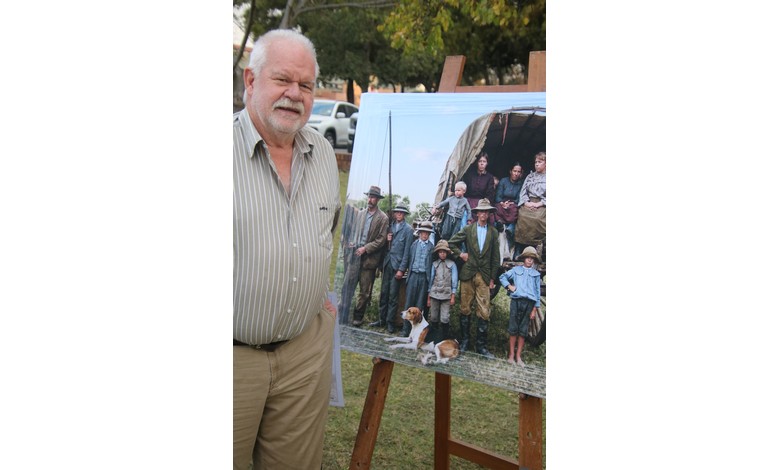
“Unfortunately, it was not only a war between fighting soldiers or civilians, but also a war against unarmed elderly, disabled, women and children.
“On June 16, 1900, Lord Frederick Roberts, the British Commander-in-Chief, proclaimed that Boer farms in the direct vicinity of so-called sabotage would be burned down. This was later applied, especially where there were attacks on the railway network.
“Under Roberts’ successor, Lord Horatio Kitchener, this action got out of hand, and these attacks on Boer homes became raids that destroyed everything. In total, approximately 30 000 homes were burned or looted, and entire towns, including Bethal, Ermelo and Carolina, were burned down.
“As the war turned into guerrilla warfare, with small groups of Boer warriors moving around quickly, Kitchener intensified drive hunts to remove undesirables, such as the women and children of fighting burghers, from farms, burn down houses, destroy all supplies and confiscate or kill all farm animals, sheep, horses and cattle. The photographs show us what these poor people looked like”
These women, children and elderly people were brought together in camps. But also farmer families and burghers who had surrendered were taken into the camps.
“By November 1900, the first camp in Middelburg was established in the houses opposite the station, which still exist today. By December, Kitchener ordered that a formal concentration camp be established in Middelburg. The site where the camp was located stretched from approximately where CR Swart Primary School is now to Aerorand, with the central part on the site of the Higher Technical School.
The camp grew very quickly, as families were caught in drift hunts and brought here with little clothing or bedding. By July 1901, there were 7 750 inhabitants in the camp, while the town only had about 500 inhabitants. The camp was very poorly planned and hopelessly too few tents, drinking water and facilities were available, as shown in the photographs.
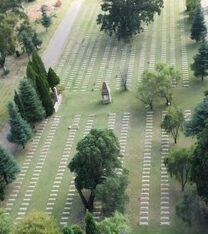
July 1901 is also described as an exceptionally cold winter in Middelburg, with these families in leaky tents on this plain, with no beds or warm clothing. In July, there were an average of 13 burials per day in Mineralia Cemetery of children, mothers and the elderly who died of measles and pneumonia, among other things.
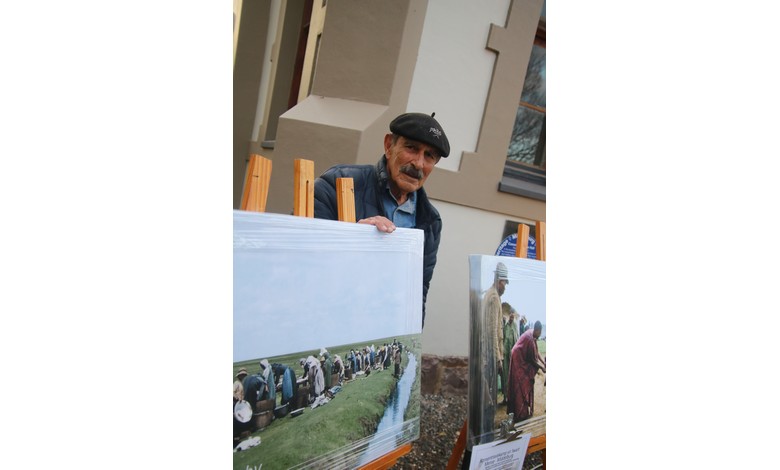
“We are standing here this afternoon on the site where the hospital stood, approximately, where most of these people died. By October 1901, a Commission was sent by the British Government to investigate the camps, which Emily Hobhouse strongly opposed. This Committee of Ladies described the Middelburg camp as the weakest camp in the entire camp system, with a very poor organisation and layout.
The camp was moved to Kanonkop, and some of the inhabitants transferred to Balmoral and others to Durban. The camp at Kanonkop, however, still had more than 5 000 inhabitants, but the conditions were mercifully better.
“It was, unfortunately, not only the Boer families that were forced into the camps, but also the Black families living on the farms. The British decided not only to allow Black workers to accompany their employers to the camps, but also to remove all Black families that might assist the Boers from the farms. Black homesteads were also burned down, crops burned, animals confiscated, and the families forced into camps.
“Approximately 80 000 Blacks were taken to camps all over South Africa, with the main camp for this area at the Olifants River Railway Station between Middelburg and eMalahleni. The conditions in these Black camps were even worse than those in the White camps. No tents were provided, and they had to build shelters for themselves from material collected in the vicinity.
Only ½ a penny, that would constitute about R2.25 today, was allowed per person for food, with the objective to force the Black men to work for the British to be able to buy more food. An estimated 20 000 Black people died in these camps in the country.
“In Middelburg, the initial Black camp was west of the Kanonkop camp. We have a record of about 70 Black people who died in this camp, with the oldest a gentleman called Jan, 100 years old, who died from bronchitis, and the youngest, Katalika, only seven days old, dying from diarrhoea.
“The Guerrilla phase of the war, increased sweeps were conducted and Black people were loaded onto trains, just to be offloaded in the veld next to the railway line where the train turned around. At that stage, the Black township of Middelburg was around Meijer Bridge, and a second camp developed in the area for the people just offloaded from the train at Pan Station.
Mhluzi only started to develop at that time, and it is possible that a third camp developed adjacent to this new township. “We can only estimate the Black deaths in the Middelburg camps at roughly 500, as no records are available. We don’t know how many people died at Olifants River Camp.”