The South African provincial governments, particularly in Gauteng and the Western Cape, have intensified their crackdown on unsafe learner transport, conducting roadblocks, impounding unroadworthy vehicles, and arresting drivers operating without valid permits.
Authorities are enforcing a zero-tolerance approach to overloading, while also checking for seatbelts, valid driver’s licences, operating permits, and properly fixed seating in scholar transport vehicles.
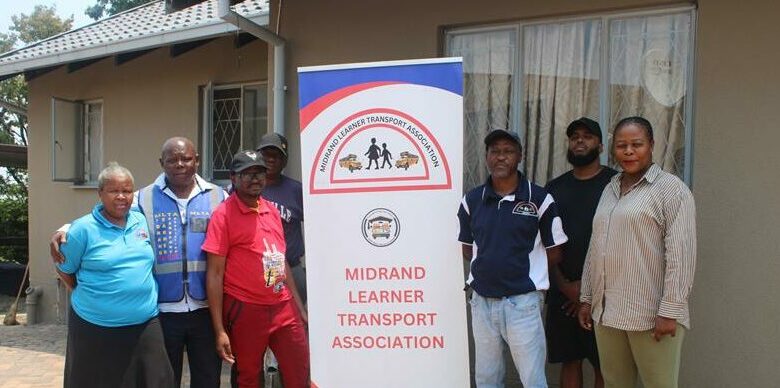
The Midrand Learners Transport Association (MLTA) has thrown its support behind government’s efforts, maintaining that its members have always complied with the law.
MLTA operates across Midrand in two divisions. The township sector serves areas including Ebony Park, Ivory Park, and Rabie Ridge, to name a few, while the town sector covers Noordwyk, Halfway House, Blue Hills, etc. Both divisions operate under the same association.
Read more: Transport minister outlines SA’s ambitious 2029 road safety and transport targets
The association falls under Gauteng Education Transport Services (Gets), the provincial mother body that represents private scholar transport associations and operators across Gauteng. Gets co-ordinates non-subsidised learner transport from nursery school to tertiary level.
MLTA town chairperson Phil Pillay said the recent tragedy in Vanderbijlpark, where a scholar transport vehicle collided with a truck on January 19, killing 14 learners, deeply shook the country.
“[The accident] did affect everybody. I don’t think it only affected school transport; it affect the transport industry as a whole, because a truck was [also] involved. Taxis are also feeling the pressure now from the police department. So in that regard, it affected everyone, including parents, and it’s not an easy thing for those parents to have lost their children in the manner that they did. That’s the saddest part of it all.”
Pillay said the incident had strengthened the association’s resolve to prioritise safety. “That’s why we have a training officer who is running initiatives to train drivers to transport children in a safer manner. We’ve already trained a number of drivers, but we haven’t reached everyone yet. We want to expand the programme and get more drivers involved.”
South Africa’s learner transport regulations have long been a subject of debate, particularly Regulation 231 of the National Road Traffic Regulations, under the National Road Traffic Act (93 of 1996), which allows children to be counted as fractions of a person when calculating vehicle capacity.
Under the regulation, children under three years old are not counted as passengers if they do not occupy a separate seat. For children aged three to six, two children are counted as one adult, while three children, aged six to 13, are counted as two adults. Only children aged 13 and older are counted as one full passenger.
However, the regulation has been criticised for contradicting other safety laws, including Regulation 213, which requires every passenger to wear a seatbelt if one is available, something that becomes impossible in overcrowded vehicles.
Also read: Transport department sets bold target to cut road fatalities by 45% by 2029
MLTA town training assistant Buti Mokgoera said the regulation should not be used as an excuse for unsafe practices. “Yes, the traffic act does dictate that [one child be counted as half a person], but it doesn’t mean you have to put everyone in there as a half person. It’s a matter of knowing how to load and seat learners safely.”
Amid social media claims by some school transport drivers that the government should allow more time for vehicle registration and compliance, MLTA all-round secretary Tebogo Maledi said operators were aware of the law from the start. “Drivers saying government should give them more time to register their vehicles knew the law from the beginning. We want all cars and drivers to comply with the law. Anyone who doesn’t comply must go to court. That’s why MLTA has ongoing training officers who check vehicles on our behalf.”
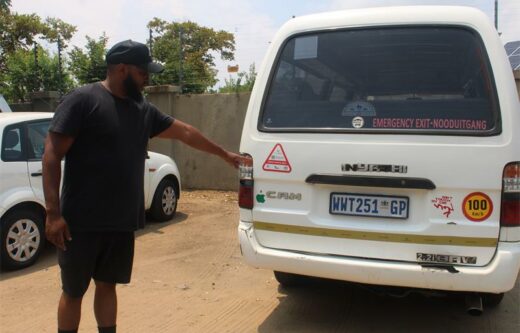
Maledi said that complaints from residents about school vehicle drivers often concern unregistered operators who are not affiliated with the association. “We can’t act against those who are not members, but when it comes to our members, we deal with them. If a driver breaks the rules, we take them to our disciplinary committee. That’s why we support government and the police as they enforce the law.”
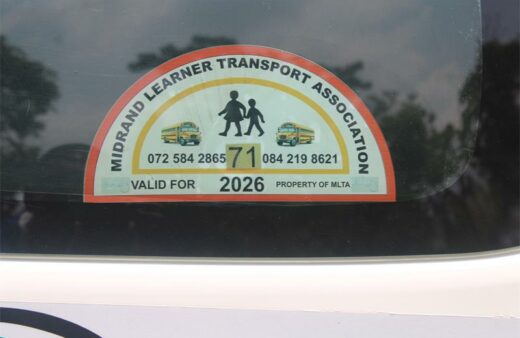
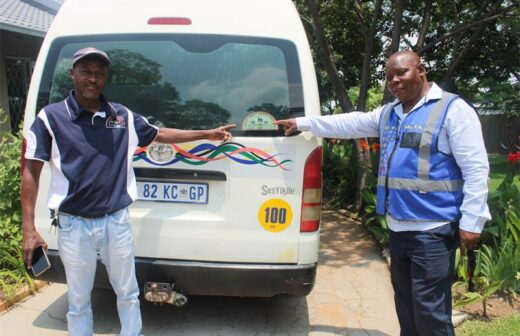
MLTA has urged local scholar transport operators to formally register with the association, stating that registered vehicles are issued an official association stamp indicating their year of operation, among other documents.
MEC warns scholar transport operators
As of January 2026, MECs and transport departments have adopted a zero-tolerance approach, promising to impound unroadworthy vehicles and arrest drivers without valid licenses and professional driving permits (PrDPs).
Before the fatal collision, the Gauteng department of roads and transport (GDRT), on January 11, had issued a stern warning to scholar transport operators as schools were about to reopen. The warning was that unroadworthy vehicles, and those operating without valid permits, would be impounded immediately.
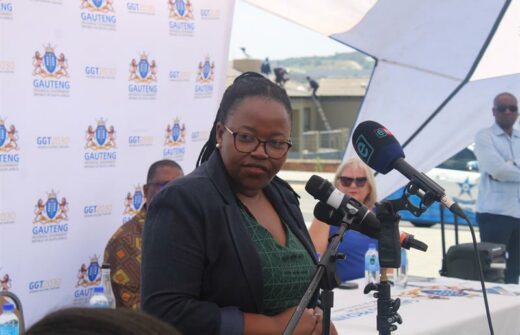
MEC for Roads and Transport Kedibone Diale-Tlabela said the safety of learners travelling to and from school is non-negotiable, and the government will not tolerate operators who place children’s lives at risk.
“For the next nine months, millions of children will depend on drivers to get them to school safely. Every time a child gets into a vehicle or walks near a road, their life is in someone else’s hands. We will not allow unroadworthy vehicles or unlicensed operators to transport our children.”
Also read: Department of Basic Education publishes 2026 school calendar
Since the opening of schools, intensive scholar transport inspections have been conducted at schools, along transport routes, and during peak travel times across SA. Vehicles found to be unroadworthy or operating without the required permits are being impounded on the spot, while drivers without valid licences are arrested.
The MEC also called on parents to play an active role in protecting their children by refusing to pay for unsafe transport. “Parents have power. Your money gives you a voice. Don’t pay for transport in a vehicle that doesn’t have proper seating for every child, working seatbelts, or is visibly unroadworthy. Report unsafe vehicles to us.”
She further appealed to all motorists to exercise extra caution near schools and scholar transport vehicles. “You might not have children in your car, but you share the road with them. That child crossing the road could be distracted or running late. You’re the adult in control of a ton of metal. The responsibility to watch out for them is yours.”
Scholar transport safety remains a key priority in the service delivery agreement signed between Diale-Tlabela and Gauteng Premier Panyaza Lesufi. “We committed to ensuring safe roads for every Gauteng learner. Government is doing its part through enforcement. Now we need every driver, every parent, and every operator to do theirs. E thoma ka wena – It starts with you.”
She also reaffirmed that the department is ready to assist compliant operators, but there will be zero tolerance for unlawful operations and non-compliance. Enforcement will continue to protect learner safety.
Also read: MEC for Roads and Transport commits to concluding roads projects on time and in budget
The Gauteng department of roads and transport has clarified the process for scholar transport operators who have never applied for registration.
Operators must submit applications with all required documents:
• Copy of the contract (for purposes of contracted services).
• Certified SA ID copy (for purposes of contracted services).
• Tax compliance status.
• Proof of residential address.
• Letter of recommendation from the school with original signature and stamp.
• List of learners with parent/guardian contact details.
• Professional driving permit (PrDP).
• Route description.
• Should have a CK/business that must reflect the CK details, eg, SARS, and all documents attached with ID copies of the directors.
• Police clearance certificate.
• Indemnity insurance cover.
• Commitment to comply with compliance with labour laws, in respect of drivers and staff, as well as sectoral determinations of the department of labour.
• R600 per application per vehicle (card payments only). Please note that the applicant is the only one that can submit and pay for the application.
Applications must be submitted in person at designated Transport Operating Licensing Administrative Body regional offices during office hours. (08:00–16:00)
• Tshwane – 230 Lilian Ngoyi Street, Pretoria Central.
• Johannesburg – 45 Commissioner Street, Marshalltown.
• Ekurhuleni – 1 Hardach Street, Germiston, Ekurhuleni.
• West Rand – Kagiso Drive and Mmusi Street, Kagiso.
• Sedibeng – 45 Commissioner Street, Marshalltown.
Follow us on our WhatsApp channel, Facebook, X, Instagram, and TikTok for the latest updates and inspiration!