
Water levels critically low
Inadequate rainfall has led to rivers drying up and dam levels falling to crisis levels.
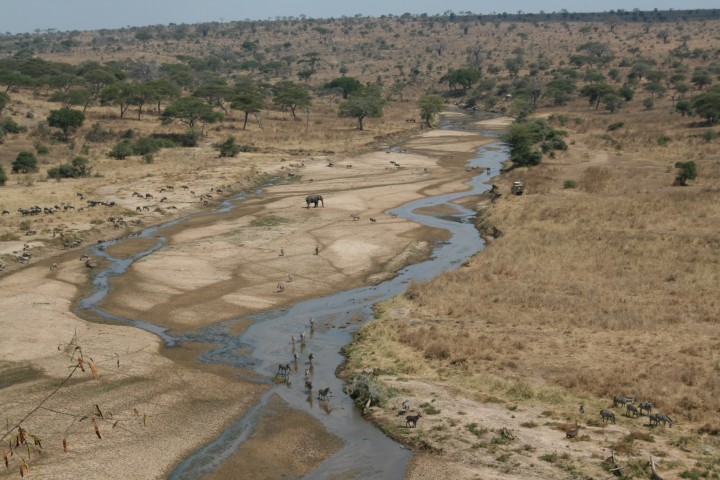
MBOMBELA – Merely days after KwaZulu-Natal and some parts of the Free State were declared disaster areas, this province finds itself facing one of the biggest droughts in decades.
This is a result of inadequate rainfall, which has led to rivers drying up and dam levels falling to crisis levels.
In order to prevent the disaster and unnecessary water wastage,
Mr George Mthethwa, the spokesperson for cooperative governance and traditional affairs has asked households and businesses to reduce their water consumption by at least 70 per cent.
“The fact is we are slowly running out of water and if we do not preserve the little we have now, we will soon find ourselves in the same crisis as KZN and Free State provinces.
We are calling on businesses such as car washes to reduce their consumption.
We further urge households to do the same and maybe refrain from irrigating gardens at this point in time until the situation is back to normal,” Mthethwa said.
He added his department has already begun creating awareness and fixing leaking pipes to save water.
“Between 50 and 70 per cent of our freshwater is being wasted through burst pipes, malfunctioning pumps, broken taps and reckless water use.”
The water- management institution, Inkomati-Usuthu Catchment Management Agency, has called for further restrictions on water supply from the Crocodile River.
In a letter seen by Mpumalanga News, it advises the council to reduce its raw water use abstraction by at least 20 per cent with immediate effect at all locations within the Crocodile River catchment and its tributaries.
“Due to significantly below-normal rainfall and the extreme high temperatures we are currently experiencing in the Inkomati-Usuthu water- management area, levels in the Crocodile and Sabie River are extremely low.
“The international obligations, environmental-flow requirements and the needs of water users are thus not being met in the lower portions of these rivers and further intervention is required,” read part of the letter.
“We are currently releasing 6m³/s from Kwena Dam, and have restricted the irrigation sector to half of their full unrestricted abstraction hours.”
The agency has also advised the municipality to immediately issue notices to users to stop the irrigation of gardens within their areas.
This newspaper has since learnt that the flow of water in the Crocodile River has completely stopped downstream of Malalane, meaning that communities within the Nkomazi subregion are now only relying on the Nkomazi River and the Driekoppies Dam for water consumption, which according to the local council spokes-person, Mr Cyril Ripinga was not enough to supply the more than 50 communities in the area.
The South African Weather Service has predicted low rainfall this season and this may result in even more aggravating circumstances.
“We have two situations, one which we call La Nina which is associated with much rainfall and we call it wet season, and the other one is El Nino and is associated with dry conditions which will result in drought.
“Indications are that El Nino is strengthening and we should be expecting below-normal rainfall.”