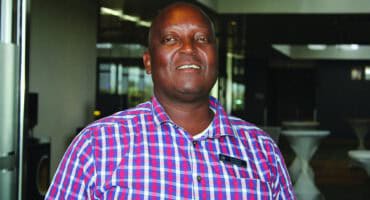
Getting to know Yvette
Yvette Alta Raphael: Advocacy for Pre-exposure prophlaxis as HIV Prevention Part of the Series, "Advocates in Their Own Words," by UNAIDS September 22, 2015
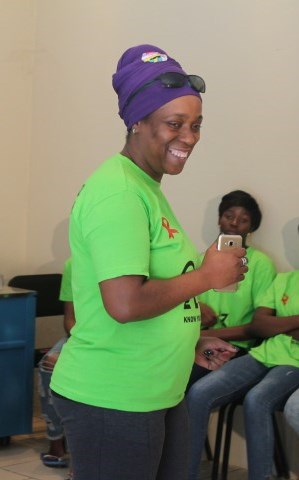
Yvette Alta Raphael is a consummate leader in the fight against HIV/Aids.
As a woman who has been living with the virus for over 15 years, she has experienced first-hand what HIV stigma, insufficient prevention education, and reduced access to health care can do. She co-founded the Tshwaranang Care Centre for People Living With HIV/Aids (PLWHA) in South Africa. She has spoken around the globe to advise researchers, advocates, and policymakers on how to best win the war against HIV/Aids.
Her passion has been to improve the health outcomes for young women and girls, but she has also used her expertise to develop policies in the workplace and to create better, more efficient structures to utilise the available governmental resources to end the scourge.
What got you involved in the Aids movement, and particularly PrEP advocacy?
I was diagnosed with HIV/Aids when I was 26. My daughter was only a year old. I gave birth to her at a public hospital and the whole process was insensitive and flawed on so many levels. I was tested for HIV but never got my results. After giving birth I was so scared and decided not to breastfeed. I did not know my status. When she was a year old I went for an HIV test and found out I was positive.
I was angry and scared that my baby might be HIV positive. I took her to be tested and found out she was negative. The news gave me a new lease on life. I started educating myself about HIV/Aids.
I started speaking to other HIV positive people and found out more on the Internet. Everything I know about HIV/Aids is self-taught. Initially I just needed the information to survive, then I started reading more about training and other organisations like ACT UP, Sister Love and TAG. I started working in my own community and soon I was in the midst of fighting policies and positions of South African president, Mr Thabo Mbeki and minister of health Ms Manto Tshabalala-Msimang, around 2000, when the International Aids Conference was held in Durban.I had just started my treatment and people in the public system could not access ARVs.
It was personal – my friends who gave me strength and courage were dying. To me, advocacy for PrEP is the same as the advocacy for treatment. There is a level of denial of its efficacy like with treatment. However the more we delay, the more people are getting infected. Why are people in denial about proven methods? We know treatment is prevention, so let’s move and get everyone on treatment. We are also in the most unfortunate space where a big number of young women and girls are infected with HIV/Aids. New infections among them are not going down or stabilising. It is also true that the structural issues that fuel the sugar-daddy phenomenon in South Africa and elsewhere in Africa are not being addressed or even understood.

I am HIV positive and on Truvada treatment. I advocate for PrEP because I know as a woman I would have wanted a choice about how to protect myself. I want to make that choice without fearing if my partner would be OK with it. That is what access to PrEP will do to young women and girls – it will liberate them and give them choices. I also want to reiterate the fact that PrEP is available in the US. Why is it not available in South Africa? Is denialism once again the issue?
What is an example of PrEP advocacy work you have engaged in recently? Is there a particular tactic or approach you have used?
During my fellowship I worked with 90 young women in Mpumalanga and trained them on new prevention technologies (NPTs). I have developed a tool for communities on new prevention technologies, which can be used to start discussions. I am mentoring seven young girls, specifically on PrEP advocacy.
From your perspective, what are the top priorities for PrEP advocacy to advance an accelerated, more equitable response to HIV/Aids?
Governments and policymakers need PrEP education themselves. Conferences are not enough. Advocates need to do more to educate them. The approval of Truvada for PrEP in many countries needs to be a priority. We also need to develop PrEP guidelines for all populations, and especially for governments.
If you were speaking to a young advocate interested in HIV/Aids advocacy, what would you advise her/him about how to be effective?
Do not look for the big lights and the cameras; there is no glamour in Aids advocacy. When my friends say that I am always on television, I tell them that during every interview I disclose my status – where is the glamour in that? Your
community is probably your most important space to work in and it is where you will have the biggest impact and you probably are. Be cordial, civil and polite but policymakers can never be your friends. And be that change that you want to see in the world – it starts that small.