
Lowvelder investigation uncovers illegal foetus trade in Mbombela
Survivors suffer permanent injuries and uterine removals after seeking illicit procedures advertised on street posters.
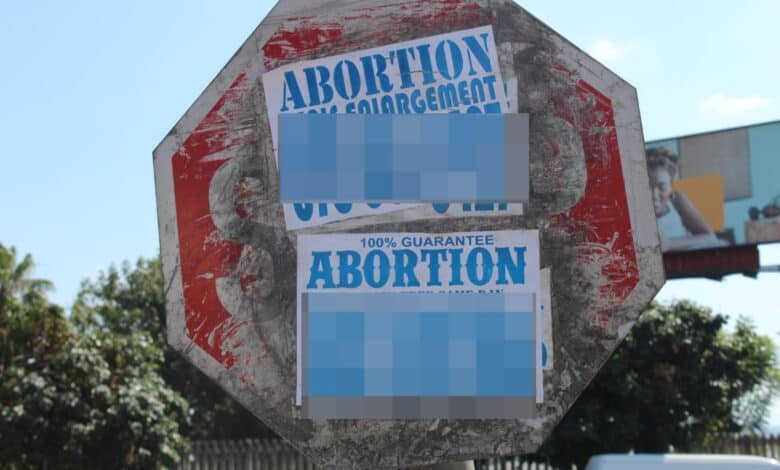
For years, posters promising safe abortions have plagued the streets of the city, pasted on lamp-posts, bus stops and shopfronts. Behind the bold lettering and cellphone numbers, little is known about what truly happens once desperate women make contact.
An investigation by Lowvelder has revealed chilling claims of an underground trade, with illegal providers openly admitting to the practice. Survivors’ testimonies reveal a deadly cycle of secrecy, exploitation, and permanent injury, while health officials warn of life-threatening complications.
Women interviewed by Lowvelder described severe bleeding, infections, and permanent injuries. Several claimed that friends had died after undergoing procedures.
ALSO READ: Illegal abortion providers operate in Mbombela
Survivors speak out
Thoko Ntuli (32) from KaBokweni said she sought an abortion in secret after spotting a poster in town. Taken to a flat in Mbombela, she was given pills and later assisted by two women.
“I wanted to take the foetus with me, but they said it would be sold because I hadn’t paid enough,” she recalled.
Ntuli collapsed soon after and woke up in hospital, where she met other women with similar experiences.
For Thelma Mgiba (28) from Hazyview, the ordeal left her unable to have children. After being turned away by a hospital because her pregnancy had passed the period for an abortion, she paid R1 500 to a man advertising abortion services.
ALSO READ: Illegal posters cover Mbombela streets as community calls for by-law fines
“The pain was unbearable. A traditional healer took the foetus, saying it would be used for muthi,” she said.
Days later, doctors removed her uterus to save her life.
Foetuses sold for muthi
Speaking anonymously, self-proclaimed doctors and healers confirmed that foetuses are sold for between R500 and R1 000. Some admitted that they source abortion pills from public hospitals and clinics.
“We do this as a business, but also to assist those who cannot afford private hospitals,” one said. “We don’t see anything wrong, because we don’t force people to come to us.”
A traditional healer in Mbombela’s CBD admitted buying aborted foetuses, claiming they are ‘powerful’ and sought by high-profile clients.
Health department raises alarm
The Mpumalanga Department of Health said it is alarmed by the proliferation of abortion posters and theft of pharmaceuticals from public facilities. Department spokesperson Dumisani Malamule confirmed that hospitals regularly treat patients with complications from illegal abortions.
“These complications may arise from procedures performed by illegal providers,” he said.
The department urged women to seek safe, legal services at public facilities, where 57 clinics provide first-trimester terminations and nine offer second-trimester procedures.
“Women experiencing an unplanned pregnancy are encouraged to visit their nearest health facility for confidential counselling and care,” said Malamule.
Mpumalanga police spokesperson Colonel Mavela Masondo said crackdowns on illegal abortions are conducted once they are reported to the police.
“SAPS relies on either municipal by-laws or the health department when they seek backup for the execution of arrests,” said Masondo.
The City of Mbombela spokesperson, Joseph Ngala, said by-law enforcement officials occasionally conduct raids in the city to combat the posting of illegal abortion posters.