Illegal abortion providers operate in Mbombela
An investigation into backstreet health services reveals claims of stolen state medication and foetuses sold for traditional medicine.
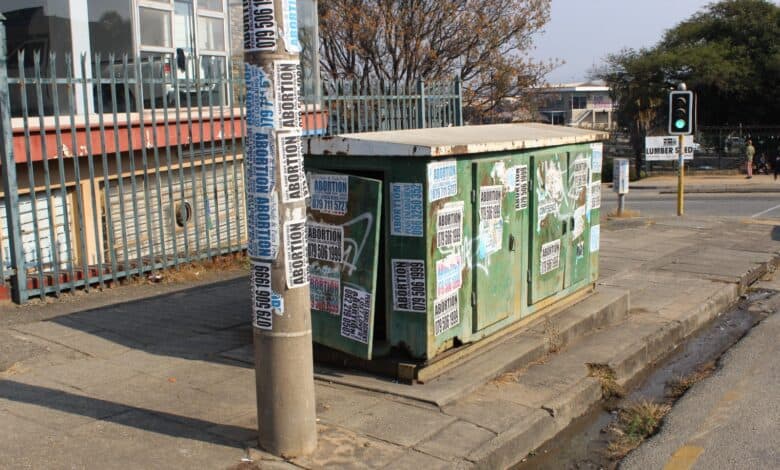
An investigation has uncovered illegal abortion practitioners operating in Mbombela, with some claiming to sell foetuses to traditional healers and admitting they continue despite fines and complaints.
Lowvelder visited several backstreet abortion practitioners operating in the city who claimed to be medical or traditional doctors from Nigeria and Ghana.
The issue was once again highlighted when We Care 4 Nelspruit’s Pastor TJ Maré embarked on a campaign to remove posters advertising these services.
One man, who claimed to be a traditional doctor from Ghana, said he had assisted many women who had been turned away by government institutions or could not afford private healthcare. He added that he had been in the business for many years and knew he was breaking the law, but claimed it was the only way he could earn a living.
ALSO READ: Illegal posters cover Mbombela streets as community calls for by-law fines
He told Lowvelder that some of the medication he used was obtained from government officials, while other medicines were imported from Ghana. He insisted that the medication was safe.
“The posters are my only source of advertising and they also create jobs for unqualified people. I know the municipality does not want them displayed. I have received numerous complaints and fines, but there is nothing I can do because formal advertising is very expensive,” he said.
ALSO READ: We Care 4 Nelspruit tackles abortion posters
Foetuses sold to traditional healers
Another man, who claimed to be a doctor from Nigeria, echoed the Ghanaian’s sentiments, saying he was earning a living while creating employment for people who put up posters and distribute pamphlets. He said he used his own medication and refused to provide further details.
“I perform the entire abortion procedure in my consulting room and even clean the womb afterwards, but they need to leave the foetus behind so there is nothing that can be traced back to me if something goes wrong,” he claimed.
When asked what he does with the foetuses, he said traditional healers usually buy them.
“Some even travel from other countries because they believe they have special powers. I cannot tell you how much I sell them for because the price depends on how old the foetus is.”
Individuals advertising penis enlargement said they charged about R1 500 for the procedure, using lotions allegedly manufactured in Cameroon, Ghana, Nigeria and Zimbabwe.
Department of Health responds to claims
Department of Health spokesperson Chris Nobela previously said the department works closely with SAPS detective services to conduct unannounced raids whenever a suspected illegal abortion provider has been identified.
“Abortion services at our facilities are provided in accordance with the Choice on Termination of Pregnancy Act 92 of 1996, as amended,” he said. “The minister of health has designated government health facilities to provide abortion services. These services are offered free of charge to patients who request them. Abortions may only be performed by a trained medical practitioner or a registered nurse who has completed the prescribed training.”
Nobela said he could not comment on the claims that foetuses were being sold, as public healthcare facilities do not sell foetuses. He urged anyone who encounters such an incident to report it to SAPS.
He did not respond to allegations that medication was obtained from government health officials.