
VIDEO: SA Harvest recommits to ending hunger on World Food Day
According to a statement released by SA Harvest, it states that on October 16, more than 19 million South Africans will suffer from hunger.
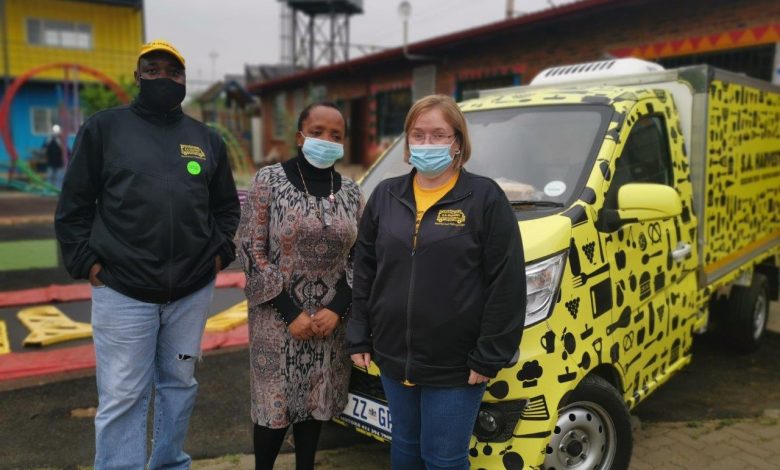
According to the organisation, 10 million tonnes of food goes to waste each year – more than enough to feed the entire country, let alone to meet the ever-increasing need in vulnerable communities.
SA Harvest is a food rescue organisation that was launched in 2019. It will celebrate the one-year anniversary of its official launch on World Food Day.
It is on a mission to end hunger in South Africa and to ensure that every single person is able to access enough nutritious food on a daily basis.

The man behind this ambitious goal is Alan Browde, a fervent campaigner for the fact that in South Africa, it is the constitutional right of every person to have access to enough food. “This is not happening and the State must ensure the fulfilment of this right,” he said.
SA Harvest started small in 2019, despite there being a massive need. “Until Covid-19 struck, very few people realised the enormity of the problem we were already facing, with 14 million going hungry every day.” With the support of South African expats living in Australia and the funding of their first vehicle by airline entrepreneur, Gidon Novick, SA Harvest got off the ground, officially launching on October 19, 2019, with Novick as chairman.
Growth was initially relatively slow. Until the coronavirus pandemic struck, the organisation was delivering an average of around 5 000 meals a week with one refrigerated truck.
Then everything changed. South Africa went into lockdown and this figure surged to 60 000 meals a week with five trucks. Ronni Kahn (CEO and founder OzHarvest) has built OzHarvest into one of the leading food rescue operations in the world.
She has become a household name in Australia and in the 14 years of operation, has overseen the delivery of 110 million meals.

“Complacency was shattered by the pandemic as individual and corporate consciousness woke up to what was happening,” said Browde. Building on the reputations and connections of Kahn, Novick and Browde, substantial individual donations were made by locals and expats. “The number of hungry people in South Africa has increased by 30 per cent to 18 million and that’s what woke people up. This figure is a terrible tragedy, but 13 million is too.”
To meet the dramatic increased need to get food to those who need it, SA Harvest has responded by upscaling volunteer staff, infrastructure and paid permanent staff, as well as by extending the range of both food donors and beneficiary organisations.
SA Harvest offers a unique end-to-end food rescue solution service of both perishable and non-perishable foods, sourcing excess fresh, nutrient-dense food from a broad range of suppliers including producers, retailers, restaurants, airlines, events and community consolidators.
Drivers collect the produce from food donors and deliver them in SA Harvest’s refrigerated vehicles, either directly to vetted beneficiaries or to its warehouses in Johannesburg, Cape Town and Durban.

The organisation has 40 approved beneficiary organisations that are the epicentre of its rescue operation, together feeding approximately 60 000 people per day.
These organisations have the capability to safely handle, prepare and distribute nutritious meals to recipients. On Mandela Day this year, SA Harvest, in partnership with Chefs with Compassion, delivered more than 300 000 cups of soup across the country.
Having delivered the equivalent of three million meals (and climbing) over the past six months, SA Harvest has taken its operations to a different level and plans to build on its exponential lockdown growth.
“We now have around 17 people in the company, about 40 per cent of whom are volunteers doing vital work,” said Browde. “From a one-man show, we’ve suddenly become a big company. Covid-19 was the great impetus to people realising that they’ve got to do something.”

Among the projects it is investing significant research, time and financial resources into, is the creation of small, efficient farms that give the entrepreneur a chance to make a living, while simultaneously creating access to more affordable healthy food for surrounding communities.
“The first project, which is already under way is at the Walter Sisulu Education Centre in the Mamelodi Township in Tshwane, where we are developing a 1,3 hectare piece of land, which will be transformed into a diverse food producing, for-profit business using sustainable farming methods.
This land was originally farmed by a Mamelodi community organisation, but sadly failed through lack of funds. We have resuscitated the participation of the same people and our intention is to use this as a pilot project to be rolled out around the country.
“As we celebrate our one-year anniversary, we recommit ourselves to ensuring we get good food to those who need it most – now and in the future. For now, this is achieved through our operational mandate to rescue supplies and deliver them to those who need it, and for the future, it means working towards sustainable systemic solutions to achieving food sovereignty.

We are doing this through projects and initiatives that are scalable, as well as through advocacy and campaigning for South Africans to be granted their constitutional right to food, which is entrenched in Section 27(1)(b) of the constitution of the Republic of South Africa.
At SA Harvest, we believe that this right should be extended to include the right to sufficient nutrition – the foundation for living a dignified life.”
The response to the work done by SA Harvest has been heartening, attracting extraordinary people with energy and passion to bring about change. “Our journey has just begun and we are excited to embark on the next phase as we fight for systemic change in our food system,” concluded Browde.
Read original story on lowvelder.co.za

