
Drowning in deadly Covid-19 cases, Ramaphosa moves country back to level 3 to stem rising tide
“We have let down our guard, and unfortunately we are now paying the price.”
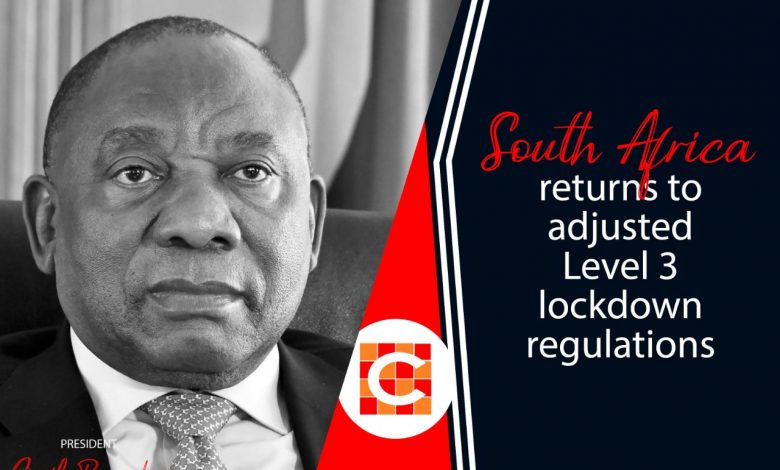
The government has moved the country to an “adjusted level three” lockdown after South Africa recently breached the 1-million positive cases of Covid-19.
President Cyril Ramaphosa on Monday evening addressed the nation, saying nearly 27 000 people were known to have died from Covid-19.
“The number of new coronavirus infections is climbing at an unprecedented rate. More than 50 000 new cases have been reported since Christmas Eve.”
He said the majority of new cases were emerging in KwaZulu-Natal, the Western Cape, Gauteng and the Eastern Cape, while the infections were also alarmingly on the rise in Limpopo.
“We will all have heard that there is a new variant of Covid-19 that is now well-established in our country. As our scientists study this variant, called 501.V2 and its spread, it appears that it may be more contagious than the virus that drove the first wave of infections.”
Ramaphosa said the rapid rise in infections was being fuelled by so-called “super-spreader” events such as end-of-year functions, family and social gatherings, and music and cultural events.
He said social gatherings, the consumption of alcohol in restaurants, nightclubs and taverns had also contributed to risky behaviour.
“Excessive alcohol consumption is also driving up the number of trauma cases in our hospitals.
“We have let down our guard, and unfortunately, we are now paying the price. We have not been wearing masks. We are not washing our hands or sanitising and we are not keeping a safe distance from others.
“We have continued to host and attend social gatherings and events that in many cases flout public health regulations,” Ramaphosa said.
Ramaphosa said according to the data by government, with every relaxation of the restrictions on the sale of alcohol, the number of trauma cases reporting at hospitals had increased.
“These trauma cases are putting an unnecessary strain on our already stretched public health facilities.”
He said both private and public hospitals were already close to full capacity in a number of provinces and ICU beds were either full already or rapidly filling up. Frontline healthcare workers were becoming infected in higher numbers.
“They are exhausted, and they are struggling under the strain of the second wave.”
Ramaphosa said on the recommendation of the National Coronavirus Command Council, and after consultation with provinces and metro mayors, cabinet decided to put the country on an adjusted level 3 from level 1 with immediate effect.
He said several of the level 3 regulations were being strengthened to further limit the potential for transmission while doing everything possible to keep the economy open.
“We have adjusted the restrictions that will apply at level 3 based on the lessons we have learned through our response to date.”
Ramaphosa said the four main reasons for this step were to firstly, minimise the risk of super-spreading events, secondly, to decrease unsafe interactions between people.
“Thirdly, we want to increase the implementation of our five key prevention measures – social distancing, masks, hand hygiene, symptom-checking and testing and lastly to decrease the burden on health care services to meet the needs of Covid-19 and other patients.”
Under the adjusted level 3 regulations:
– Indoor events are prohibited for 14 days.
– Funerals to be attended by 50 people maximum.
– Curfew extended to between 21h00 and 06h00.
– Non-essential businesses must close by 20h00.
– Masks now legally compulsory. Non-wearing of masks could lead to arrest and prosecution.
– Sale of alcohol from retail outlets and on-site consumption is prohibited.
Ramaphosa said it was compulsory for every person to wear a mask in a public space.
“A person who does not wear a cloth mask covering over the nose and mouth in a public place will be committing an offence.
“On conviction, they will be liable to a fine or to imprisonment for a period not exceeding six months or to both a fine and imprisonment.”
The following areas have been declared Covid-19 hotspots:
- In the Eastern Cape, Chris Hani district, Buffalo City, Amathole district, Alfred Nzo district and the OR Tambo district. These are in addition to Nelson Mandela Bay metro and the Sarah Baartman district.
- In KwaZulu-Natal, these are eThekwini, Umgungundlovu district, Ugu district, Harry Gwala district, King Cetshwayo district and Ilembe district.
- In Gauteng, the West Rand, Tshwane, Ekurhuleni and Johannesburg.
- In the Western Cape, the West Coast, Overberg, Winelands, Cape Town, Central Karoo and the Garden Route.
- In the North West, Bojanala District is declared a hotspot area.
- And in Limpopo, the Waterberg district and the Capricorn district.
He said the level 3 restrictions would remain in place until 15 January 2021.
Caxton Local Media Covid-19 reporting
Read original story on rekordeast.co.za

