
UP equine expert pioneers cardiac exam for horses
An innovative equine cardiology service to detect early heart health issues in horses has been introduced by a South African equine health specialist.
A specialist at the University of Pretoria’s (UP) Faculty of Veterinary Science has created a unique offering for horse owners: An equine cardiology consulting service called EquiCardio, which provides comprehensive evaluation for horses with heart murmurs and arrhythmias.
“Heart diseases in horses often do not cause any obvious clinical signs and may go unnoticed by the owner until they progress and become relatively severe,” says Dr Christina Eberhardt, an equine internal medicine and cardiology specialist, and senior lecturer in Equine Medicine at the Faculty’s Onderstepoort Veterinary Academic Hospital.
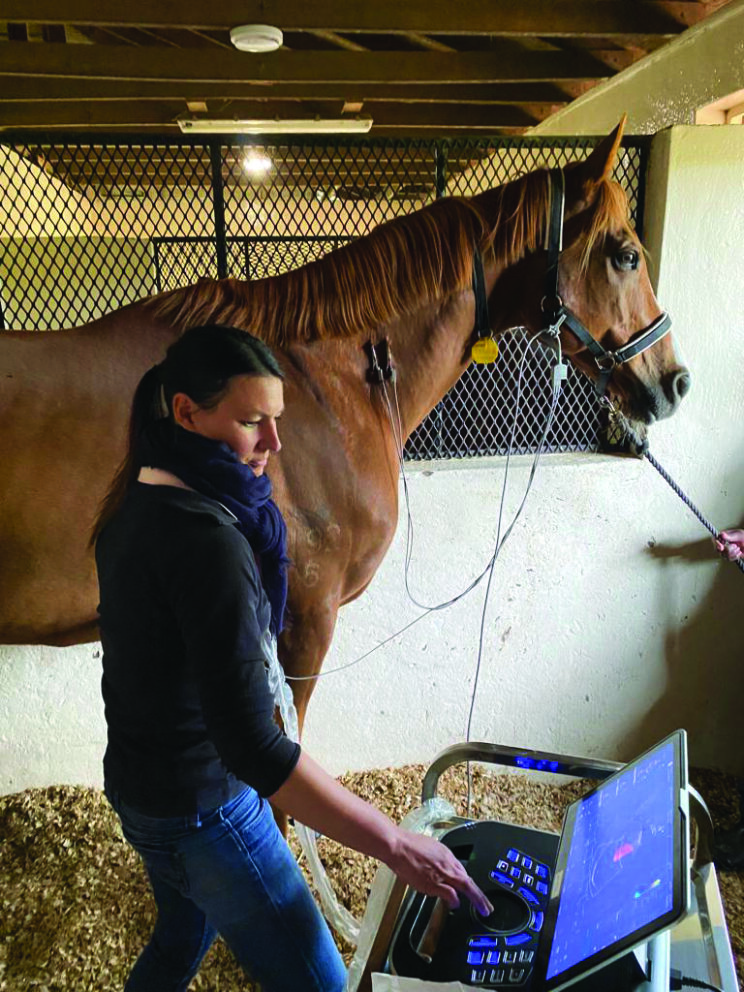
Abnormalities of the heart are commonly detected during a routine physical examination in horses, but it can be challenging to determine their significance without further diagnostic evaluation. In addition to providing more extensive assessment in this regard, the consulting service will also evaluate horses with poor performance for cardiovascular diseases.
Some heart diseases cause poor performance, resulting in a reduced lifespan or generating safety concerns for both the rider and the horse. “Some horses with heart disease progress to heart failure or experience episodes of collapse and sudden cardiac death,” Dr Eberhardt says. “Ideally, heart diseases should be diagnosed early in the course of the disease.”
The comprehensive cardiac examination performed by Dr Eberhardt aims to diagnose the specific abnormalities and severity of the disease, and answer questions related to rider safety, impact on athletic performance, quality of life and treatment or management options.
Heart murmurs or an arrhythmia (an irregular heartbeat) are two common findings that raise a veterinarian’s suspicion of potential heart disease. “Heart murmurs are often related to valvular regurgitation – also known as ‘leaky valves’ – or may be the consequence of a congenital heart defect,” Dr Eberhardt says.
“Unfortunately, cardiac valve replacement, as performed in small animals and human medicine, is not possible in horses because of their size, but horses with certain arrhythmias can be treated with anti-arrhythmic medication.”
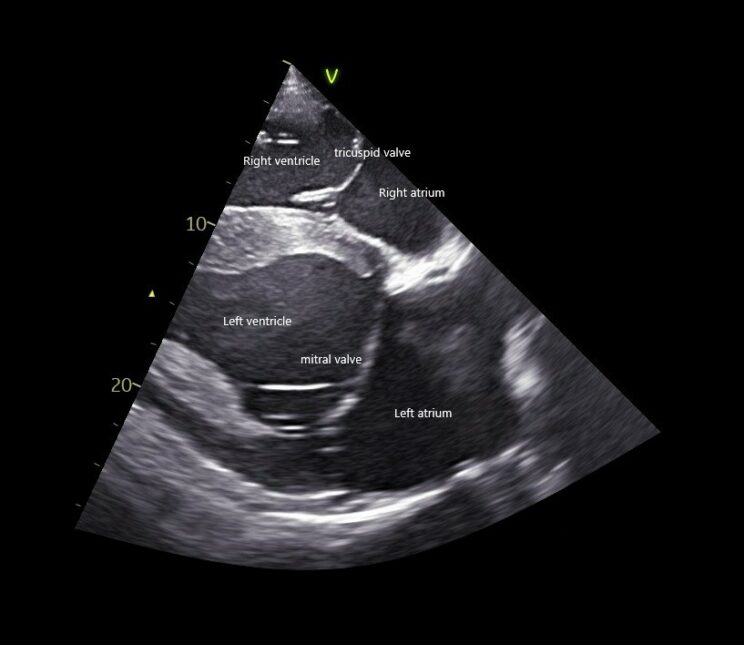
Recently, Dr Eberhardt examined a 16-year-old Warmblood horse used for showjumping, after a private veterinarian had detected the arrhythmia and referred the horse to her. Dr Eberhardt performed an electrocardiogram (ECG) – which checks the horse’s heart rhythm and electrical activity – and diagnosed atrial fibrillation. An echocardiogram (an ultrasound of the heart) was also performed to screen for any underlying disease, and an ECG was performed during exercise to screen for potentially dangerous additional arrhythmias.
“The horse had no underlying heart diseases, but some concerning additional arrhythmias during the exercise test,” Dr Eberhardt says. “Treatment with the anti-arrhythmic drug quinidine sulphate was therefore recommended. This treatment can only be administered in a hospital under continuous ECG and clinical monitoring as the drug can have dangerous side effects. The treatment was successfully performed and the horse was discharged from the hospital.”
The EquiCardio team has the best and latest equipment currently available for the examination of horses with heart disease, including telemetric ECG devices, a specific cardiac ultrasound machine and blood pressure measurement devices.
Limited surgical interventions
While open-heart surgeries cannot be performed on horses because of their size, minimally invasive procedures can be conducted, such as transvenous electrical cardioversion for the treatment of atrial fibrillation. During this procedure, special catheters are placed in the heart and introduced through the jugular veins; correct placement is guided with ultrasound and radiography. General anaesthesia is induced so that an electric current can be delivered directly to the heart, which ‘shocks’ the heart back into normal rhythm.
This procedure is performed by very few equine specialists in the world, Dr Eberhardt says. “It has not been performed in South Africa before, but I have the expertise to perform transvenous electrical cardioversion; hopefully, we will be able to offer it shortly.”
World Veterinary Day falls on April 30 this year. The theme, set by the World Veterinary Association, is ‘Strengthening veterinary resilience’. This is an apt topic in South Africa, where a shortage of vets places strain on those in the profession. The upside is that veterinary science is a great career choice for youngsters, who will have an excellent chance of securing employment.
Read original story on ridgetimes.co.za

