
Rhino poaching-linked financial crimes: 15 appear in Mbombela court
Rhino poaching syndicate suspects, including ex-rangers, appeared in court as Operation Blood Orange highlights their role in a multi-tier criminal network.

Fifteen people accused of financial crimes related to rhino poaching briefly appeared in the Nelspruit Commercial Crimes Court on Monday.
Among the accused were two former field rangers and some of their relatives. While the majority of the respondents appear to be from a humble background, almost all of them are represented by private advocates.
Although the state was ready to commence trial proceedings, the matter was provisionally postponed to February 27 for a possible pretrial conference. This followed accused number eight’s recently appointed legal aid representative requesting more documents from the state. The documents, understood to be the case docket, were provided to her on a hard drive at the court. Should she manage to work through everything by the next court date, trial dates may be set.
The Hawks arrested a total of 16 suspects in 2022 as a result of Operation Blood Orange, a multidisciplinary ‘follow-the-money’ investigation aimed at addressing the rhino poaching scourge that has wiped out a reported 8 936 rhinos between 2006 and 2020 in South Africa alone.
Field rangers Daniel Maluleke and Solly Ubisi, along with Francis Kipampa, Martin Lekhuleni, Eunice Lekhuleni, Sipho Nyundu, Agina Mkhonto, Thandy Makhuvele, Ignatia Mnisi, Given Mzima, Joyce Maluleke, Nkateko Maluleke, Otters Maluleke, Miyelani Maluleke, Khensani Maluleke and Stephilina Mbhombi first appeared in May 2023 on charges of money laundering, corruption, conspiracy, and contravention of Section 57 of the National Environmental Management: Biodiversity Act of 2004 relating to dealing in rhino horns and other charges. They have been awaiting trial ever since.
However, upon pleading guilty to all charges, the Middelburg Regional Court sentenced Kipampa, a 51-year-old Congolese national, to 18 years’ imprisonment last Wednesday. While his 15 co-accused (all South African citizens) were out on bail awaiting trial, Kipampa had been in custody as his bail application was refused due to his status as an illegal immigrant.
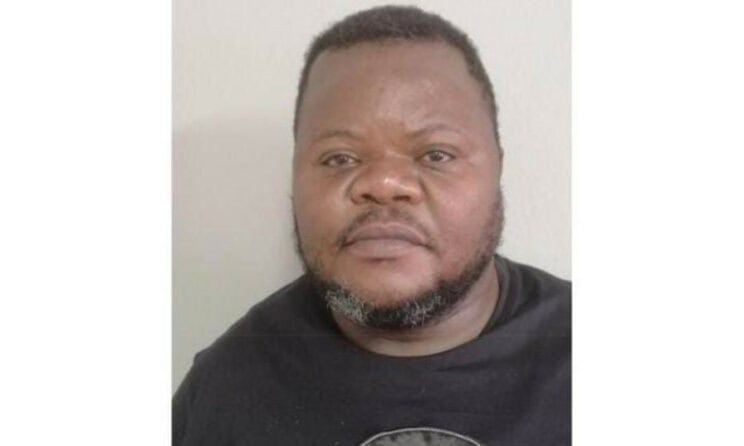
Kipampa, who was based in Johannesburg at the time of his arrest, is understood to have been a level four international seller to the Asian market. Due to his sentencing, Kipampa did not appear with the other 15 on Monday. Specialist prosecutor Advocate Ansie Venter instructed that his case had been finalised and that the charges against him in the matter before the court would therefore be withdrawn in his absence.
Insight from an Operation Blood Orange case review
According to a Project Blood Orange case review published by Save the Rhino International, criminal syndicates have an appetite for exploiting poor community members, often recruiting them to become level one or two poachers and local couriers. The case review references a report in which 83% of convicted poachers interviewed had not reached or completed secondary school, while 38% were unemployed.
Higher up the food chain, level three and four operatives’ activities diversify into human trafficking, trafficking of other species, cash-in-transit robberies, car theft, and murder-for-hire. Key to the project’s success was identifying the tools used by the syndicate, which then guided the collection of relevant information for further analysis. Different levels of the syndicate used different tools, but communication, transportation, and payment tools appear to be the golden threads utilised across the board.
While dead animals, firearms, ammunition, and hunting tools are the obvious telltale signs of wildlife crimes such as rhino poaching, bribes, asset conversions, cash flow, lifestyle enhancements, laptops, cellphone messages, and bank transactions are among the hidden indicators investigators look for to snuff out this brand of organised crime.
Read original story on www.citizen.co.za

