
Limpopo farmers use bee barriers to deter elephants
Human-wildlife conflict poses a significant threat to food security, something a conservation and food security NGO is hoping to change.
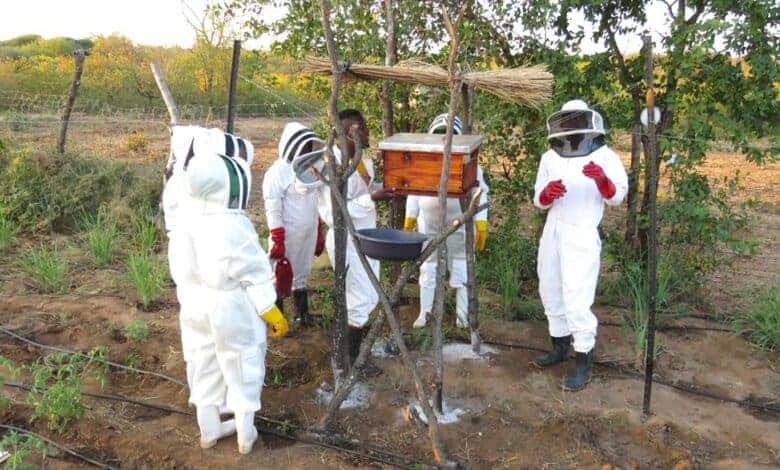
In an attempt to promote coexistence in an area where man and beast are forced to live in close proximity, farmers in Limpopo are looking at nature for solutions to protect their food and income sources from elephants living in the nearby Kruger National Park.
Vincent Mabunda, team leader at Gingirikani Agricultural Co-operative in Phalaubeni village between Giyani and Phalaborwa, says their food garden is in constant danger of elephant incursions because the fence of the Kruger National Park is a mere 4km away.
With the assistance of conservation NGO, Elephants Alive, and food security NGO, African Conservation Trust (ACT), the small-scale farmers are fighting back with an environmentally friendly method to secure vital food sources, while also enhancing crop production and livelihoods.
Mabunda says that that a barrier of elevated beehives is strung near the food garden fence, above a mixed crop of lemongrass and chilli plants.
The elephants are afraid of bee activity and abhor the potent scent of the plants.
Solar-powered lights on poles are interspersed between the hives with an extended line of suspended scrap metal, namely zinc, producing a loud noise when activated by elephant movement.
Fabric soaked in recycled engine oil and chilli grinds is tied onto the external, wire fence in a final effort to deter the elephants from accessing the food gardens.
Mabunda states the coordinated efforts are successful in mitigating elephant incursions into the garden, although there has been pachyderm activity in the area.
Dr Michelle Henley, CEO and co-founder of Elephants Alive says, “We aim to establish human-elephant coexistence values in the precinct, as opposed to the existing human-elephant conflict values. Four elephants were collared and to date, none have tested the beehive barriers.”
According to Henley, the NGO placed 10 hives in the farming cooperative, which was rechristened Ndlopfu Kurhula, meaning Elephant Peace.
Half of the hives were immediately occupied by the insects, although all of them are expected to be filled by summer when bee forage becomes plentiful; with a honey harvest planned after the colonies have added nectar from the summer bounty to their existing winter reserves.
The farmers are currently cultivating plants close to the hives, to increase available pollen and nectar for the bees, to boost honey production. The honey will be sold to individuals, lodges, and local produce markets in Hoedspruit and Phalaborwa.
Francois du Toit, CEO of ACT which is the food security organisation supporting the small-scale farmers, says it is encouraging to see successful, environmentally friendly approaches used to deter elephant incursions.
He says, “Human-wildlife conflict poses a significant threat to food security in these remote locations and any initiative that creates a harmonious coexistence between humans and elephants is welcomed. We are especially grateful for the additional exposure this project is giving participants to help generate a longer-term sustainable income source for these resilient community members because a rising tide will lift all ships.”
Henley expands on the importance of community dialogue in Elephants Alive’s elephant deterrent process, saying that Phalaubeni Village was selected as the province’s primary implementation, following thorough research into the area’s elephant activity.
The South African bee project ensures a successful implementation in Mozambican villages, adjacent to the elephant corridor exiting from the KNP.
This aspect of Elephants Alive’s work was in part supported by Dr Lucy King, who conducted the initial award-winning research into the use of bees as a natural elephant deterrent.
Read original story on www.citizen.co.za

