
Your right to know: Why journalism and access to information matter more than ever
Access to information is a human right. Without it, democracy and journalism falter. On World News Day, we’re reminded why defending truth and transparency matters more than ever.
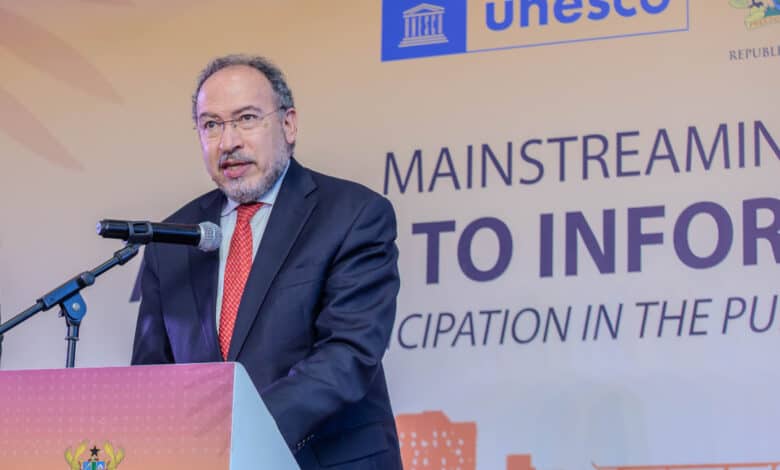
September 28 is both World News Day and the International Day for Universal Access to Information – a timely reminder that if we lose our fundamental right to access information, and if independent journalists lose the ability to report facts, then our rights and democracies may vanish entirely.
Access to information is a fundamental human right, empowering us all to make informed decisions, to participate in democratic processes, and to hold our leaders accountable. It is also critical for survival in a host of situations.
In a natural disaster, timely updates about evacuation routes, shelter locations and weather conditions can mean the difference between life and death. In public health emergencies – as we saw during the Covid-19 pandemic – accurate information about symptoms, prevention methods and treatment options helps people protect themselves and others. And in conflict zones, knowing which areas are safe and how to access humanitarian aid is vital.
On World News Day 2025:
- 139 countries have access to information (ATI) legal frameworks,
- 90% of the world’s population lives in a country where this right is enshrined.
- Just 30 years ago fewer than 20 countries were in this group.
UNESCO data shows that in 2022, 3.5 million public information requests were processed; by 2024, that number had risen to 6.7 million – a clear sign that people want transparency. The global number of requests is also rising with the advent of digital solutions, which make processing easier.
Major gaps remain in some regions
In Africa, data gathered in 2024 by the Africa Freedom of Information Centre showed that 29 of the continent’s 55 countries have ATI laws, but implementation is often patchy. UNESCO helped to establish the African Network of Information Commissioners (ANIC), which enables oversight bodies across the continent to share best practice on implementing and enforcing ATI laws, while also raising the profile of access to information in human rights fora.
Access to public information is an important resource for journalists, just as journalists are essential in enabling citizens to access information. Journalism has always been a key bridge between governments and the people. When officials stay silent, journalists investigate. They verify information and tell the public what is really going on. Journalism is not just a job – it is a public service.

Behind every important news story is someone asking hard questions. Journalists make regular use of ATI laws to conduct their research and publish stories that lead to meaningful change. But this crucial democratic check is increasingly under threat. Journalists face violence, censorship and online harassment.
In 2024, 70% of journalists worldwide who responded to a UNESCO survey said they had experienced attacks ranging from online harassment to legal threats and even physical violence when reporting on environmental issues.
Independent newsrooms are being squeezed financially. Disinformation clogs our feeds, often spreading faster than facts. The fog of lies grows thicker, while trust in truth fades.
We see this, for example, in issues related to climate disruption. This led the International Court of Justice and the Inter-American Court of Human Rights to recognise that access to environmental information is essential for addressing this critical challenge. Because you cannot protect what you cannot see or understand.
So what can we do?
We can urge our governments to support quality journalism by funding independent media and fully enforcing access to information laws. We can call out disinformation as soon as we spot it, and we can push politicians, social media platforms and AI companies to be more accountable.
Access to information is not a threat, but an opportunity for our societies. Today, and every day, let us all defend our right to know.
This article was commissioned as part of World News Day – a global campaign to highlight the value of journalism. It is organised by WAN-IFRA’s World Editors Forum, Project Koninuum and The Canadian Journalism Foundation.
Breaking news at your fingertips… Follow Caxton Network News on Facebook and join our WhatsApp channel.
Nuus wat saakmaak. Volg Caxton Netwerk-nuus op Facebook en sluit aan by ons WhatsApp-kanaal.
Read original story on www.citizen.co.za

